
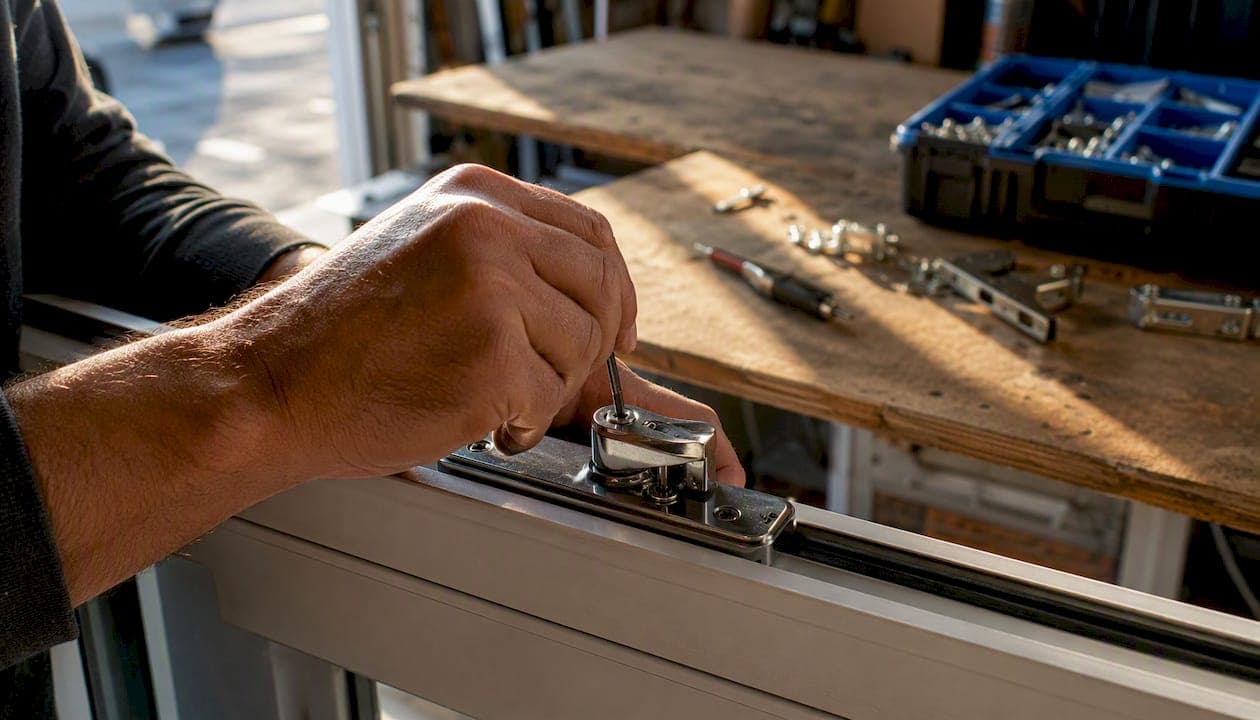
A window striker, known in the trade as a keep, is the frame-mounted plate that receives the locking bolt from your espagnolette, shootbolt, or sash lock. It is the first component to inspect when a window rattles, draughts, or refuses to lock properly. Before ordering a replacement, run through three quick checks:
- Look for stamped codes. Remove the keep and check the reverse for a manufacturer logo or product code. That code is your fastest route to the correct replacement SKU.
- Try a compression adjustment. Many modern uPVC keeps have an adjustable cam. A 4 mm Allen key turned clockwise usually tightens the seal; anti-clockwise loosens it.
- Measure screw centres. If no code is visible, measure the distance between screw holes (centre-to-centre) and the overall plate length before ordering anything.
Trade specialists consistently find that homeowners replace entire locking assemblies when the actual fault is a worn or misaligned keep. A five-minute inspection often saves a much larger repair bill.
Table of Contents
- What does a window striker (keep) actually do?
- Which type of keep does your window use?
- How to identify and measure the correct replacement keep
- What material and finish should you choose?
- How to adjust or replace a uPVC window keep
- What does a replacement keep cost in the UK?
- Where to buy the right replacement keep in the UK
- Key takeaways
- The part most people overlook
- Stock the right keeps with Windowhardwarestore
- Useful sources and further reading
What does a window striker (keep) actually do?
A window striker is a metal or durable plastic plate fixed to the window frame that provides the anchor point for the locking bolt. When you turn the handle, the espagnolette gearbox drives one or more bolts into the keep, compressing the frame seal and holding the sash shut. Without a correctly fitted keep, the bolt has nothing solid to engage, and the window cannot lock or seal properly.
A keep does two jobs at once: it locks the sash and compresses the weatherseal. A worn or mismatched keep undermines both, letting in draughts and reducing resistance to forced entry. That is why espagnolette keeps and strikers must match the window profile precisely.
The mechanical interaction matters more than most people realise. Patent-documented latch designs confirm that latch bolts, cams and springs engage keeps with precise geometry: the recess depth, bolt projection, and cam angle must all align. A generic keep from a DIY shed may look similar but sit fractionally too shallow, leaving the bolt under-engaged and the seal loose.
In the UK, the word "keep" is standard trade terminology. "Striker" or "striker plate" is also widely understood, particularly among homeowners. When searching for parts online, using both terms increases your chances of finding an exact match on trade sites.
Which type of keep does your window use?
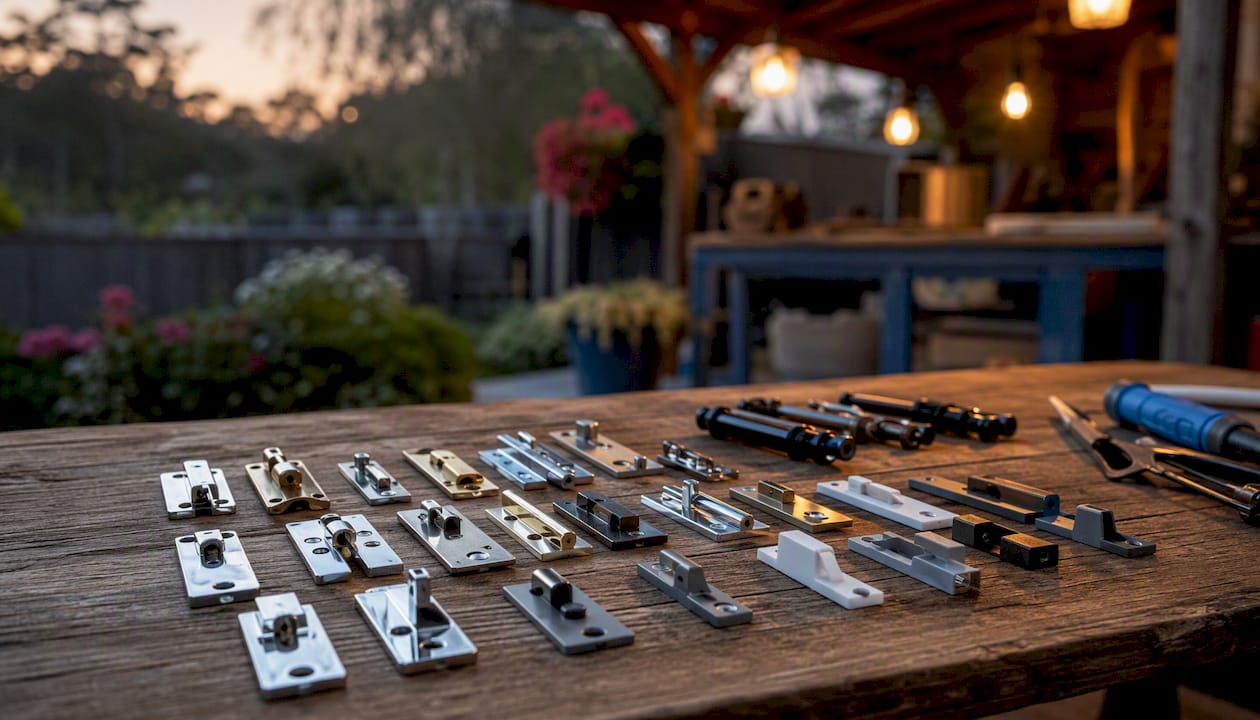
The five main keep types cover the majority of UK windows and doors. Identifying yours correctly narrows the replacement search considerably.
Different lock types require different keeps: sash and latch locks use simple surface keeps, espagnolette systems need profile-matched keeps, shootbolt systems need dedicated shootbolt strikes, and cockspur handles use small wedge plates.
| Keep type | Typical window/door style | Typical material | DIY replacement ease |
|---|---|---|---|
| Espagnolette keep | uPVC casement, tilt-and-turn | Zinc-plated steel | Moderate (profile-specific) |
| Shootbolt keep | uPVC/aluminium door, patio | Steel or stainless | Moderate (position-critical) |
| Cockspur wedge | Older uPVC/aluminium casement | Nylon or ABS plastic | Easy |
| Roller/strike keep | Sliding sash, sliding patio | Steel or nylon | Easy to moderate |
| Retrofit universal keep | Any casement (cosmetic fix) | Nylon or plated steel | Easy |
Espagnolette keeps are the most common type on UK uPVC casement windows. They sit in a routed channel in the frame and receive one or more bolts from a multipoint locking gearbox. Brands such as Maco, Roto, ERA, and Mila each produce profile-specific keeps, so the same bolt pattern from two different manufacturers may not be interchangeable.
Shootbolt keeps are longer, narrower plates used where a bolt travels vertically or horizontally into the frame head or sill. They appear frequently on uPVC and aluminium doors, including patio doors. Position along the frame is critical: a shootbolt keep fitted even a few millimetres out of line will cause the bolt to miss or bind.
Cockspur wedges are the small ramp-shaped plastic or nylon plates found on older casement windows fitted with a cockspur handle. The handle's spur presses against the wedge to hold the sash closed. Mila and ERA both supply these; they are among the easiest keeps to replace.
Roller keeps and sliding-sash strike keeps receive a spring-loaded roller or latch bolt on sliding systems. They are generally straightforward to swap like-for-like.
Retrofit universal keeps are surface-mounted plates designed to cover a worn recess or provide a new engagement point without routing. Useful for cosmetic repairs, though they do not restore the original compression geometry.
How to identify and measure the correct replacement keep
The single most reliable starting point is the manufacturer code stamped on the reverse of the keep. Remove the keep entirely, flip it over, and look for a logo (Maco, Roto, ERA, Mila, or similar) alongside an alphanumeric code. That code lets you order the exact SKU from a trade supplier without guessing.
When no code is visible, work through this measurement checklist:
- Remove the keep using a cross-head or Torx screwdriver. Keep the screws safe.
- Note the manufacturer logo on the reverse, even if the product code has worn off.
- Measure screw centres (centre-to-centre distance between fixing holes).
- Measure overall plate length from end to end.
- Measure recess depth (how deep the bolt pocket sits below the plate face).
- Measure plate thickness and any projection from the frame face.
- Note the bolt type the keep receives: round espag bolt, flat shootbolt, or cockspur spur.
- Photograph the keep in situ against a ruler before removing it.
Key measurements to record:
- Screw centre-to-centre distance (mm)
- Overall plate length (mm)
- Recess depth (mm)
- Plate thickness (mm)
- Number of fixing holes
Pro Tip: When no code exists, photograph the old keep next to a steel rule showing both its length and its recess profile. Include a second photo of the window frame showing the lock type. Sending both images to a trade supplier like Windowhardwarestore cuts identification time significantly and reduces the chance of an incorrect order.
Profile compatibility matters as much as the measurements. Maco, Roto, ERA, and Mila all design their keeps to match specific uPVC and aluminium profiles. A keep from one system fitted to another profile can produce poor sealing and mechanical failure rather than improving security.
What material and finish should you choose?
Choose plated steel or stainless steel keeps for any external or security-critical application. Nylon and ABS plastic keeps are acceptable for low-stress sash uses or cosmetic retrofit situations, but they offer less resistance to forced entry and can degrade faster in exposed positions.
Key considerations by material:
- Nylon/ABS plastic: suitable for cockspur wedges and low-load roller keeps; not recommended for ground-floor windows or any location where stronger locks are advised for security.
Screw selection matters too. Standard short screws that grip only the uPVC outer skin provide minimal pull-out resistance. Where the uPVC profile contains a steel reinforcing insert, use longer screws (typically 35–50 mm) that reach the steel. This single change can substantially increase the keep's resistance to forced entry.
How to adjust or replace a uPVC window keep
The decision rule is straightforward: if the keep is intact but the window rattles or draughts, try a compression adjustment first. If the keep is cracked, corroded, or the recess is visibly worn, replace it.
Tools you will need
Cross-head and Torx screwdrivers, a 4 mm Allen key, a steel rule, a marker pen, replacement screws (35–50 mm for steel reinforcement), and the new keep if replacing. For work above ground level, use a stable platform and follow safe working at height guidance.
Troubleshooting common symptoms
- Window handle not locking at all: check whether the bolt is engaging the keep at all; if not, see the window handle not locking guide for further steps.
Safety note: on bedroom windows designated as emergency egress, never adjust compression so tight that the handle cannot be operated quickly from inside. Building Regulations require egress windows to open fully without a key.
What does a replacement keep cost in the UK?
Parts costs are modest; labour is where the budget rises quickly.
- Cockspur wedges: — typically under £5 each; often sold in packs.
- Shootbolt keeps: — broadly similar to espagnolette keeps; specialist or branded keeps may sit at the higher end.
For labour, UK locksmiths and window fitters charge between £50 and £120 per hour depending on region and job complexity. A straightforward keep replacement typically takes 30–60 minutes once the correct part is to hand, so a professional call-out for a single keep can cost £50–£120 in labour alone, before parts. London and the South East tend to sit at the upper end of that range.
Ordering parts directly from a trade supplier like Windowhardwarestore and fitting them yourself reduces the total outlay to the cost of the part plus your time. For readers weighing a single repair against a broader refurbishment, a repair vs replace assessment can help clarify whether a keep replacement is the right scope of work.
| Cost element | Typical UK range |
|---|---|
| Cockspur wedge (part only) | Under £5 |
| uPVC espagnolette keep (part only) | £5–£20 |
| Professional fitter/locksmith (labour) | £50–£120 per hour |
| DIY replacement (part + fixings) | £5–£20 total |
Where to buy the right replacement keep in the UK
Buy from a specialist supplier that lists profile compatibility, provides clear SKU guides, and holds real-time stock. A general DIY retailer may carry a limited range of universal keeps, but profile-specific keeps for Maco, Roto, ERA, or Mila systems are reliably stocked by trade-focused online suppliers.
Windowhardwarestore stocks a range of profile-matched keeps for uPVC and aluminium windows, with product pages that include screw-centre dimensions and compatibility notes. The site also carries the Winlock Patio Door Handle Set for patio door applications where the striker and handle are supplied together.
When placing an order, supply the following information:
- Manufacturer name and product code (from the reverse of the old keep)
- Screw centre-to-centre measurement (mm)
- Overall plate length (mm)
- Recess depth (mm)
- Lock type (espagnolette, shootbolt, cockspur, roller)
- Material and finish preference (zinc-plated, stainless, powder-coated)
- Photos of the old keep (front and reverse) and the frame recess
If you need next-day delivery for a scheduled installation, confirm stock availability before ordering. Windowhardwarestore offers real-time stock visibility, so you can see immediately whether the part is available for despatch.
For shootbolt-specific keeps and extensions, the shootbolt keeps and extensions guide covers the additional measurements needed for those systems.
Key takeaways
The correct window striker (keep) must match your window profile, lock type, and frame material; a generic substitute risks poor sealing, mechanical failure, and reduced security.
| Point | Details |
|---|---|
| Check the reverse first | The manufacturer code stamped on the keep's reverse is the fastest route to the correct replacement SKU. |
| Measure before ordering | Record screw centres, plate length, and recess depth; include photos to avoid incorrect fits. |
| Adjust before replacing | A 4 mm Allen key compression adjustment resolves most rattles and draughts without buying a new part. |
| Match material to risk | Use zinc-plated or stainless steel keeps for external and ground-floor windows; nylon suits low-stress sash uses only. |
| Windowhardwarestore for trade stock | Windowhardwarestore stocks profile-matched keeps with real-time availability, trade pricing, and next-day UK delivery. |
The part most people overlook
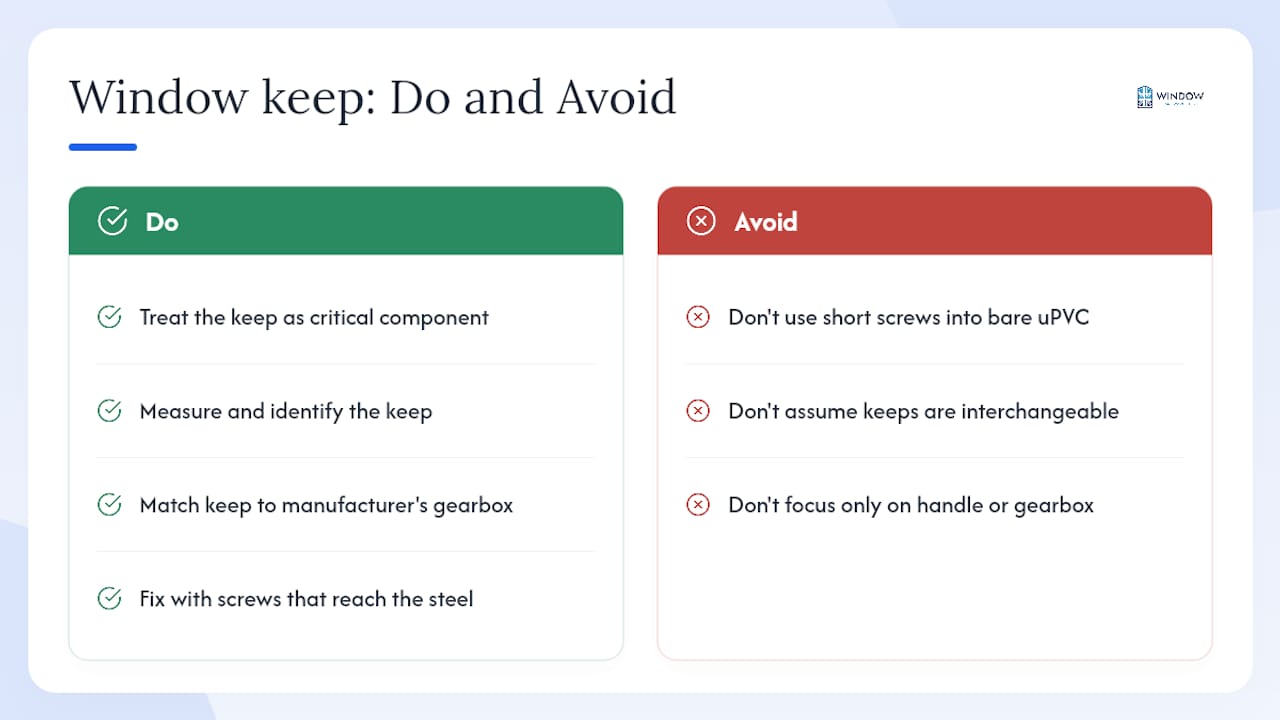
There is a tendency in window repair to focus on the handle or the gearbox and treat the keep as an afterthought. That is understandable: the handle is what you touch every day, and the gearbox is the expensive component. But the keep is where the security of the whole system is actually tested.
A multipoint lock with five bolt points is only as strong as the weakest keep. If one of those keeps is fixed with short screws into bare uPVC, a determined intruder does not need to defeat the lock mechanism at all. They just need to apply lateral force to the sash until the keep pulls free. This is not a theoretical risk; it is the most common method of forced entry on uPVC windows in the UK.
The other thing people consistently underestimate is profile specificity. Keeps from Maco, Roto, ERA, and Mila are not interchangeable, even when they look nearly identical. The recess geometry, bolt engagement depth, and cam position are all calibrated to the manufacturer's own gearbox. Fitting the wrong keep does not just look wrong; it can leave the bolt partially engaged, which feels secure but is not.
My advice: treat the keep as the critical component it is. Measure it, identify it correctly, and fix it with screws that reach the steel. Everything else follows from that.
Stock the right keeps with Windowhardwarestore
Sourcing a profile-matched keep from a general builder's merchant is often a frustrating exercise in near-misses. Windowhardwarestore stocks keeps and striker plates for uPVC and aluminium windows across the main UK profiles, with real-time stock levels so you know before you order whether the part is ready to despatch.
Trade pricing is open to all customers, with no minimum order. The product pages include screw-centre dimensions and compatibility notes, and the support team can help identify the correct keep from photos and measurements if you are unsure. Next-day UK delivery is available on stocked lines, which matters when a window is off-hire or a job is running to schedule.
Browse the full range and check compatibility at Windowhardwarestore, or go straight to the Winlock Patio Door Handle Set if you are working on a patio door application.
Useful sources and further reading
- Espagnolette keeps and strikers — matching parts for a perfect fit
- Locksmith prices (cost guide) — Checkatrade
- 16 types of window locks (uses & styles) — Designing Idea
- Window lock types: security options for every window style — Build‑Construct
- The beginner's guide to window latches — Monroe Engineering
- Friction latch for sliding sash window (US Patent 11280114) — Exa.ai
Recommended
- Window Handle Not Locking? Troubleshooting Common Issues | Window Hardware Store | Window Hardware Store
- Espagnolette Keeps and Strikers: Matching Parts for a Perfect Fit | Window Hardware Store | Window Hardware Store
- Window Handles Replacement for Double Glazed Windows: Key Checks | Window Hardware Store | Window Hardware Store
- Matching Your Window Gearbox to Existing Keeps and Strikers | Window Hardware Store | Window Hardware Store