

Tested window locks should be your default choice. They are independently assessed to resist forced entry, meet police and insurer expectations, and reduce the risk of a rejected claim. If you are replacing hardware or fitting new locks, choosing a product certified to PAS 24, Secured by Design (SBD), or BS EN 13126 is the single most effective step you can take to protect your home and keep your policy valid.
Here is why it matters in practice:
- A substantial portion of UK burglaries involve entry through a window, while only a small fraction involve breaking glass. The rest exploit unlocked windows, night-vent positions, or inadequate locks.
- Most insurers require key-operated locks on ground-floor and accessible windows as a condition of cover. Failing to meet that condition can affect your claim.
- Secured by Design is the police-preferred specification. It requires PAS 24 as a baseline and adds further criteria tested in UKAS-accredited laboratories.
- Certified locks deter opportunistic intruders, resist common forced-entry tools, and give you documented proof of compliance for your insurer.
Table of Contents
- What "tested" and "certified" actually mean for window locks
- Which lock types suit which windows?
- Key features to prioritise when buying tested window locks
- What Secured by Design and insurers expect from you
- Concrete benefits of choosing tested, certified window locks
- Installation, fitment checks, and what to expect on cost
- Maintenance, common problems, and simple troubleshooting
- Window restrictors: ventilation, child safety, and security
- Practical buying checklist and what tradespeople check
- Key takeaways
- The mistake most homeowners make with window security
- Tested parts, trade knowledge, and fast UK delivery from Windowhardwarestore
- Useful sources and further reading
What "tested" and "certified" actually mean for window locks
Not every lock sold as "secure" has been independently verified. Understanding the difference between marketing language and genuine certification is the first practical step.
PAS 24 is a whole-window system test. It simulates a 3-minute or 5-minute attack using concealable tools, assessing the complete window: frame, glass, hinges, and locks together. It is mandatory for new-build and replacement windows under Building Regulations in England and Wales. Crucially, breaking the glazing is not permitted during the test, so the assessment genuinely reflects how a burglar would approach your window.
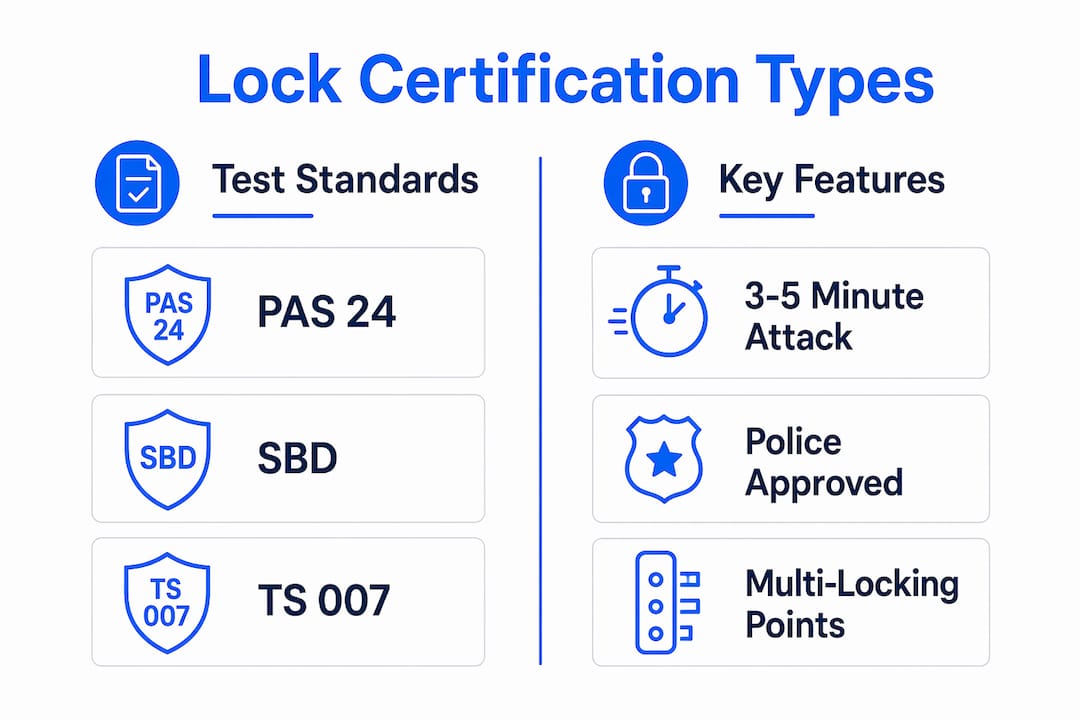
Secured by Design (SBD) is the police-preferred specification, operated by the UK Police Service. It requires PAS 24 as a minimum and adds further criteria. Products carrying the SBD mark have been assessed in UKAS-accredited laboratories and are listed on the SBD website, so you can verify a product's status before you buy.
BS EN 13126 covers the hardware itself: handles, espagnolette mechanisms, and other ironmongery. It sets performance grades for individual components rather than the whole window assembly.
TS 007 and the BSI Kitemark are lock-level tests rather than whole-window assessments. When you are retrofitting hardware onto an existing frame that cannot be replaced, a TS 007-rated or Kite-marked lock is a practical and recognised upgrade.
- PAS 24 = whole window tested as a system (new builds, full replacements)
- TS 007 / Kitemark = lock or hardware tested in isolation (retrofits, hardware upgrades)
- BS EN 13126 = component-level performance grading for ironmongery
- SBD = police-preferred, requires PAS 24 as a baseline, independently verified
Pro Tip: When a supplier claims a product is "tested to PAS 24," ask whether the whole window assembly was tested or just the hardware. The distinction matters, especially for insurance purposes.
Which lock types suit which windows?
Matching the right lock to your window type is where most homeowners go wrong. A certified lock fitted to the wrong window style, or used without the correct complementary hardware, will not perform as tested.
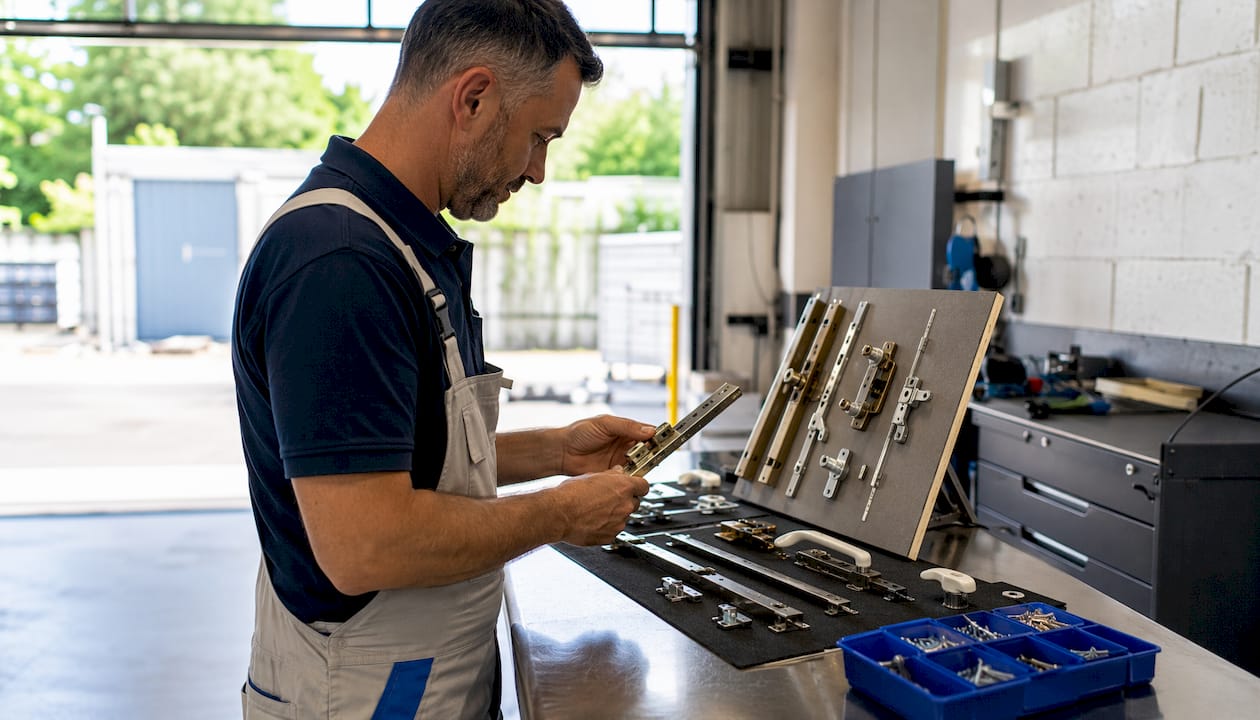
| Lock type | Typical window | Key notes |
|---|---|---|
| Espagnolette (espag) | uPVC casement, tilt-and-turn | Multi-point; operated by a single handle; standard on modern uPVC |
| Multi-point shootbolts | uPVC, timber casement | Steel bolts engage top and bottom of frame; high resistance to jemmying |
| Sash locks / sash stops | Timber sliding sash | Prevent vertical movement; often used in pairs |
| Keyed handles | Casement, tilt-and-turn | Key-operated; meet insurer requirements for accessible windows |
| Surface-mounted casement locks | Timber casement, older frames | Bolt-on addition; useful where internal hardware cannot be replaced |
| Window restrictors | Any opening window | Limit opening gap; tested versions resist significant force |
| Cockspur handles (lockable) | Older casement, timber | Lockable version recommended; non-lockable versions are inadequate |
The NPSA guidance on domestic window security notes that espagnolette locking devices incorporating multiple locking points offer greater resistance than single-point devices, because the operating handle cannot be overcome without first causing visible damage to the window.
For sashes over 600 mm, multiple locking points are recommended by the Master Locksmiths Association's minimum security guidelines. A single handle or latch on a large sash is simply not enough.
Key features to prioritise when buying tested window locks
Certification tells you a product has passed a test. These features tell you whether it will hold up in your specific situation.
- Key-operated mechanism: Required by most insurers on ground-floor and accessible windows. Factory latches are often designed for weather sealing, not forced-entry resistance, and commonly fail basic security tests. Replacing them with a keyed handle is a high-value upgrade.
- Multiple locking points: Espag systems and shootbolts distribute load across the frame. A single latch concentrates all force at one point and is far easier to defeat.
- Corrosion-resistant materials: Load-bearing parts should be stainless steel or brass. Zinc die-cast components corrode and weaken over time, particularly on exposed or coastal properties.
- Tamper-resistant fixings: Anti-tamper screw heads slow down removal. Internal beading (where the glazing bead is on the inside of the frame) prevents glass from being pushed out from outside.
- Clear certification markings: The product packaging or the lock itself should carry the standard reference (PAS 24, TS 007, SBD). If it does not, ask for the test report.
- Cylinder quality (where relevant): On key-operated handles with a cylinder, look for anti-drill, anti-pick, and anti-snap features. A weak cylinder undermines an otherwise strong lock.
You can find a detailed breakdown of handle security features on the Windowhardwarestore blog, covering materials, corrosion resistance, and what to check before you buy.
Pro Tip: Check whether your window is internally or externally beaded before ordering. Externally beaded windows allow the glazing to be removed from outside without touching the lock. No certified lock fully compensates for external beading on an accessible window.
What Secured by Design and insurers expect from you
Police and insurer guidance is more specific than most homeowners realise. Getting this right protects both your home and your policy.
Secured by Design recommends key-operated locks on all accessible windows and lists police-preferred products on its website. SBD is not a legal requirement for existing homes, but it is the benchmark insurers and police use when assessing whether your security was adequate.
Insurer conditions are the more immediate concern for most homeowners. Home insurance policies frequently require key-operated locking on ground-floor and accessible windows as a condition of cover. "Accessible" typically means any window a person could reach from ground level, a flat roof, a drainpipe, or an adjacent structure. Failing to meet that condition can result in a reduced payout or a rejected claim, even if the burglary was not directly through that window.
Practical checks to carry out now:
- Read your policy's security conditions section, not just the summary. Look for specific wording about window locks, key operation, and accessible windows.
- Check every ground-floor and first-floor window that could be reached without a ladder. If any have non-keyed catches, they are likely non-compliant.
- Ask your insurer directly whether PAS 24 or SBD certification satisfies their requirements. Most will confirm this in writing, which is worth keeping.
- For locking vs non-locking handle options, the Windowhardwarestore blog covers the practical differences and when each is appropriate.
Pro Tip: If you have recently moved into a property, do not assume the existing locks meet your insurer's requirements. The previous owner's policy may have had different conditions, or the locks may have been fitted before current standards applied.
Concrete benefits of choosing tested, certified window locks
The case for certified hardware goes beyond compliance. Here is what you actually gain.
- Deterrence: Burglars are largely opportunistic. Visible, robust hardware signals that a window will take time and effort to defeat, which pushes intruders towards easier targets. The police-backed evidence consistently shows that visible security measures reduce opportunistic entry attempts.
- Force resistance: Tested locks are assessed against real attack methods: prying, drilling, and manipulation with concealable tools. An untested latch has no verified performance against any of these.
- Insurance compliance: Certified hardware gives you documented proof that your locks meet a recognised standard. This matters when making a claim and when renewing your policy.
- Fewer claim disputes: If you can show a loss adjuster that your windows carried PAS 24-certified hardware installed by a competent fitter, disputes about whether your security was adequate become much harder for an insurer to sustain.
- Resale value: Properties with documented, certified security hardware are easier to sell and can attract lower insurance premiums for the next owner. It is a small but real advantage in a competitive market.
- Peace of mind: Knowing your locks have been independently tested to resist the methods burglars actually use is worth more than any marketing claim on a box.
Installation, fitment checks, and what to expect on cost
A certified lock fitted incorrectly will not perform as tested. The installation is as important as the product itself.
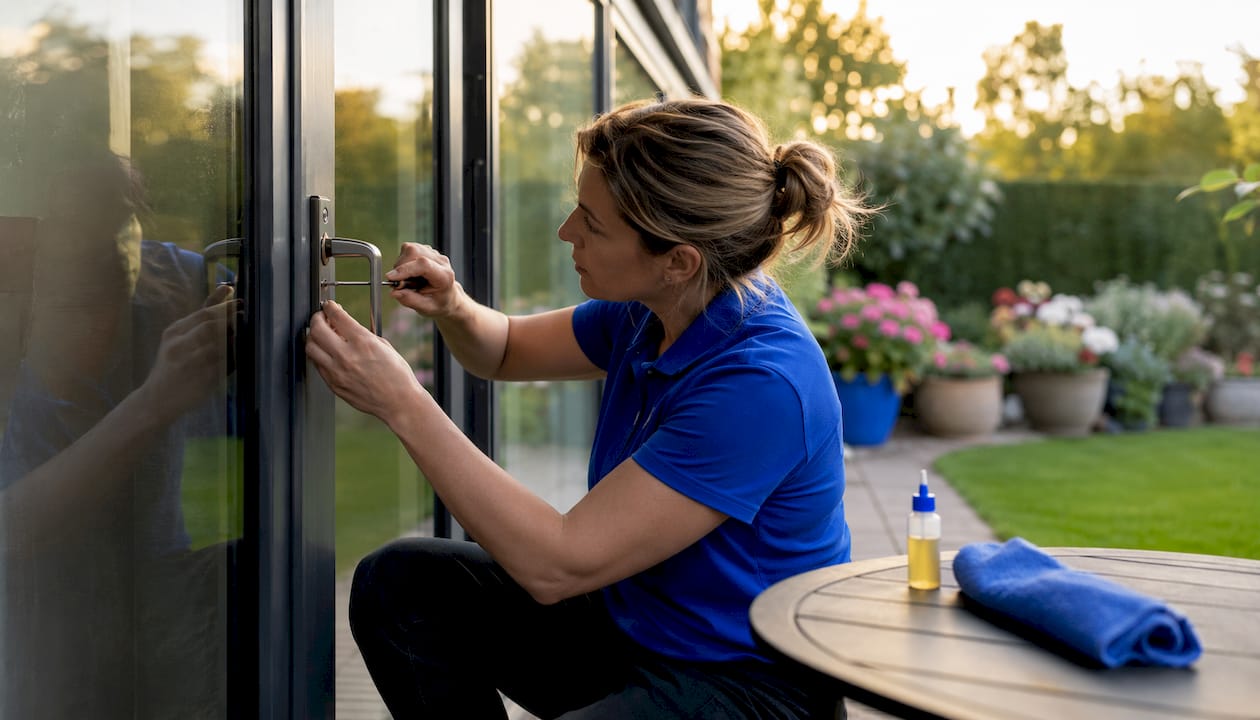
The whole window system determines effectiveness. Frame condition, hinge strength, and beading type all affect how well a tested lock performs. A warped frame or worn hinges can create gaps that undermine even the best hardware. The NPSA guidance is explicit: the mode of opening does not affect security potential, provided the window is correctly constructed and fitted with appropriate hardware.
Common fitment errors stem from incorrect measurements. Homeowners frequently buy the wrong part because they do not measure the spindle length, backset, fixing centres, or faceplate depth before ordering. A professional survey covers all of these. Before ordering any replacement lock or handle, measure:
- Spindle length and diameter
- Fixing centres (the distance between the two fixing screws)
- Faceplate dimensions (height and width)
- Frame profile and depth
Our guide to locking window handles walks through each measurement in detail.
On cost, locking handles, casement locks, and restrictors are typically low double-figure part costs. The main decision is whether to fit them yourself or pay a locksmith for a short visit. For accessible or ground-floor windows, professional fitting is worth the additional cost: you get correct installation and, critically, post-fit paperwork confirming the product and standard used.
When selecting fixings for security-critical hardware, the choice of fasteners matters more than most homeowners expect. Correct screw type and length for the frame material directly affect how well the lock holds under load.
Maintenance, common problems, and simple troubleshooting
A tested lock that is poorly maintained will not perform as it should. Most problems are straightforward to spot and fix.
Common faults:
- Sticking or stiff operation: Usually caused by a lack of lubrication or slight frame movement. Apply a dry PTFE or silicone lubricant to the mechanism. Avoid WD-40 on lock internals as it attracts dirt over time.
- Misalignment: The keep (the striker plate in the frame) shifts as frames settle. If the bolt or cam is not engaging fully, the lock is not securing the window. Adjust the keep position or call a fitter.
- Worn keeps: A keep that has been repeatedly struck by a misaligned bolt develops a groove. Once the bolt drops into that groove rather than engaging the keep properly, the lock can be defeated with minimal force.
- Loose fixings: Screws work loose over time, particularly on uPVC frames. Check and tighten fixings annually. If a screw spins freely, the thread is gone and the fixing needs replacing.
Routine care:
- Lubricate the mechanism and any exposed metal parts twice a year, more often in coastal or high-humidity locations.
- Check that the bolt or cam engages the keep fully when the window is locked. If it does not, the window is not secured.
- Inspect for corrosion on exposed components, particularly on ground-floor windows.
For step-by-step window handle maintenance, including lubrication and tightening guidance, the Windowhardwarestore blog covers the process in full.
Pro Tip: Keep a record of any maintenance carried out, including dates and what was done. If you ever need to make an insurance claim, evidence that you maintained your locks in good condition strengthens your position.
Window restrictors: ventilation, child safety, and security
A window restrictor lets you keep a window open for ventilation while physically preventing it from opening wide enough for a person to pass through. They are not a substitute for a lock, but they are an important part of a complete security and safety approach.
Tested restrictors are engineered to hold a window at a controlled gap, typically under 100 mm, and some are rated to resist forces equivalent to several adults. A restrictor that is not independently tested may simply pull away from the frame under load, which defeats the purpose entirely.
Key considerations:
- Child safety: A gap of less than 100 mm prevents a child from falling through. Restrictors are particularly important on first-floor and above windows in homes with young children.
- Emergency egress: Restrictors must not permanently prevent escape in a fire. Look for a restrictor with a release mechanism that adults can operate quickly but children cannot. Key-locking restrictors on fire-escape windows are generally not appropriate. Our guide on fire escape window hinges covers egress requirements in detail.
- Insurance interaction: A restrictor does not replace a lock for insurance purposes. Your insurer's condition for key-operated locking still applies; the restrictor is an additional measure.
- When to choose a restrictor: Use a tested restrictor when you need regular ventilation from a window that is also a security or safety concern. For windows that are only occasionally opened, a standard certified lock is sufficient.
The Windowhardwarestore RES Lock concealed window restrictor is designed to secure windows in an open position for ventilation while reducing access risk.
Practical buying checklist and what tradespeople check
Use this checklist when speaking to a supplier or instructing an installer. It covers the information you need to gather before you buy and the questions worth asking before work begins.
Before you buy or order:
- Measure spindle length, fixing centres, and faceplate dimensions on the existing hardware.
- Note the window type (uPVC casement, timber sash, sliding, tilt-and-turn) and frame profile.
- Check whether the window is internally or externally beaded.
- Read your insurance policy's security conditions and note any specific requirements.
- Confirm whether you need a whole-window PAS 24 solution or a hardware-only TS 007 upgrade.
Questions to ask your installer:
- Can you confirm which test standard the hardware is certified to?
- Will you provide post-fit paperwork showing the product model and standard reference?
- Is the existing frame in good enough condition to support a hardware upgrade, or does the whole unit need replacing?
- Are the hinges and keeps in good condition, or do they need replacing at the same time?
- What fixing specification are you using, and is it appropriate for this frame material?
A note on upsells: A competent fitter will sometimes recommend replacing the whole window unit rather than upgrading the hardware. This is legitimate when the frame is warped, the hinges are worn, or the window is externally beaded. It is worth asking for a clear explanation of why hardware alone will not suffice. If the fitter cannot explain the specific deficiency, get a second opinion.
Our guides on universal window handle fitment and checking handle compatibility are useful preparation before any supplier conversation.
Pro Tip: Ask for post-fit documentation as a condition of the job, not an afterthought. A good installer will provide it without hesitation. Keep it with your insurance documents.
Key takeaways
Tested window locks reduce burglary risk, satisfy police and insurer requirements, and give you documented proof of compliance that protects your claim.
| Point | Details |
|---|---|
| Choose certified hardware | PAS 24, SBD, or TS 007 certification confirms independent testing against real attack methods. |
| Key-operated locks on accessible windows | Insurers commonly require this as a condition of cover; non-keyed catches can invalidate a claim. |
| Measure before you order | Spindle length, fixing centres, and faceplate depth determine whether a replacement lock will fit. |
| Restrictors need a release for egress | Never fit a key-locking restrictor on a fire-escape window; use a tested restrictor with an adult-operable release. |
| Windowhardwarestore stocks trade-grade parts | Tested locks, handles, and restrictors are available with real-time stock visibility and fast UK-wide dispatch. |
The mistake most homeowners make with window security
The conventional wisdom is that buying a certified lock solves the problem. It does not, on its own. The lock is one component in a system, and the system is only as strong as its weakest part.
What we see repeatedly is homeowners fitting a PAS 24-rated handle onto a frame with worn hinges, an externally beaded glazing unit, or a keep that has been loose for years. The handle passes a test. The window does not. An insurer assessing a claim after a break-in will look at the whole picture, not just the product label.
The second common error is buying on price without checking certification. A handle that looks identical to a certified product may carry no test standard at all. The difference is not visible from the outside. It only becomes apparent when someone tries to force the window.
The third mistake is ignoring the paperwork. Post-fit documentation showing the product model, the test standard, and the installer's details is the evidence you need if a claim is ever disputed. Most homeowners do not ask for it. Most insurers will ask for it if a claim arises.
Certified hardware, fitted correctly, on a sound frame, with documentation kept safely: that is the complete answer. Each part matters.
Tested parts, trade knowledge, and fast UK delivery from Windowhardwarestore
If you have read this far, you know what you need: certified hardware that matches your window type, fitted correctly, with the paperwork to back it up.
Windowhardwarestore stocks trade-grade tested locks, keyed handles, and restrictors with real-time stock visibility, so you can confirm availability before you order. Parts are dispatched fast across the UK, and the support team can help you match components to your frame profile if you are unsure which product fits. Whether you are a homeowner replacing a single handle or a tradesperson sourcing parts for multiple properties, the process is straightforward.
Browse the full range at Windowhardwarestore, or go directly to the RES Lock concealed restrictor if ventilation security is your immediate priority. If you have a compatibility question before ordering, the support team is there to help you get it right first time.
Useful sources and further reading
These are the primary sources worth consulting for standards interpretation, installer guidance, and insurance relevance.
- NPSA: Assessment of Security Afforded by Domestic Windows — The National Protective Security Authority's technical guide to assessing window security by visual inspection. Useful for understanding what a surveyor or loss adjuster looks for.
- Secured by Design — The police-preferred specification. The SBD website lists approved products and explains the PAS 24 baseline requirement. Use it to verify whether a product you are considering is genuinely police-preferred.
- PAS 24 and TS 007 explained — A clear explanation of the difference between whole-window and hardware-only certification, and when each applies.
- Master Locksmiths Association: Minimum Security Requirements — The MLA's guidelines on locking-point minima by sash size and key-locking requirements for accessible windows. Useful when specifying hardware for a survey or insurance review.
- LocksmithLocal: Choosing and Upgrading Window Locks — Practical installer-level guidance on fitment measurements, common errors, and when to upgrade hardware versus replace the whole window.
Recommended
- Locking Window Handles: Buying Checklist | Window Hardware Store | Window Hardware Store
- Replacing Window Handles: Locking vs Non-Locking Options | Window Hardware Store | Window Hardware Store
- Window Handle Security Features: What Makes a Handle Secure | Window Hardware Store | Window Hardware Store
- uPVC Door Lock Buying Guide: What to Look for in 2026 | Window Hardware Store | Window Hardware Store