
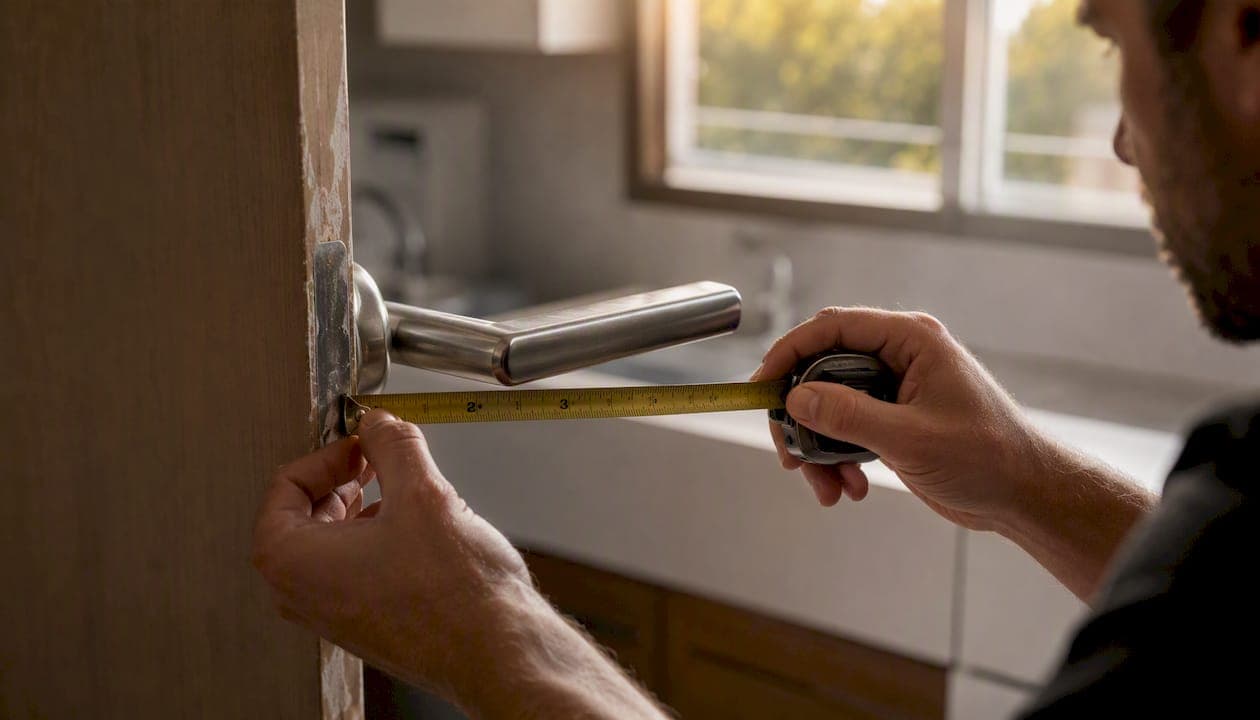
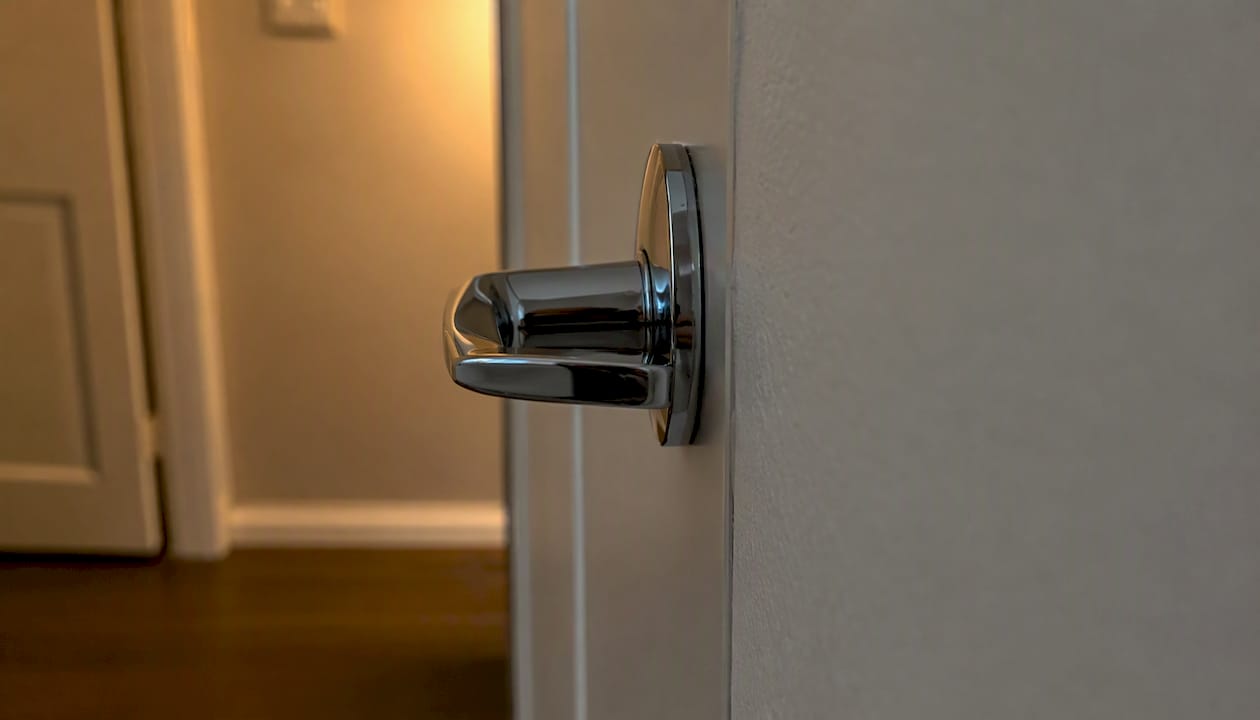
Door handle projection is the distance from the flat surface of the door to the furthest point the handle sticks out. It sounds simple, and it is, but the way you measure it trips up more orders than any other spec on the sheet. The rule that matters most: always measure to the furthest projecting point of the handle, not the rose, the backplate, or the base fixing. Most lever handles project somewhere between 50mm and 100mm (roughly 2 to 4 inches), with 2 to 4 inches often cited as the standard range and lever handles typically sitting a little higher in that band than knobs.
Key Takeaways
Door handle projection is the distance from the door face to the handle's furthest point, and measuring to anything less guarantees a clearance mistake.
| Point | Details |
|---|---|
| Measure to the furthest point | Always measure from the door face to the handle's absolute furthest projection, not the rose or base. |
| Know the typical range | Most lever handles project 50 to 100mm (2 to 4 inches), with knobs generally shorter. |
| Check clearance first | Confirm the swing arc and reveal to adjacent walls or glass before choosing a projection. |
| Match projection to door type | Heavier entrance doors suit longer projections; narrow corridors suit shorter ones. |
| Buy from stock you can verify | Windowhardwarestore lists projection and centre measurements on product pages and accepts photos for tricky orders. |
Table of Contents
- What is door handle projection compared with other measurements?
- Typical door handle projection sizes explained
- Choosing the right projection for different door types
- How to measure door handle projection correctly
- Checking clearance before you order a replacement handle
- Accessibility and recommended projections for comfortable grip
- What suppliers actually get asked about projection
- Where to find handles once you know your projection
- Frequently asked questions
- Sources
What is door handle projection compared with other measurements?
Projection gets confused with three other numbers on a spec sheet, and mixing them up is the fastest way to order a handle that doesn't fit.
- Projection: distance from the door face to the handle's furthest point.
- Backset: distance from the door edge to the centre of the spindle hole.
- Lever length: total length of the handle arm, measured end to end.
- Overall length: the full length of the backplate or rose assembly, top to bottom.
Projection and lever length work together to determine how much clearance you need, both from the handle to whatever sits beside the door and from your hand to the door face when you grip it. Measure handle projection with the door open, from the door surface plane out to the absolute furthest point, whether that's the tip of a lever, the edge of a knob, or the barrel of a pull handle.
Why does this matter beyond the tape measure? A handle with a longer projection needs more room to swing clear of an adjacent wall, a glass sidelight, or another door in a double set. Ignore this and you get a handle that clatters into brickwork every time someone opens the door, or worse, one that can't complete its swing at all—issues common with oversized interior doors where door proportions affect handle projection.
Quick callout: Manufacturer spec sheets typically list projection in millimetres, so if you're working in inches, convert first. A 63mm projection is 2.48 inches. A 76mm projection is roughly 3 inches. Keep a simple conversion note by your measuring tape and you'll avoid the single most common ordering error installers report.
For a full breakdown of how projection sits alongside spindle length and lock type, manufacturer specification sheets are worth checking before you commit to an order, particularly on doors with unusual lock hardware.
Typical door handle projection sizes explained
Product pages rarely explain what their numbers mean in practice, so here's what you're actually looking at when you see a projection figure listed.
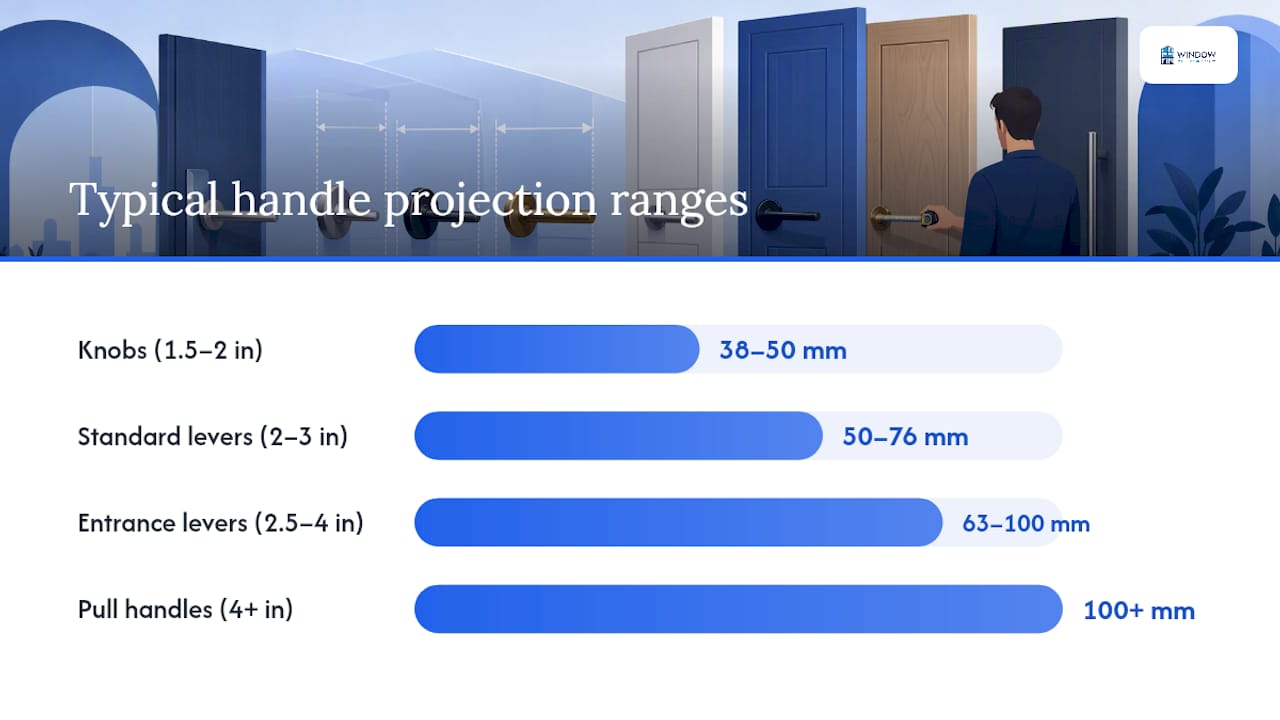
| Handle type | Typical projection (mm) | Typical projection (inches) |
|---|---|---|
| Interior door knobs | 38–50mm | 1.5–2 inches |
| Standard lever handles | 50–76mm | 2–3 inches |
| Entrance/heavy-duty levers | 63–100mm | 2.5–4 inches |
| Pull handles (centre bar) | 100mm+ | 4 inches+ |
Standard door handle projections generally fall between 1.5 and 3 inches, with knobs sitting at the shorter end and levers stretching towards the top. Anything outside that band counts as non-standard, and you'll usually only need it for specific reasons:
- Glass doors often need shallower projections to suit slim rails and avoid visual bulk.
- Commercial pull handles on heavy fire doors or shopfronts routinely exceed 100mm because the door itself is heavier and needs more leverage.
- Bespoke or period ironmongery can carry unusual projections that don't match modern spec conventions, so always check the listing rather than assume.
Choosing the right projection for different door types
Not every door needs the same handle. Internal doors, front entrance doors, and patio sets each have their own practical constraints, and getting the projection wrong on the wrong door type causes real problems.
Internal doors in narrow corridors or small landings do better with a shorter projection, typically towards the 50mm end, to avoid handles snagging on coats or catching against opposite doors when both are open. Entrance doors carrying a heavier lever or a lever handle with a full multipoint lock often benefit from the longer end of the range, around 76mm to 100mm, because more leverage makes the door easier to pull shut against weatherseals. Patio and French doors usually pair a moderate projection with wider handle centres, since these doors see frequent daily use and benefit from a confident grip.
A few dos and don'ts worth keeping in mind:
- Do check the reveal, the gap to an adjacent wall or window, before choosing a longer projection.
- Do match projection to backset and handle centres together, not in isolation.
- Don't assume every lever in a matching set has the same projection. Pull handles and pair operating levers can differ.
- Don't fit a heavy-duty entrance lever with a short projection on a door that needs real pulling force.
Pro Tip: If you're replacing a lever handle on a patio door, check the Winlock patio door handle set spec sheet against your existing backset and centres, not just the projection figure. Patio sets often use non-standard centres that a generic lever won't match.
How to measure door handle projection correctly
Getting this right takes two minutes with the right tools and saves you a returns headache later.
What you'll need:
- A tape measure or ruler (metric and imperial markings help)
- A digital calliper for precision on tight or awkward handles
- A spirit level, useful for keeping your measurement square to the door face
The method:
- Open the door fully so you have clear access to both faces.
- Identify the flat plane of the door surface, ignoring any moulding or bevel.
- Hold your tape or calliper flush against that flat plane.
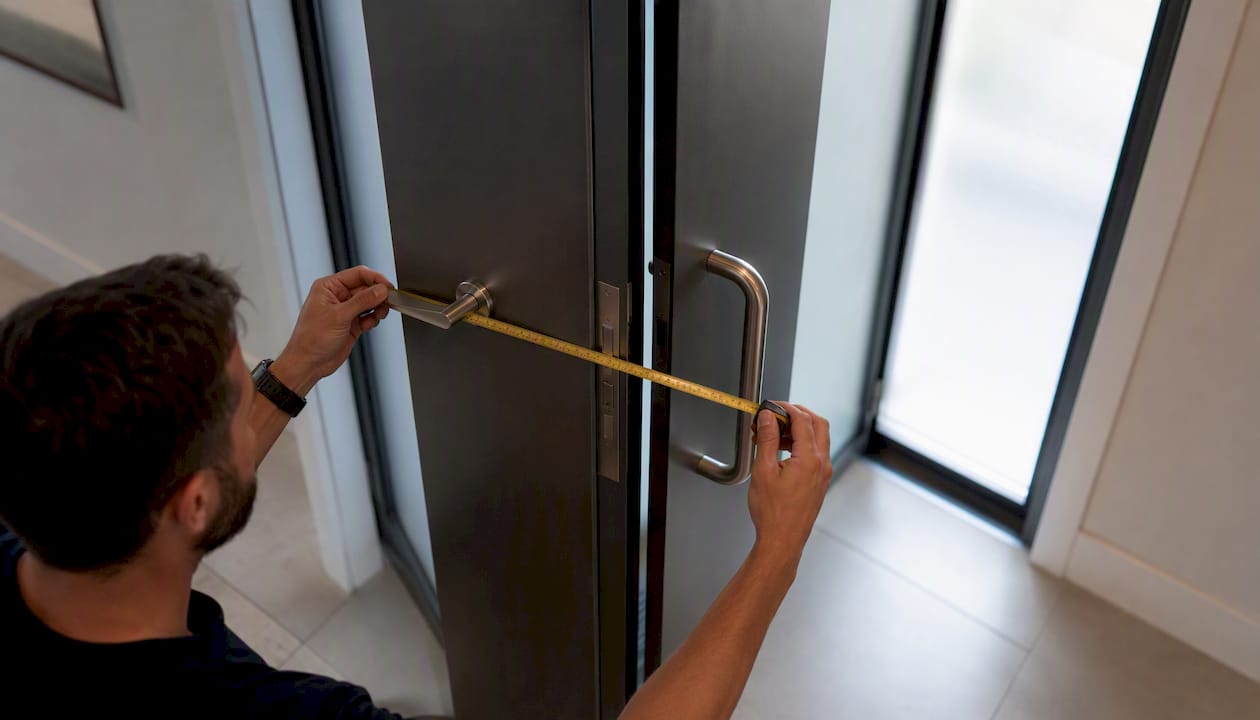
- Measure straight out to the furthest projecting point of the handle, whether that's a lever tip, knob edge, or pull bar.
- Record the figure in both millimetres and inches.
- Note which face of the door you measured from, since some handles differ between the two sides.
If the handle is already fixed and you can't get a straight line with a tape measure, a digital calliper set to its widest jaw span often gives a cleaner reading than trying to eyeball a ruler at an angle. Where access is genuinely limited, take a photo with the tape measure held in frame. It's a far more reliable record than trying to remember a number later.
Pro Tip: Measure from both faces of the door if the handles differ, especially on entrance doors where one side often carries a lever and the other a pull handle. Two projection figures, not one, is normal on split-function doors.
Checking clearance before you order a replacement handle
A handle that looks perfect on a product page can still fail on your door if you skip the checks below. Run through this before you commit to an order:
- Confirm the swing arc clears any adjacent wall, frame, or glass sidelight.
- Check the reveal, the gap between the door edge and whatever sits beside it, against your chosen projection.
- Verify whether you need handles for one side of the door or both.
- Check the latch or lock body doesn't interfere with your chosen backset.
- Look at door stops and trims, which can eat into clearance you assumed you had.
The most common mistakes installers and homeowners make when ordering:
- Measuring to the base or rose instead of the handle's furthest point.
- Forgetting that rose or plate thickness adds to the effective projection once fitted.
- Ignoring backset and latch position, then discovering the spindle doesn't align.
- Skipping a full swing test, so a handle that clears at rest still strikes a wall mid swing.
If you're ordering online and unsure of a fit, take three photos: the door face straight on, a side profile showing the existing handle's projection, and a wide shot showing the reveal to any adjacent wall or glass. Those three images answer almost every question a supplier needs to help you.
Accessibility and recommended projections for comfortable grip
Projection isn't purely a clearance question. It affects how comfortably someone can actually use the handle, which matters more than most spec sheets let on.
A projection of at least 2.5 inches is often recommended for lever handles to allow a comfortable one-hand grip without pinching fingers against the door face or forcing an awkward wrist angle. Anything shorter tends to force users to grip closer to the door, which is harder on the wrist over repeated use, particularly for anyone with limited hand strength or dexterity.
Quick callout: Shape matters alongside length. A lever with a rounded, D-shaped profile at that 2.5 inch projection gives a more secure grip than a slim, straight bar of the same length, because the grip zone, where your fingers actually wrap, is wider and better supported.
- Favour rounded or D-shaped lever profiles over slim bars where accessibility is a priority.
- Match projection to the weight of the door. Heavier doors need more leverage, which usually means a longer projection.
- For projects with specific accessibility requirements, check the door handle height regulations alongside projection, since height and reach work together, or consult a specialist for compliance-driven installs.
What suppliers actually get asked about projection
Most of the queries we see aren't about exotic handles. They're homeowners who've measured to the rose instead of the lever tip, or installers double checking a projection against a tight reveal before a bulk order goes out. The pattern is consistent: get the furthest point right, check the swing arc, and most fit problems disappear before they start. For anything trickier, a composite door with an unusual lock body or a patio set with non-standard centres, it's worth checking a dedicated measuring guide before you order rather than after.
Where to find handles once you know your projection
Once you've got your projection figure in hand, Windowhardwarestore gives you real-time stock visibility across lever handles, patio sets, and the gaskets and trims that affect reveal and clearance, so you're not guessing whether a size is actually available before you order.

If you're fitting a patio or French door, the Winlock patio door handle set is built for inline handle configurations and lists full projection and centre measurements upfront. For doors where reveal or seal thickness might be tightening your clearance, an E020 E gasket can restore the fit without swapping the whole door set. Stuck on an odd handle or unsure which projection matches your existing hardware? Send us photos of the door face, the handle profile, and the reveal, and our support team will help you match the right part before you order. Head to Windowhardwarestore to check stock and get started.
Frequently asked questions
What is a door handle projection in simple terms? It's the distance the handle sticks out from the flat surface of the door, measured to its furthest point rather than its base or rose.
How do I measure door handle projection at home? Open the door, hold a tape measure flush against the door face, and measure straight out to the furthest point of the handle, recording the figure in both millimetres and inches.
What is a standard door handle projection? Most standard levers project between 50mm and 100mm (2 to 4 inches), with 2.5 inches often recommended for comfortable one-hand use.
Does projection differ between knobs and levers? Yes. Knobs typically project less, around 38 to 50mm, while levers commonly run higher in the 50 to 100mm range.
Why does projection matter for door clearance? A handle that projects further than the available reveal will strike an adjacent wall, frame, or glass sidelight during its swing, so checking projection against reveal before ordering prevents fitting problems.
Sources
- Ofstandard
- How to Measure Door Handles? - DESCOO
- Custom door handle size and fitting | OEM specification support
Recommended
- Door Handle Centres Explained: 92mm, 122mm, and 240mm | Window Hardware Store | Window Hardware Store
- How to Measure a Window Handle for Replacement | Window Hardware Store | Window Hardware Store
- Window Handles for Double Glazed Windows: What to Measure First | Window Hardware Store | Window Hardware Store
- How to Measure for Replacement Window Handles (Without Guesswork) | Window Hardware Store | Window Hardware Store