
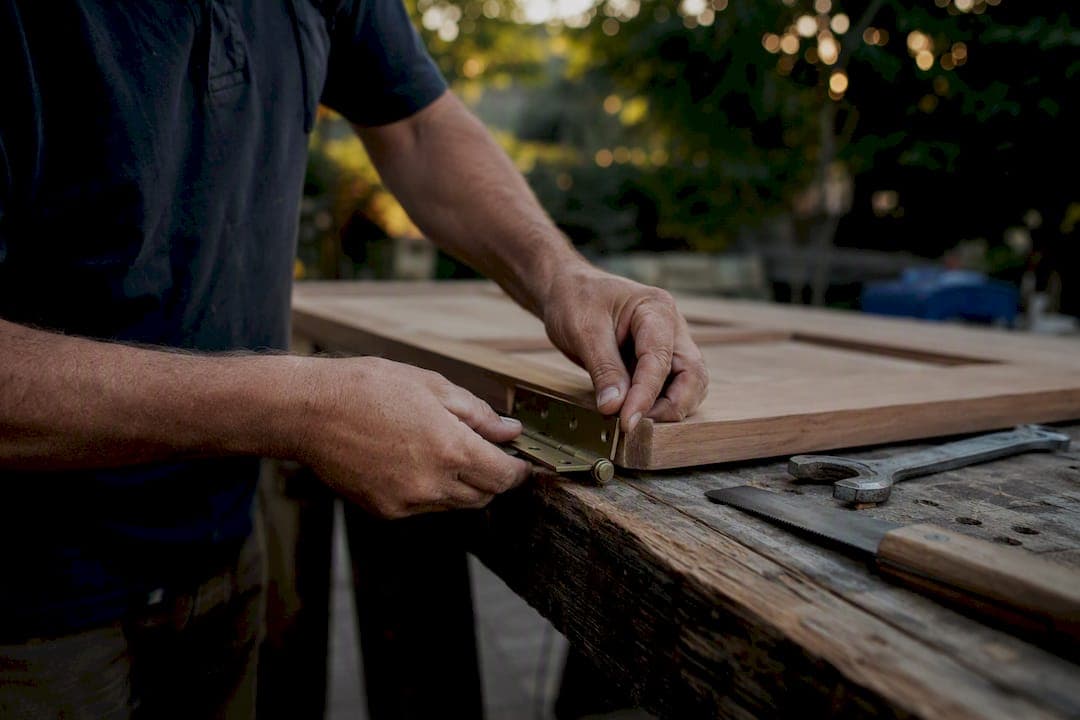
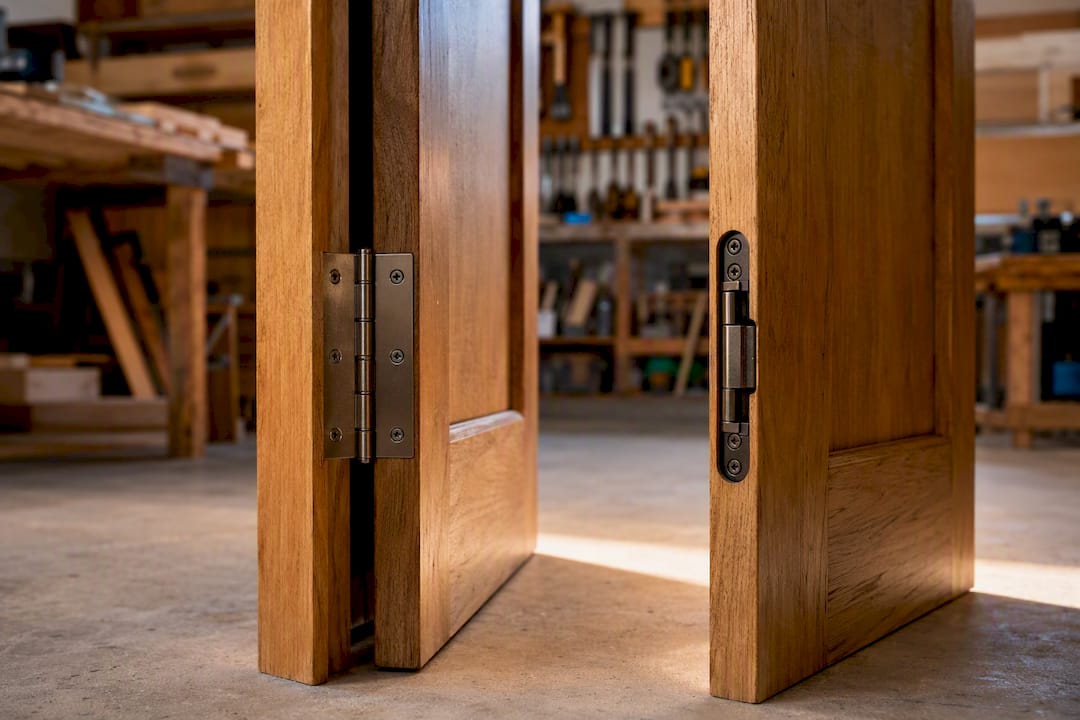
A butt hinge is two matching metal leaves joined by a central pin and knuckle, mortised into the door and frame so the leaves sit flush and only the barrel shows when the door's closed. It's the standard hinge for most swinging doors, from a bedroom door to a heavy front entrance, and it works because the mortised fit spreads the door's weight across a solid joint rather than relying on screws alone.
You'll find butt hinges holding up:
- Internal and external doors in almost every home
- Cabinet doors and cupboards
- Trunks, gates and some casement windows
If you're here to buy a replacement or fit a new one, jump to the sizing and installation sections below. If you just want to understand what you're looking at, read on.
Key Takeaways
A butt hinge works reliably only when its bearing type matches the door's weight and frequency of use, and its leaves are properly mortised rather than surface fixed.
| Point | Details |
|---|---|
| Definition | A butt hinge is two leaves joined by a central pin, mortised flush into door and frame. |
| Bearing choice | Plain bearings suit light interior doors; ball-bearing suits heavy or high-frequency doors. |
| Hinge count | Most doors use three hinges; taller or heavier doors often need four for even load distribution. |
| Measure before buying | Check leaf height, width, thickness and screw pattern against the existing mortise. |
| Security on external doors | Specify non-removable pins to stop the door being lifted off from outside. |
Table of Contents
- Butt hinge anatomy: leaves, knuckle and pin explained
- Types of hinges: plain, ball-bearing, washered, spring and security variants
- Where butt hinges work best, and where another type is smarter
- How to measure a butt hinge before you buy a replacement
- Installing a butt hinge: mortising, fixing and getting the alignment right
- A quick checklist for choosing the right butt hinge
- Trade tips from Window Hardware Store on getting hinges right first time
- What actually matters when choosing a butt hinge
- Frequently asked questions
- Sources
Butt hinge anatomy: leaves, knuckle and pin explained
Every butt hinge has three core parts. The leaves are the flat metal plates, one screwed to the door, one to the frame. The knuckle (sometimes called the barrel) is the cylindrical section where both leaves interlock. Running through the middle is the pin, which lets the door swing.
Screw holes are positioned in a set pattern on each leaf, usually matching standard spacings so replacement hinges from other manufacturers still line up.
- Leaves: flat plates that carry the screw holes and attach to door and frame
- Knuckle/barrel: the joined cylindrical sections that house the pin
- Pin: the rod through the knuckle that allows rotation
- Screw pattern: hole spacing and countersink style, which determines whether a new hinge will fit an old mortise without modification
Pins can be fixed (peened in place, harder to remove) or removable (lift out to separate the door from the frame without unscrewing anything). Removable pins are handy for rehanging doors during decorating, but they're a weak point on external doors unless paired with a security feature, which we'll cover shortly.
Pro Tip: Before ordering a replacement, measure the existing leaf thickness and screw spacing rather than just the overall length. A hinge that's the right height but the wrong thickness will still bind.
Types of hinges: plain, ball-bearing, washered, spring and security variants
Not every butt hinge is built the same, and the bearing type inside the knuckle matters more than most buyers realise. Plain-bearing hinges suit light-duty interior doors where the door is opened occasionally and doesn't weigh much. Ball-bearing and washered hinges are recommended for heavier or higher-frequency doors because the bearing reduces friction between the knuckle sections and extends the hinge's working life.
- Plain bearing: budget-friendly, fine for lightweight cupboard or bedroom doors
- Ball-bearing: smoother action, longer life, the usual choice for front doors and communal doors that see constant use
- Washered: a middle ground, adding a friction-reducing washer without the full ball-bearing mechanism
- Spring butt hinges: built to self-close, common on fire doors and back doors that need to shut automatically
- Security hinges: feature non-removable pins so the door can't be lifted off from outside, essential for external doors
Finish matters as much as bearing type. Stainless steel and powder-coated finishes resist corrosion on exterior doors, while plain steel or brass suits dry interior use. Mixing the wrong finish with an exposed frame is a common reason hinges seize within a couple of winters.
Where butt hinges work best, and where another type is smarter
Butt hinges dominate residential doors for good reason: mortising the leaves into door and frame creates a strong, stable connection that handles repeated opening and closing without the door sagging over time. You'll see them on:
- Internal doors, external doors, and most cabinet doors
- Garden gates and outbuildings
- Trunks and chest lids, where a lighter-duty version does the job
They're not always the right pick, though. Concealed hinges suit fitted furniture where you want no visible hardware. Piano hinges (a continuous hinge running the full length of a joint) work better on long lids or narrow cupboard doors that need support along their whole edge. Friction hinges, not butt hinges, are the norm on casement windows, since they need to hold the sash open at an angle rather than simply swing.
The deciding factors are duty and frequency: a butt hinge handles a swinging door well, but a continuously supported edge or a hold-open window sash needs different hardware entirely.
How to measure a butt hinge before you buy a replacement
Getting the measurements right the first time saves a return trip to the shop and stops you gouging a mortise that doesn't fit. Measure these five things:
- Leaf height: the length of one leaf, typically 75mm, 100mm or 102mm for domestic doors
- Leaf width: the width when the hinge is open flat
- Knuckle length: the height of the barrel, which affects how the pin sits and how much weight the hinge can carry
- Leaf thickness: often overlooked, but critical for the mortise to sit flush
- Screw hole positions: spacing and countersink angle, so existing holes line up with a new hinge
Measure in situ with the door still on its hinges where possible, and take a photo of the existing hinge next to a tape measure or a hinge template for reference when you're ordering online. Our guide on replacing old butt hinges and finding the right size walks through the process step by step.
The most common replacement mistakes are ordering the wrong leaf thickness (leaving the hinge sitting proud or too deep in the mortise) and cutting a mortise too shallow, which forces the door out of alignment with the frame and causes it to bind on the latch side.
Pro Tip: If you can't find an exact match for an older hinge, a slightly thicker leaf can sometimes be planed into the mortise. A thinner leaf, though, means you're refitting the mortise entirely, so always round up on thickness rather than down.
Installing a butt hinge: mortising, fixing and getting the alignment right
Mortising means cutting a recess into the door edge and frame so the hinge leaf sits flush rather than sitting on the surface. It's not just about looks. Mortising distributes the door's load across the mortise walls and screw threads rather than leaving the screws to take the full strain, which is why surface-mounted hinges are more prone to screw pull-out on heavier doors over time.
The standard sequence for fitting a butt hinge:
- Mark the hinge position on the door edge, usually with the top hinge around 150 to 200mm from the top and the bottom hinge a similar distance from the bottom
- Score the outline of the leaf with a marking knife, then chisel or router out the mortise to match the leaf thickness exactly
- Test-fit the leaf so it sits flush with the door edge, adjusting depth if it's proud or recessed
- Repeat the mortise on the frame side, then offer the door up and align both leaves
- Insert the pin, check the door swings freely without binding, then drive the screws home
- Check the gap around the door on all sides and adjust the hinge position slightly if the door catches
Most residential doors use three hinges, spaced top, middle and bottom, which distributes weight evenly and stops the door twisting. Taller or heavier doors, including many external and fire-rated doors, often need four hinges to keep the frame from sagging over years of use. Our guide on how many butt hinges you need per door breaks this down by door weight and height.
Use screws long enough to bite into solid timber behind the frame liner, not just the facing board, and if a door drops slightly after fitting, a small shim behind one leaf usually corrects it without re-cutting the mortise. For technique on cutting a clean mortise by hand or with a router, see our piece on how to mortise for butt hinges.
A quick checklist for choosing the right butt hinge
Most hinge problems trace back to one thing: someone bought by habit instead of by duty, frequency and environment. Before you order, run through this:
- Door weight: heavier doors need ball-bearing hinges, not plain bearings, to avoid premature wear
- Frequency of use: a door opened dozens of times a day (a communal entrance, a busy internal door) justifies the extra cost of ball-bearing over plain
- Environment: external doors need corrosion-resistant finishes; stainless or powder-coated hinges outlast plain steel outdoors
- Security: external doors should specify non-removable pins, which stop the door being lifted off from outside
- Fire compliance: fire doors need certified hinges rated for the door's fire resistance, not a standard domestic hinge; see our notes on fire door hinge compliance if you're unsure
If you're fitting a front door, a fire door, or anything load-bearing and safety-critical, it's worth getting trade advice before you commit to a hinge spec rather than guessing.
Trade tips from Window Hardware Store on getting hinges right first time
We hear the same mistakes on repeat calls: someone's fitted a surface-mounted hinge on a heavy door and the screws have started pulling out, or they've ordered a replacement without checking leaf thickness and it binds against the old mortise. Mortising properly, even an extra millimetre of depth, makes a real difference to how long a hinge lasts under load.
Before ordering a replacement, always measure leaf thickness and screw pattern against the existing mortise, not just the overall hinge length. On tall or heavy doors, don't assume three hinges are enough. Adding a fourth spreads the load and keeps the door from dropping at the latch side over time.
Sourcing matters too. Trade jobs stall when the exact fitting isn't in stock, which is why having real-time visibility on hinge sizes and bearing types speeds up repairs rather than leaving a door propped open for a week.
What actually matters when choosing a butt hinge
Most guidance on hinges focuses on the wrong variable. People fixate on finish and price, when the decision that actually prevents callbacks is bearing type matched to frequency of use. A cheap plain-bearing hinge on a front door that gets used forty times a day will wear out fast, no matter how good the finish looks.
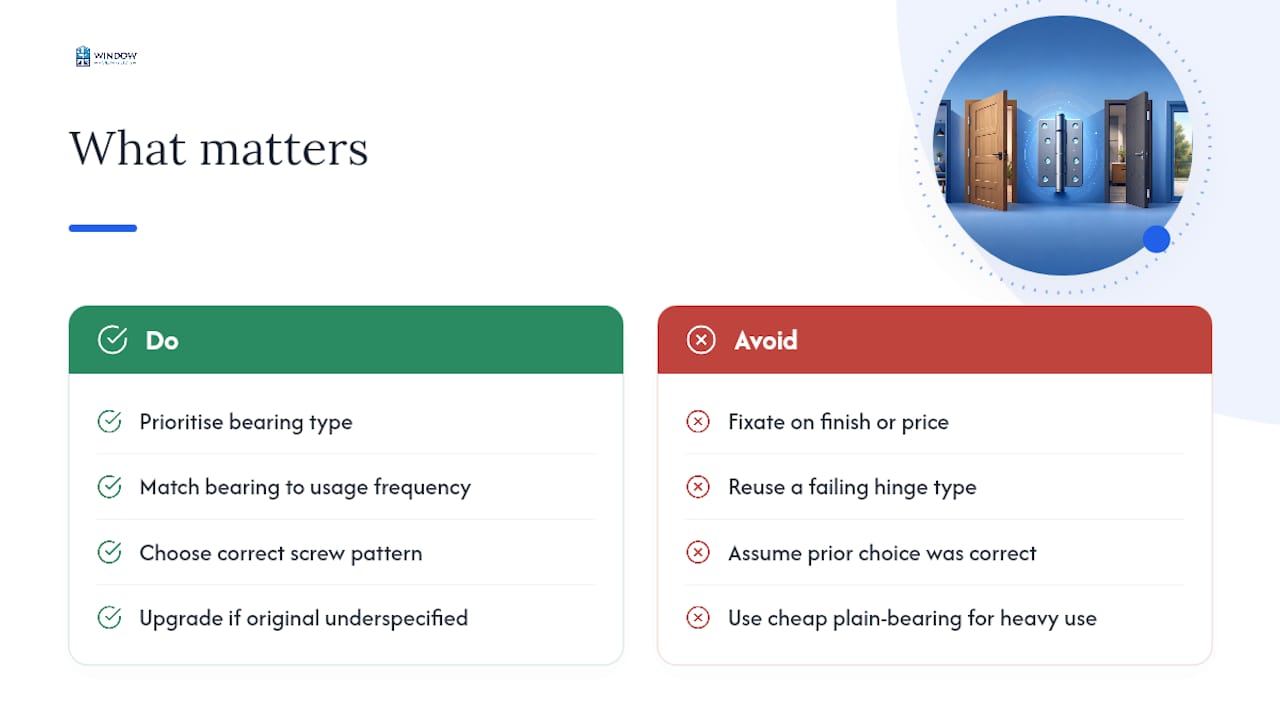
The conventional advice, buy hinges that match what was already there, only works if what was already there was correct in the first place. It often wasn't. Plenty of doors get refitted with the same underspecified hinge that failed the first time, because nobody stopped to ask whether the door's weight or usage justified an upgrade.
If you take one thing from this, prioritise bearing type and screw pattern over everything else. Get those two right, and the hinge will outlast the door's other hardware. Get them wrong, and you'll be back here within a year.
Frequently asked questions
What is a butt hinge used for? A butt hinge is used wherever a door or lid needs to swing on a fixed edge, most commonly internal and external doors, cabinet doors, and gates. The mortised fit gives it enough strength for repeated daily use.
How does a butt hinge work? Two leaves, one fixed to the door and one to the frame, interlock at the knuckle around a central pin. The pin allows the leaves to rotate against each other, letting the door swing open and closed.
What's the difference between a butt hinge and other hinge types? A butt hinge is mortised so the leaves sit flush, unlike surface-mounted hinges that sit on top of the door edge. Compared with concealed hinges (hidden inside furniture) or piano hinges (a continuous strip along a whole edge), a butt hinge is the standard choice for a single swinging door.
How many butt hinges does a door need? Most residential doors use three hinges, spaced top, middle and bottom. Taller, heavier, or fire-rated doors often need four to prevent sagging and keep the door aligned.
Can I replace a butt hinge with a different bearing type? Yes, provided the leaf dimensions and screw pattern match the existing mortise. Upgrading from plain bearing to ball-bearing on a heavily used door is a common and worthwhile improvement.
Do butt hinges need a mortise, or can they be surface mounted? They work best mortised, since this spreads the door's load across the mortise walls rather than relying on the screws alone. Surface mounting is possible but increases the risk of screw pull-out on heavier doors.
If you're sourcing replacement hinges, gaskets, or other door and window hardware for a repair job, Window Hardware Store stocks a full range of butt hinges alongside handles, gaskets and locking mechanisms, with trade pricing open to everyone and real-time stock visibility so you're not guessing what's actually available.
Sources
- A guide to butt hinges | Essentra Components UK
- Butt Hinges 101: Types, Sizing, Installation & Uses - SHIONP
- What Is a Butt Hinge? The Basics of Butt Hinges and How They Work - Monroe Engineering
- Butt Hinge Guide: Door Types, Problems, and Replacement | Jaspector
Recommended
- How Many Butt Hinges Per Door? Guidelines for UK Doors | Window Hardware Store | Window Hardware Store
- Replacing Old Butt Hinges: Finding the Right Size | Window Hardware Store | Window Hardware Store
- Fire Door Butt Hinges: Compliance Requirements | Window Hardware Store | Window Hardware Store
- How to Mortise for Butt Hinges: Carpentry Tips | Window Hardware Store | Window Hardware Store