
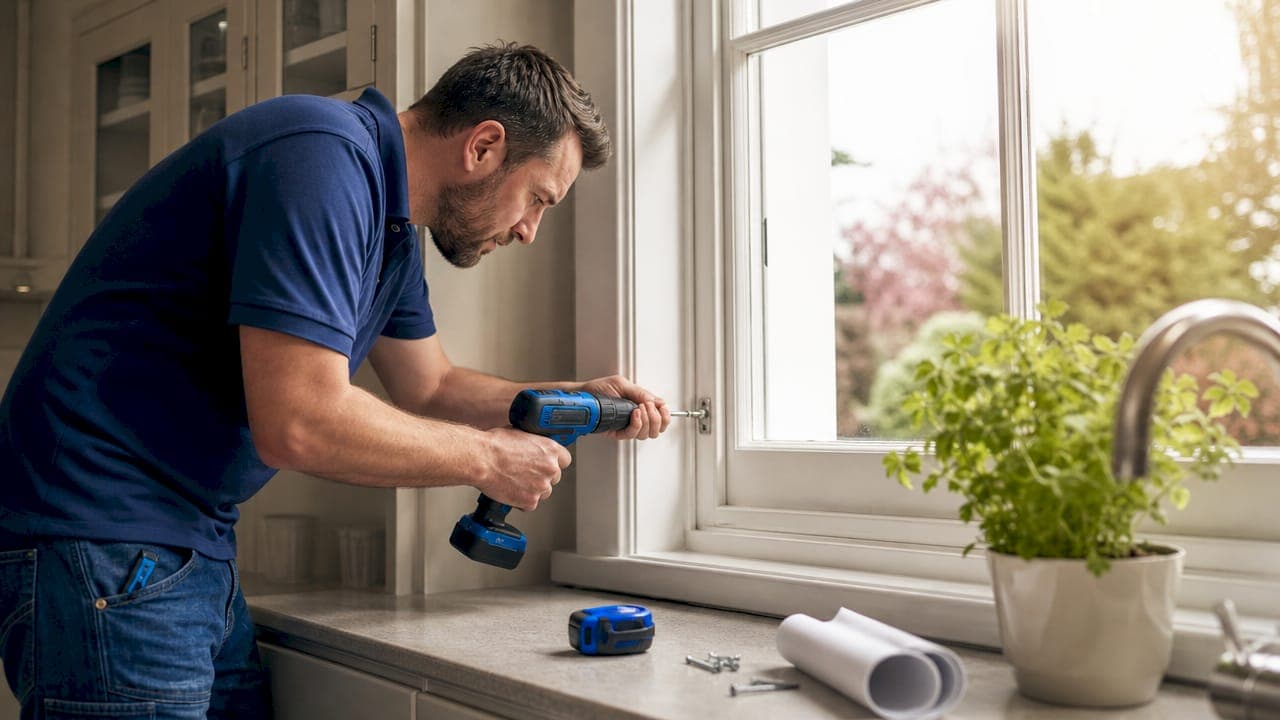
A window keep is defined as the fixed receiver plate that accepts and holds the locking bolt or latch of a window, securing the frame in a closed or partially open position. Without a correctly fitted keep, the locking mechanism has nothing to engage with, leaving the window unsecured regardless of how good the handle or lock is. Understanding what a window keep does is the foundation of any competent window installation or repair job. The keep is small, often overlooked, yet it determines whether your locking system actually works.
What does a window keep do in a locking system?
A window keep acts as the receiver for the window lock's bolt, holding it firmly in place to secure the window closed. When you turn a window handle or engage a locking mechanism, the bolt or latch shoots out from the frame and seats itself inside the keep. The keep then holds that bolt under tension, preventing the window from being pushed open. Remove or damage the keep, and the bolt simply has nothing to grip.
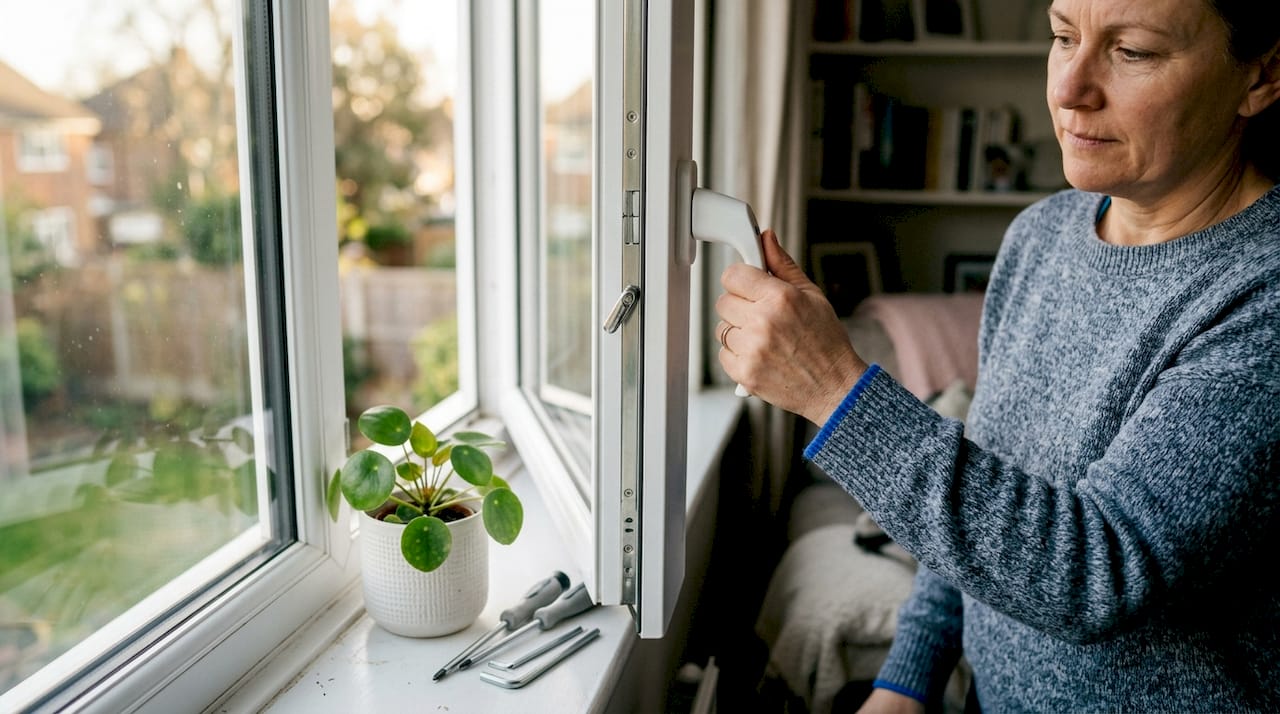
The physical design of a keep matters as much as its presence. Most keeps feature a recessed pocket or channel machined to match the profile of the bolt it receives. This tight fit is what stops lateral movement in the frame. A loose or misaligned keep reduces locking effectiveness and undermines confidence in the whole window assembly, which is why professional installers treat keep alignment as a non-negotiable step.
Common locking types that interface with keeps include espagnolette bolts, shootbolts, and hook bolts. Each requires a keep profile matched to its bolt shape. Using the wrong keep profile means the bolt either fails to seat fully or rattles inside the pocket, both of which compromise security.
- Espagnolette keeps accept the flat or mushroom-headed bolts found on most uPVC casement windows.
- Shootbolt keeps are elongated to receive the narrow rod bolt used on taller windows and doors.
- Hook bolt keeps have a curved recess designed to catch and hold the hooked bolt under tension.
- Latch keeps are shallower plates used with spring latches on lighter window styles.
Pro Tip: Before ordering a replacement keep, photograph the existing bolt in its locked position. The bolt profile tells you exactly which keep pocket shape you need, saving a wasted trip or return delivery.
What are the different types of window keeps?
Window keeps divide into several distinct categories, each suited to a specific window style, material, or security requirement. Choosing the wrong type causes poor bolt engagement, frame misalignment, or outright lock failure.
The table below covers the most common types, their typical materials, and where each one is used.
| Keep type | Typical material | Common application |
|---|---|---|
| Night vent keep | Steel, uPVC | Allows partial lock in a vented position; common on casement windows |
| Strike keep | Steel, aluminium | Standard closed-position receiver for espagnolette bolts on uPVC frames |
| Casement keep | Steel, zinc alloy | Side-hung timber or uPVC casement windows with hook or flat bolts |
| Shootbolt keep | Steel | Tall windows and French doors using top and bottom shootbolts |
| Ventilation restrictor keep | Steel | Child safety applications; limits opening distance while maintaining a locked position |
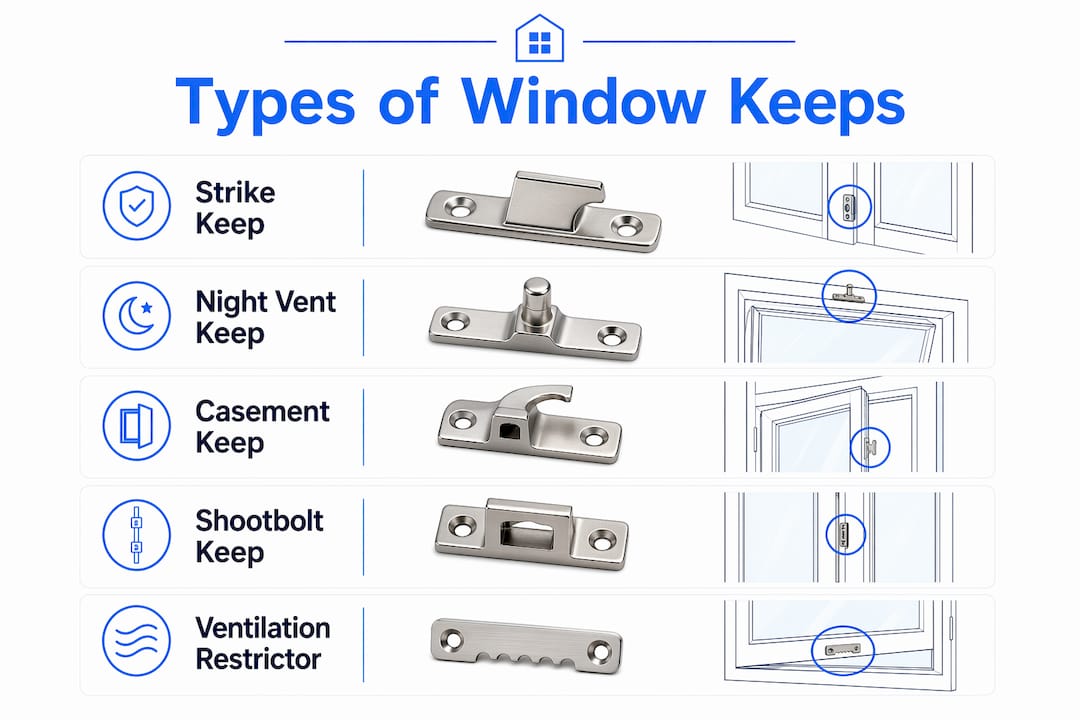
Night vent keeps allow a window to lock in a partially open position, which is particularly useful for bedrooms and kitchens where airflow is needed without sacrificing security. This dual-position function is one of the more underappreciated features of modern window hardware.
Material choice follows frame type. Steel keeps provide strength and security in timber windows, while uPVC keeps match plastic frames and avoid galvanic corrosion between dissimilar metals. Aluminium keeps sit between the two, offering a lighter option where weight matters but steel would be excessive. Matching the keep material to the frame type is not cosmetic; it prevents long-term corrosion that loosens fixings and degrades the seal.
Casement window keeps are the most frequently replaced type in the UK trade. Timber casements expand and contract with seasonal moisture changes, which gradually shifts the bolt alignment and causes the keep to wear unevenly. Professionals working on older properties should inspect casement keeps annually for this reason.
How to identify problems with window keeps and maintain them
A failing window keep shows clear signs before it causes a full security breach. Catching these early saves both money and risk.
- Check for loose fixings. Grip the window handle and apply lateral pressure to the closed frame. Any movement suggests the keep screws have worked loose or the fixing holes have stripped.
- Inspect the bolt pocket. Open the window and examine the keep recess. Wear marks, deformation, or a cracked pocket wall indicate the keep is no longer holding the bolt correctly.
- Test the locking action. Lock the window and note any resistance or grinding. A stiff or grinding lock often means the keep has shifted out of alignment with the bolt path.
- Look for corrosion. Surface rust on steel keeps or yellowing on uPVC keeps signals material degradation. Corroded keeps lose dimensional accuracy and can seize around the bolt.
- Check the frame around the keep. Cracks or splits in the frame material near the keep fixings suggest the frame itself is failing, not just the keep.
Routine inspection of window keeps is frequently overlooked, yet it is one of the most cost-effective maintenance steps available. Keep components degrade over time, causing loose fits or windows that stick on locking. Periodic cleaning removes grit that accelerates wear, and lubrication keeps the bolt seating smoothly.
The best maintenance practice is to inspect keeps annually, applying a specialised window hardware lubricant to avoid metal corrosion and plastic degradation. Never use WD-40 as a long-term lubricant on window keeps; it displaces moisture short-term but leaves no protective film and attracts dust.
Replacing a damaged keep restores security and window function, and the replacement must use compatible parts. Universal keeps often require minor adjustment or custom fitting due to differences in frame thickness and lock types, so always verify the bolt projection depth and pocket width before purchasing.
Pro Tip: When replacing a keep on a uPVC window, check whether the original was surface-mounted or rebate-mounted. Fitting a surface keep where a rebate keep is required leaves a gap that prevents the bolt from seating fully, which is a common cause of failed window locks after DIY repairs.
Why are window keeps crucial for security and safety?
A window keep is the last physical barrier between a locked window and a forced entry. Keeps lock windows securely in both fully closed and vented positions, stopping intruders and preventing accidental falls. The handle and lock mechanism generate the locking force, but the keep is what that force acts against. A compromised keep makes the entire locking system redundant.
The security contribution of a keep goes beyond resisting forced entry. Keeps also:
- Prevent accidental openings. A correctly seated bolt in a well-fitted keep resists wind pressure and accidental knocks that could push a window open.
- Support child safety. Ventilation keeps limit how far a window opens, reducing fall risks in homes with young children without blocking airflow entirely.
- Maintain frame integrity. A tight bolt-to-keep engagement stops the frame from racking under wind load, which protects the seal and extends the life of the glazing unit.
- Enable multi-point locking. Modern uPVC windows use multiple keeps along the frame perimeter, each receiving a separate bolt point. This multi-point system distributes locking force and makes forced entry significantly harder.
Incorrect keep installation leads to a poor window seal and compromised security. Small misalignments in keeps reduce locking effectiveness and erode confidence in the whole window system. This is why building regulations and window installation standards in the UK require keeps to be fitted to manufacturer specifications, with correct fixings and alignment verified before handover.
Key takeaways
A window keep is the single component that determines whether a window lock actually secures the frame, making correct selection, fitting, and maintenance non-negotiable for both security and safety.
| Point | Details |
|---|---|
| Core function | The keep receives the locking bolt and holds it firmly, securing the window closed. |
| Type selection | Match the keep type to the bolt profile and window style: casement, night vent, shootbolt, or restrictor. |
| Material compatibility | Use steel for timber frames, uPVC keeps for plastic frames, to prevent corrosion and maintain fit. |
| Annual maintenance | Inspect keeps yearly, clean the bolt pocket, and apply a specialised window hardware lubricant. |
| Replacement accuracy | Verify bolt projection depth and pocket width before replacing; universal keeps often need adjustment. |
The detail most installers get wrong
I have seen hundreds of window installations where the lock, handle, and glazing were all specified correctly, yet the window failed its security check because of the keep. Not a missing keep. A misaligned one. Shifted by two millimetres during frame fitting, the bolt would seat at an angle, and the window would appear locked while the bolt was only partially engaged.
The industry treats keeps as a commodity, and that is the problem. Professionals order them in bulk, fit them quickly, and move on. What I have found actually works is treating keep alignment as its own sign-off step, separate from the lock and handle check. Lock the window, apply firm lateral pressure to the frame, and confirm zero movement before you leave the job. That thirty-second test catches the majority of fitting errors.
For homeowners carrying out their own repairs, the single most valuable thing you can do is match the replacement keep to the original bolt profile rather than buying the cheapest available option. A keep that costs slightly more but fits correctly will outlast three cheap ones that never quite seat the bolt properly. Quality keeps from a trade-focused supplier make that difference every time.
— Samuel
Window keeps and hardware at Windowhardwarestore
Windowhardwarestore stocks a full range of window keeps, locking hardware, and complementary components for both trade professionals and homeowners carrying out their own repairs.
Whether you need a standard strike keep for a uPVC casement, a concealed ventilation restrictor for child safety, or sealing gaskets to complete an installation, the range covers the full scope of window hardware needs. Real-time stock visibility means you can confirm availability before ordering, and nationwide delivery gets components to site without delay. Browse the full window hardware range to find the right keep for your frame type, bolt profile, and security requirement.
FAQ
What is a window keep?
A window keep is a fixed receiver plate fitted to a window frame that accepts and holds the locking bolt or latch, securing the window in a closed or vented position.
How does a window keep work?
When the window handle is turned or the lock engaged, the bolt extends from the sash and seats inside the keep's recessed pocket. The keep holds the bolt under tension, preventing the frame from opening.
What are the main types of window keeps?
The main types are strike keeps, night vent keeps, casement keeps, shootbolt keeps, and ventilation restrictor keeps. Each is designed for a specific bolt profile and window style.
How do I know if my window keep needs replacing?
Signs include loose fixings, visible wear or cracking in the bolt pocket, grinding during locking, surface corrosion, or any lateral movement in the frame when the window is locked.
Can I use a universal keep on any window?
Universal keeps often require minor adjustment due to differences in frame thickness and lock types. Always verify the bolt projection depth and pocket width match before fitting to confirm proper bolt engagement.
Recommended
- Casement Window Stays: Keeping Your Windows Open Safely | Window Hardware Store | Window Hardware Store
- Replacing Window Handles: Locking vs Non-Locking Options | Window Hardware Store | Window Hardware Store
- Universal Window Handles: Do They Actually Fit Most Windows | Window Hardware Store | Window Hardware Store