
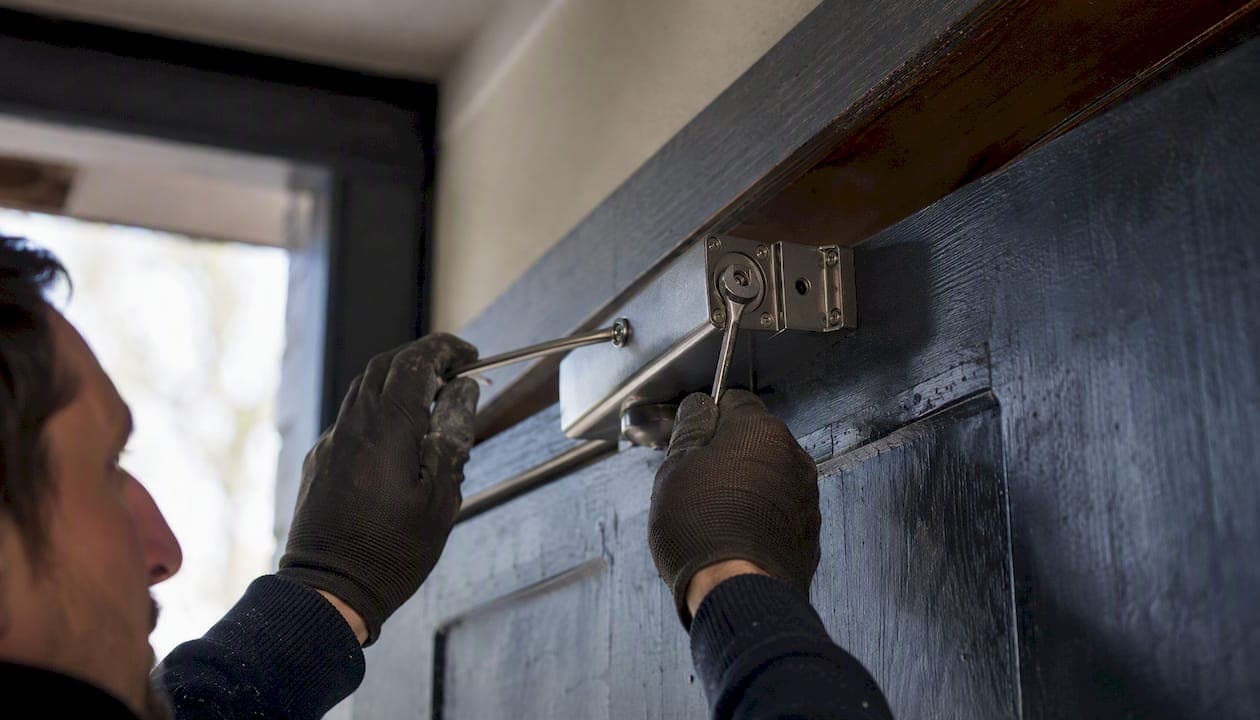
Match the closer to the traffic band first. That single rule prevents more call-backs than any other decision on site. For selecting door closers by traffic, the process runs in three quick steps: estimate daily cycles, measure door width, and check whether the opening is fire rated or exposed to wind. Those three data points tell you the EN size, the closer family, and the features you need before you open the van.
- Low traffic: a standard surface closer, EN 2–3, suits most internal office or residential doors.
- Medium traffic: step up to EN 3–4 with backcheck; Grade 1 is worth specifying here.
- High traffic: Grade 1 surface or overhead closer, EN 4–5, with full valve set.
- Very high traffic: cast-iron or heavy-duty Grade 1, EN 5–6, floor spring or concealed for prestige entrances.
ASSA ABLOY's selection guidance makes the point plainly: every door is different, and relying on what worked last time is the most common specification error on site.
Key takeaways
Selecting door closers by traffic band, then refining by door width, fire rating, and environment, is the single most reliable method for avoiding premature failure and call-backs.
| Point | Details |
|---|---|
| Start with the traffic band | Estimate daily cycles on site and default to the higher band when the count sits near a boundary. |
| EN size follows door width and environment | Step up one EN size for wind-exposed, stack-effect, or oversized doors beyond the mid-point of their nominal range. |
| Grade 1 for anything above low traffic | Grade 1 cycle life suits schools, hospitals, and retail; Grade 2 is for light commercial use only. |
| Fire doors need listed closers | EN 1154 compliance and manufacturer-listed mounting are mandatory; hold-opens must be alarm-released. |
| Windowhardwarestore for trade supply | Real-time stock, Grade 1 options, mounting kits, and UK-wide delivery support every traffic band. |
Table of Contents
- How do traffic levels translate into closer specifications?
- What should you check on site before specifying a closer?
- How do you match closer type and EN size to traffic and door width?
- What are the UK rules for closers on fire doors?
- Which installation details prevent the most common failures?
- How often should you service closers by traffic band?
- What do you specify differently for challenging environments?
- Windowhardwarestore stocks the closer range UK installers rely on
- An installer's perspective on getting this right
- The practical choice for UK trade installers
- Sources
How do traffic levels translate into closer specifications?
Traffic bands give you a measurable starting point rather than a gut feeling. The table below maps cycles to real environments so you can cross-reference what you observe on site.
| Traffic band | Typical environment |
|---|---|
| Low | Private office, back-of-house store room |
| Medium | Small retail, GP surgery waiting room |
| High | School corridor, busy pub, supermarket aisle |
| Very high | Airport gate, hospital A&E, transport hub |
If you cannot count cycles directly, sample the door for 15 minutes at peak time and multiply up. When the result sits near a band boundary, always default to the higher band. A closer slightly over-specified costs little extra; one that is under-specified fails early and generates a call-back.
US Made Supply's door closer selection guide confirms that Grade 1 is the commercial baseline for cycle life, Grade 2 suits light commercial use, and Grade 3 is not appropriate for commercial openings. Specify Grade 1 for anything above low traffic.
What should you check on site before specifying a closer?
Record these before you open a catalogue. ASSA ABLOY's guidance stresses that environmental factors can render a correctly sized closer ineffective if they are ignored at the assessment stage.
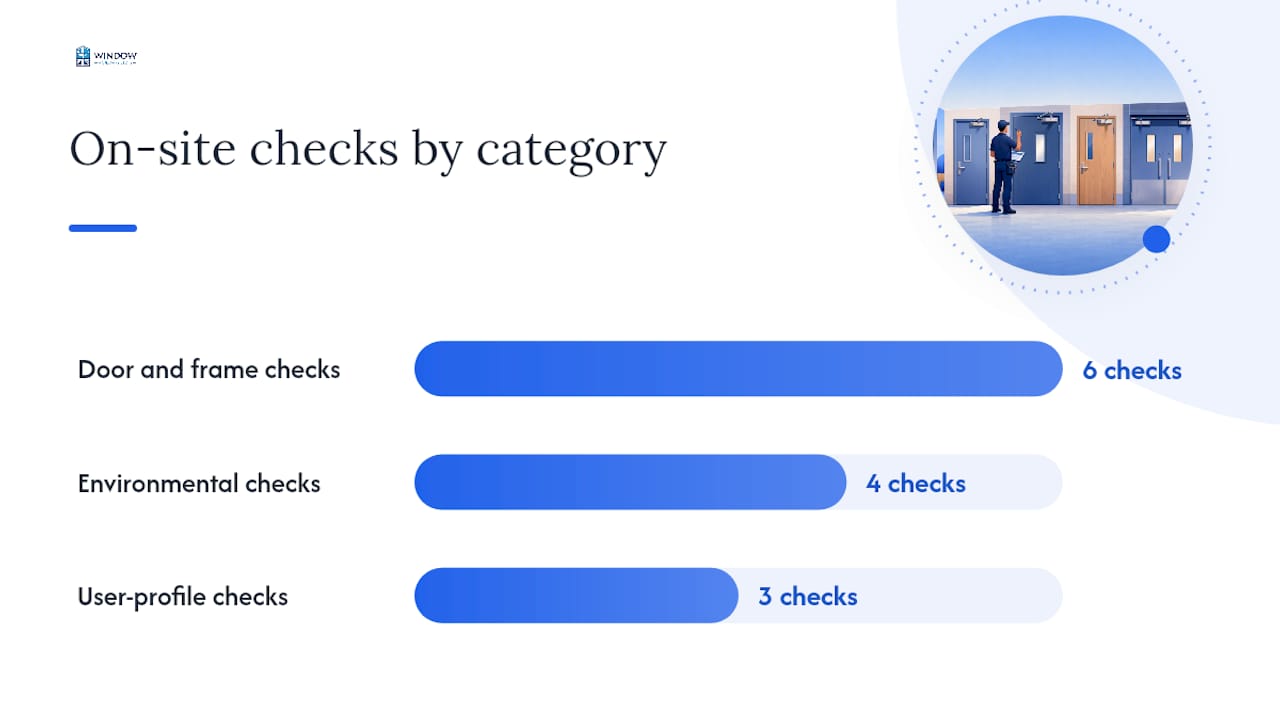
Door and frame checks:
- Door width and estimated weight (weigh with a luggage scale if unsure)
- Hinge side and swing direction
- Frame material and depth (affects mounting plate choice)
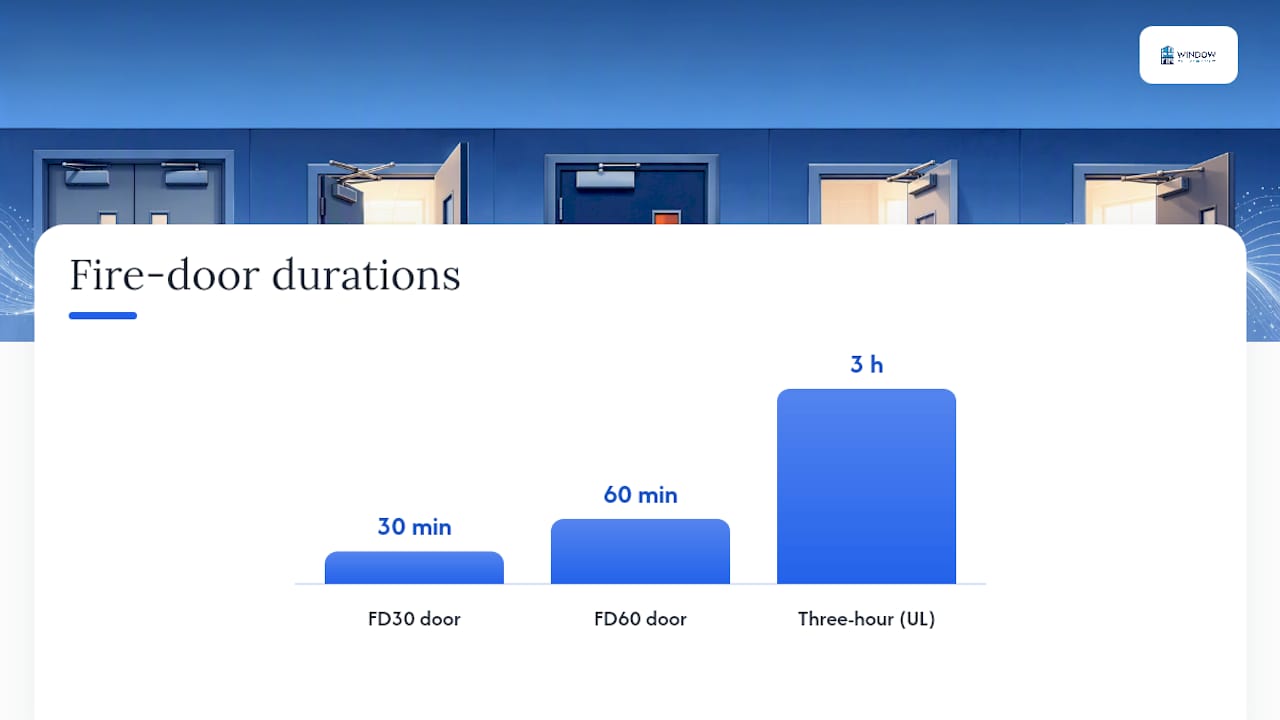
- Fire label: FD30, FD60, or none
- Glazing area (increases effective wind load)
- Threshold or step (affects floor-spring suitability)
Environmental checks:
- Wind exposure: external or semi-external position
- Stack effect: stairwells and tall buildings create significant pressure differentials
- Vestibule or airlock: single-door versus double-door lobby changes the wind load calculation
- Draughts from HVAC or door sealing condition
User-profile checks:
- Likely users: children, elderly residents, wheelchair users, trolley traffic
- Required maximum opening force (Approved Document M sets 20 N for internal fire doors on accessible routes)
- Whether a low-energy or automatic operator is needed instead of a manual closer
Pro Tip: Use a simple opening-force gauge after installation to verify the set force. Record the reading alongside your valve settings. It takes two minutes and gives you a defensible baseline if the door is queried later.
How do you match closer type and EN size to traffic and door width?
The ANSI/BHMA sizing scale runs from 1 (lightest) to 6 (heaviest); EN 1154 uses a similar 1–7 range. The two systems are not identical, but the principle is the same: wider and heavier doors need a higher size number, and higher traffic demands a higher-grade body.
Step up one EN size when the door faces wind load, a stack-effect stairwell, or is wider than the mid-point of its nominal range. A 900 mm door in a stairwell behaves more like a 1,050 mm door in a sheltered corridor.
Grade 1 cast-iron closers with UL listings are available with multiple arm options to suit most mounting patterns, including parallel arm, standard arm, and track arm. Parallel arm is the preferred choice where the door is regularly wedged open by staff, because it reduces leverage abuse on the body. For prestige glazed entrances, a concealed floor spring removes the overhead body entirely and suits heavy glass panels.
For accessible routes, increasing closer power to overcome wind load can breach the 20 N opening-force limit. In those cases, specify a delayed-action closer or replace the manual closer with a low-energy operator rather than stepping up the spring size.
What are the UK rules for closers on fire doors?
Fire doors in the UK must be fitted with a self-closing device that is EN 1154 compliant and listed in the door's fire-test evidence. The closer must be installed following the manufacturer's listed mounting pattern; deviating from it can invalidate the fire rating.
Key rules for installers:
- FD30 and FD60 doors require a closer that is part of the tested door assembly or is listed as compatible by the door manufacturer.
- Hold-open devices are only permitted on fire doors if they are automatic and alarm-released (free-swing electromagnets or acoustic hold-opens). Mechanical wedges and manual props are not compliant.
- Approved Document M requires a maximum opening force of 20 N on internal fire doors on accessible routes. If the closer cannot be detuned to that level without losing reliable latching, a low-energy operator is the correct solution.
- After installation, test the door through its full cycle and record the result. Check the fire label is still intact and undamaged.
Grade 1 closers with UL listings for three-hour fire doors confirm that the cycle-life and fire-rating requirements can be met in a single product. Specify UL-listed or BM TRADA Q-marked closers where the project requires third-party certification evidence.
Which installation details prevent the most common failures?
Get these right on the first visit and you will rarely need a second.
- Follow the manufacturer's drilling template exactly. Off-centre pivot holes cause binding and accelerate wear.
- Use the correct arm orientation for the mounting type. A parallel-arm installation with the arm reversed is one of the most common errors and causes the door to slam.
- Torque fasteners to the manufacturer's specification. Loose screws allow the body to rock and the arm to fatigue prematurely.
- Set valves in sequence: sweep speed first, then latch speed, then backcheck. Adjusting latch speed before sweep speed wastes time.
- For ADA/accessible tuning, reduce sweep speed before reducing spring tension. A slower sweep often achieves the target opening force without losing latching reliability.
Common failure modes on test: oil leaking from the body (return for exchange, do not adjust), door failing to latch (increase latch speed, not spring tension), door slamming (reduce sweep speed), door stopping short of the frame (check arm geometry and pivot alignment).
Pro Tip: Photograph your valve settings before leaving site. A quick phone photo of the adjustment screws takes seconds and saves significant time on any future service visit.
How often should you service closers by traffic band?
At each inspection, record the cycle estimate, current valve settings, evidence of wear on the arm pins, corrosion on the body, and whether the door latches reliably on the first pass. Manufacturer guidance recommends replacing rather than repairing when a closer shows oil leakage, has exhausted its adjustment range, or has excessive play in the arm shaft. A leaking body cannot be reliably field-repaired and should be swapped out.
Grade 1 closers give the cycle life expected in institutional settings. Specifying Grade 1 for schools, hospitals, and high-traffic retail doors reduces lifecycle cost and limits unplanned call-backs.
What do you specify differently for challenging environments?
Some sites push the standard matrix beyond its limits. Here are the most common departures.
External doors and vestibules: Step up one EN size beyond the traffic-band recommendation. Insist on backcheck to protect the door and frame from wind-assisted slamming. For heavy glass entrance doors, a floor spring removes the overhead body from the wind-load equation entirely. Door construction affects closer choice significantly when glazing area is high.
Healthcare and elderly care: Delayed-action closers give users extra time to clear the threshold. Where opening force is critical, a low-energy swing operator is the correct specification rather than a detuned manual closer. Confirm fire-door compatibility before ordering. The HD8000 Series is one example of a Grade 1 closer designed specifically for healthcare and educational environments with optional delayed-action functions.
Schools and high-abuse sites: Specify cast-iron Grade 1 bodies with vandal-resistant covers. Parallel-arm mounting reduces the mechanical advantage available to someone forcing the arm. Cush-stop or door-stop options prevent the door striking the wall when propped.
- A school corridor with 400 cycles/day: Grade 1 cast-iron, EN 5, parallel arm, vandal-resistant cover, no hold-open (fire door).
- A hospital ward entrance with 200 cycles/day and wheelchair users: Grade 1, EN 4, delayed action, opening force verified at 20 N or below, alarm-released hold-open if required.
- A glazed office entrance with strong stack effect: Grade 1, EN 5, floor spring, backcheck, sweep speed set conservatively.
Windowhardwarestore stocks the closer range UK installers rely on
Windowhardwarestore carries trade-appropriate door closers, Grade 1 options, mounting kits, spare arms, and door sealing gaskets with real-time stock visibility and fast UK-wide delivery. When you need to cross-reference a mounting kit or confirm a spare arm is in stock before driving to site, the trade support team is there to help.
By traffic band, start here:
- Low traffic: standard surface closers, EN 2–3
- Medium traffic: mid-range Grade 1 surface closers, EN 3–4
- High traffic: heavy-duty Grade 1 surface or overhead closers, EN 4–5
- Very high traffic: cast-iron Grade 1 bodies, floor springs, concealed closers, EN 5–6
Contact trade support or browse the full range at Windowhardwarestore to confirm stock and get specification help before you order.
An installer's perspective on getting this right
The most persistent mistake I see on site is sizing by habit. An installer fits the same EN 3 surface closer they used on the last job, it works for six months, and then the call-back arrives. The door is in a stairwell with a strong stack effect, or it faces west and catches the wind every afternoon. The closer was never wrong for the door width; it was wrong for the environment.
A traffic-based approach forces you to look at the opening properly before you reach for the van stock. Cycle count, door width, fire label, user profile: four checks that take under ten minutes and produce a specification you can defend. The installers who adopt this method consistently report fewer call-backs and more confident conversations with facilities managers. That is the real value of the approach outlined here.
The practical choice for UK trade installers
Windowhardwarestore is the direct trade source for installers who need the right closer in stock today, not next week. The range covers every traffic band from standard surface closers through to heavy-duty Grade 1 bodies, with matching mounting kits and door gaskets to complete the installation in a single order. Real-time stock visibility means you know before you leave the office whether the part is available. The trade support team can confirm specification details, check arm compatibility, and help you match the correct closer to your site assessment.
View the trade closer range at Windowhardwarestore and get your next installation specified and ordered today.
Sources
- Find the right door closer for your building, effortlessly.
- Door Closer Selection Guide: Grade, ADA & Fire-Rated Specs | US Made Supply
- 7100 Series Extra Heavy Duty Door Closer | PDQ Locks
- The HD8000 Heavy-Duty door closer
Recommended
- Patio Door Handle Brands Compared: Which Should You Choose? | Window Hardware Store | Window Hardware Store
- Choosing the Right Lever Handle for Your Door Type | Window Hardware Store | Window Hardware Store
- Patio Door Handle Buying Guide: What to Look For | Window Hardware Store | Window Hardware Store