

For a timber final-exit door, choose a BS3621 mortice deadlock. For a uPVC or composite door, choose a TS007 3-star cylinder or a Sold Secure Diamond cylinder. Those two choices cover the vast majority of UK front and back doors, and they're the grades insurers most commonly expect to see.
Before you buy anything, check the door for these marks:
- The BS kitemark stamped on the lock case or faceplate
- A TS007 star rating sticker (one, two or three stars) on the cylinder
- A Sold Secure shield on the packaging or cylinder body
- EN1303 digits on the cylinder spec sheet, confirming key security and durability
Insurers rarely accept a verbal assurance. If your door doesn't carry BS3621, TS007 3-star, or Sold Secure Diamond, get written confirmation from your insurer before you rely on an alternative, because some insurers accept TS007 3-star or Sold Secure with written confirmation rather than by default.
Key Takeaways
Matching the correct British Standard, TS007 rating, or Sold Secure tier to your door material and confirming it in writing with your insurer is the single most reliable way to select a door lock grade.
| Point | Details |
|---|---|
| Timber doors need BS3621 | Choose a key-both-sides mortice deadlock tested against defined attack standards. |
| uPVC and composite doors need TS007 or Diamond | A 3-star cylinder or Sold Secure Diamond is the recognised high-resistance benchmark. |
| Check the whole doorset | A strong cylinder in a weak frame still fails; PAS24 testing covers frame, glazing and hinges together. |
| Get insurer confirmation in writing | Some insurers accept alternatives to BS3621 on timber doors only with written approval. |
| Windowhardwarestore stocks graded hardware | Real-time stock visibility lets you buy anti-snap cylinders and secure handles matched to your exact standard. |
Table of Contents
- British standards for timber doors: BS3621, BS8621 and BS10621
- TS007 star ratings and anti-snap cylinders for uPVC and composite doors
- Sold Secure ratings and how they compare to TS007
- EN1303 cylinder grading: reading the digits for key security and durability
- PAS24 and Secured by Design: the importance of testing the whole doorset
- How insurers typically treat lock grades and the practical evidence to collect
- Step-by-step checklist: how to pick the correct lock grade for your door
- Upgrading and installation: practical notes and when to hire a trade installer
- Trade perspective and how Window Hardware Store helps installers and homeowners
- What the standards don't tell you upfront
- Where to buy anti-snap cylinders and secure handles with trade support
- Sources
British standards for timber doors: BS3621, BS8621 and BS10621
BS3621 is the standard most insurers name for timber final-exit doors, and it's worth understanding why. It requires the lock to be key-operated from both sides, and it has to survive a defined set of attack tests before it earns the mark, which is why BS3621 remains the default many insurers cite for timber doors.
BS8621 does the same job but adds an escape function: you can open it from inside without a key, which matters for fire escape routes and is often specified in rented or multi-occupancy properties.
BS10621 sits above both for higher containment needs, though it comes with fire-safety trade-offs worth discussing with your installer.
To verify you're getting the right one:
- Ask the installer to name the standard on the quote, not just "British Standard approved"
- Check the lock case for a visible kitemark and BS number
- Confirm which variant (3621, 8621 or 10621) suits your escape requirements
TS007 star ratings and anti-snap cylinders for uPVC and composite doors
TS007 tests a cylinder's resistance to snapping, drilling, picking and bumping, and it grades the cylinder and the door furniture separately, which is why a strong cylinder paired with weak handles can still leave a gap.
Here's how the ratings break down in practice:
- One star covers basic anti-snap resistance, usually cylinder alone.
- Two stars improve resistance further but rarely match the market benchmark.
- Three stars is the figure to aim for on a front uPVC or composite door, whether that's a single 3-star cylinder or a 1-star cylinder combined with 2-star handles to reach an equivalent overall rating.
Look for the Kitemark star rating printed directly on the cylinder face, and check the handle packaging carries a matching rating. Anti-snap cylinders typically feature a sacrificial snap line and reinforced anti-drill pins, and retrofitting one is usually straightforward if the existing cylinder is a euro profile.
Pro Tip: Measure your existing cylinder from the centre of the fixing screw to each end before ordering. A mismatched length is the single most common reason a retrofit anti-snap cylinder doesn't fit.
You can read more detail on anti-snap cylinder ratings and how 1-star compares with 3-star performance under attack.
Sold Secure ratings and how they compare to TS007
Sold Secure uses four tiers, each defined by the tools and time an attacker would need to defeat it.
- Bronze resists basic hand tools for a short period.
- Silver withstands longer attacks against a wider tool set.
- Gold extends that resistance further.
- Diamond adds specialist tools and an angle-grinder phase, making it the toughest tier available.
Sold Secure's tiered testing uses progressively tougher attack-tool lists and longer minimum test durations as you move up the scale, and Diamond is widely treated as equivalent to TS007 3-star for cylinders specifically. That equivalence matters if your insurer's paperwork asks for one standard but your supplier only stocks the other.
Choose Sold Secure-rated hardware for higher-risk properties or where you're specifying chains, padlocks or ground anchors alongside your cylinder. Not every product category reaches Diamond, so check Sold Secure's own guidance on which tier your specific product type can actually achieve before assuming Diamond is available.
EN1303 cylinder grading: reading the digits for key security and durability
EN1303 breaks a cylinder's performance into a string of digits rather than a single star rating, covering effective differs (how many unique keys exist in a batch), movable detainer count, and torque resistance under mechanical stress.
It doesn't replace anti-snap testing. EN1303 complements TS007 and Sold Secure by describing key security and mechanical durability rather than attack resistance.
Use the digits practically:
- Prioritise a high differ count if you're specifying keyed-alike systems across several doors
- Prioritise higher torque resistance for doors used dozens of times a day
- Treat EN1303 as a durability check alongside your TS007 or Sold Secure decision, not instead of it
PAS24 and Secured by Design: the importance of testing the whole doorset
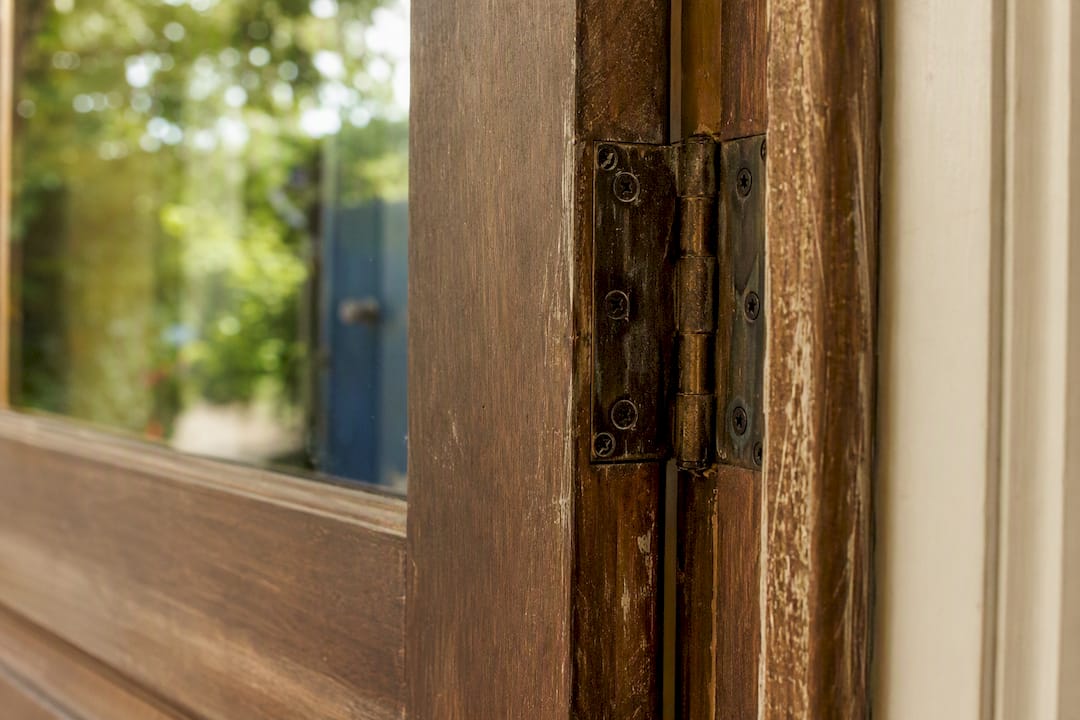
A three-star cylinder fitted into a flimsy frame is still a weak door. PAS24 tests the frame, glazing, hinges and furniture together as one assembly, because a cylinder is only as strong as the doorset around it.
Common weak points a doorset test exposes include kick-in vulnerability at the frame, hinge-side security, and glazing that can be removed from outside.
Secured by Design endorsement signals a product range has met this whole-doorset standard.
Pro Tip: If you're replacing a door entirely rather than just a cylinder, ask whether the new doorset carries PAS24 certification. It's the difference between a strong lock and a strong door.
How insurers typically treat lock grades and the practical evidence to collect
Insurers generally split their expectations by door material: BS3621 for timber, and TS007 3-star or Sold Secure Diamond for uPVC and composite.
- Check your policy wording first. Some policies name the standard explicitly; others simply say "five-lever mortice lock" or "British Standard lock", which is vaguer and worth clarifying by phone.
- Request written confirmation if you're relying on anything other than the named standard, using wording as simple as: "Can you confirm in writing that a TS007 3-star cylinder satisfies your security requirement for this door?"
- Keep evidence in a single folder: photos of the kitemark or star rating, your purchase receipt, the installer's name and contact details, and the insurer's email reply.
Insurers commonly accept TS007 3-star or Sold Secure Diamond for uPVC and composite doors, but for timber doors they usually specify BS3621 and may only accept an alternative if it's approved in writing first.
Step-by-step checklist: how to pick the correct lock grade for your door
Work through this in order rather than jumping straight to a product page.
- Identify the door material and whether it's a final exit. Timber final-exit doors point towards BS3621; uPVC and composite doors point towards TS007 or Sold Secure.
- Match the standard to the door type. BS3621 for timber, TS007 3-star for uPVC/composite, Sold Secure Diamond where the two are treated as equivalent by your insurer.
- Check the whole doorset, not just the lock. Look at frame condition, hinge security and whether the multipoint gearbox is worn, and plan complementary upgrades to handles or escutcheons if needed.
- Ask your installer four questions: Is this compatible with my existing gearbox? Can you retrofit an anti-snap cylinder without replacing the handle set? What guarantee comes with the work? Will you provide a written spec I can send to my insurer?
- Decide DIY versus trade installation. A straightforward cylinder swap on a standard euro profile is often manageable yourself; anything involving gearbox replacement, frame repair, or PAS24 compliance is worth handing to a trade installer.
- Collect documentation after installation: the product's standard certificate, your receipt, and a written note of what was fitted, for your insurer's file.
Pro Tip: Combining a TS007 3-star cylinder with a PAS24-rated doorset gives you the strongest practical protection available for a standard UK front door, because it addresses both the lock and the frame around it. You'll find a fuller breakdown in this uPVC door lock buying guide.
Upgrading and installation: practical notes and when to hire a trade installer
Replace a lock if it carries no visible markings at all, shows worn or sheared components, has survived an attempted break-in, or if you've just taken on a new tenancy and don't know its history.
Retrofitting an anti-snap cylinder sounds simple, but gearbox spindle length and handle spacing can force a handle or gearbox swap alongside the cylinder, so a straight cylinder-for-cylinder swap isn't always possible.
- DIY suits a like-for-like cylinder replacement on a door in good condition
- A trade installer suits gearbox replacement, PAS24-level adjustments, or anything where the frame itself needs attention
- Expect an installer to ask for photos of the door edge and cylinder before quoting, which speeds up compatibility checks and avoids ordering the wrong part
Trade perspective and how Window Hardware Store helps installers and homeowners
Samuel writes Windowhardwarestore's trade-focused guides drawing on the kind of compatibility questions installers ask daily, from cylinder length to gearbox spindle spacing.
- Windowhardwarestore stocks anti-snap cylinders and secure handle sets with real-time availability
- Fast UK delivery supports both trade accounts and one-off homeowner orders
- The support desk regularly advises on pairing a new cylinder correctly with existing gearboxes and handles
What the standards don't tell you upfront
Most guidance on lock grades treats the cylinder as the whole decision. That's the gap worth naming directly: a homeowner who fits a TS007 3-star cylinder into a tired frame with a worn gearbox hasn't solved their security problem, they've just moved it. The research on PAS24 backs this up plainly. A doorset test exists precisely because attackers target hinges, frames and glazing when the lock itself is too strong to bother with.
Where conventional advice falls short is treating BS3621, TS007 and Sold Secure as competing choices rather than complementary ones. They're not rivals. They measure different things: BS3621 is a lock-case standard, TS007 grades cylinder and furniture against manipulation, Sold Secure adds attack-tool and time-based testing, and EN1303 tells you about key security and mechanical wear. A homeowner comparing "TS007 versus Sold Secure" is asking the wrong question half the time.
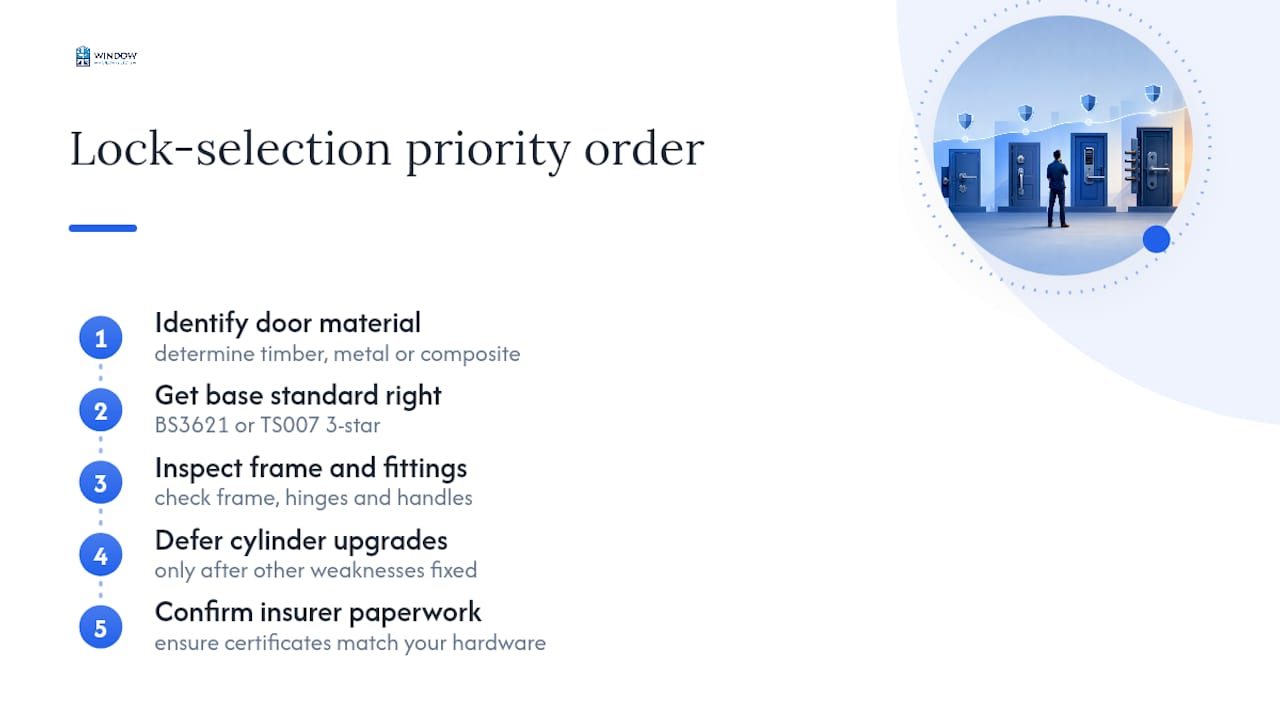
My honest priority order for most readers: identify the door material first, get the base standard right (BS3621 or TS007 3-star), then look sideways at the frame, hinges and handles before spending another penny on the cylinder itself. The paperwork for your insurer matters just as much as the hardware.
— Samuel
Where to buy anti-snap cylinders and secure handles with trade support
Windowhardwarestore is the practical alternative to hunting through generic DIY shelves for the right grade, because every listing shows real-time stock against the exact standard it meets, so you're not guessing whether a cylinder is genuinely TS007 3-star or just marketed that way.
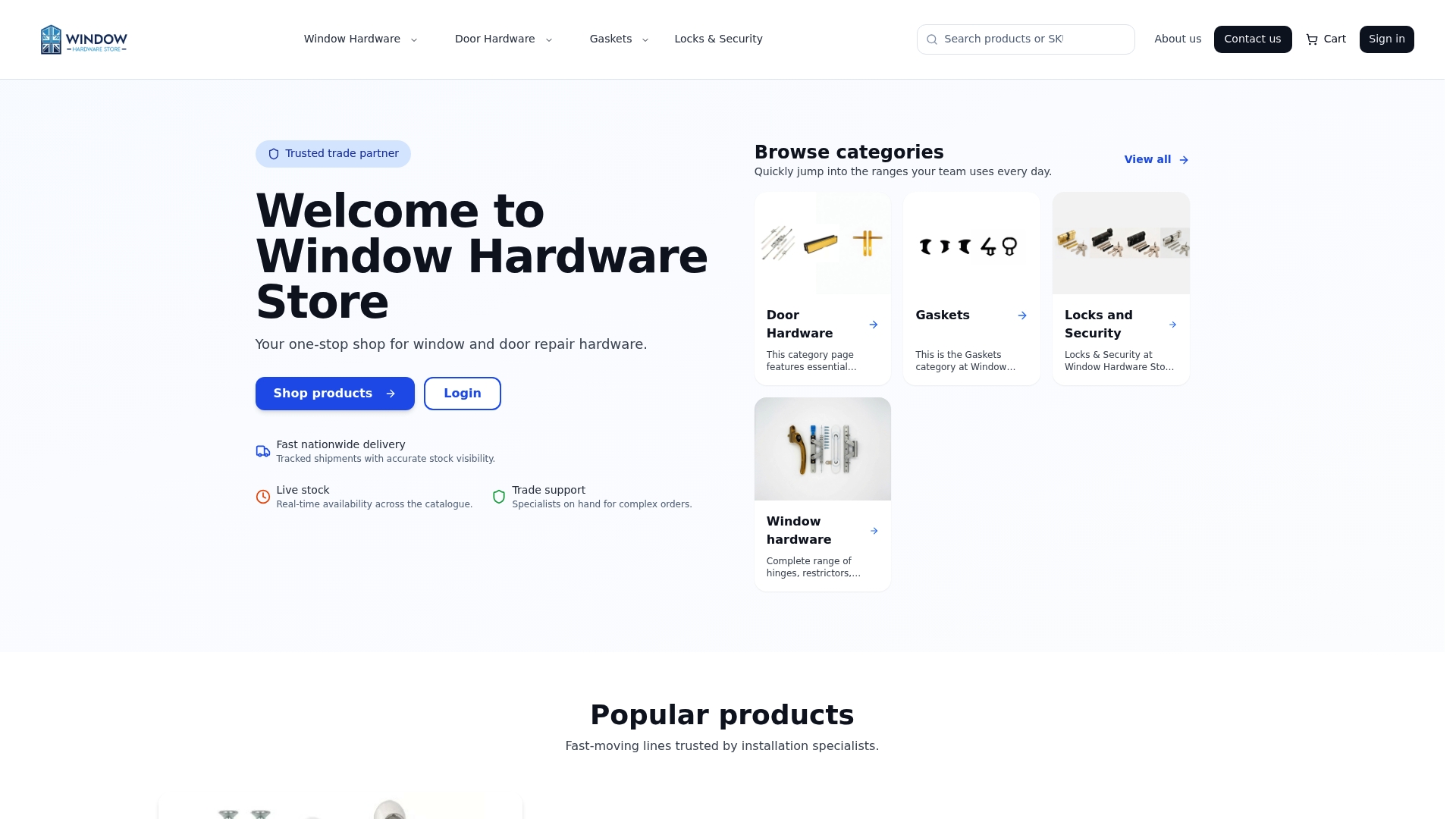
The range covers anti-snap cylinders, secure handle sets, and the gaskets and restrictors that finish a proper doorset upgrade, all searchable by standard rather than vague marketing terms. If you're pairing a new cylinder with handles, the Winlock patio door handle set is a straightforward example of hardware built to sit alongside a high-grade cylinder without compatibility headaches. Trade accounts get the same fast UK delivery as one-off homeowner orders, and the support team will talk through compatibility before you commit to a purchase, particularly useful if you're not certain your gearbox will accept a retrofit cylinder. Browse the full range at Windowhardwarestore and check stock against your door's exact requirements before you order.
Sources
- Sold Secure ratings
- EN 1303 - Lockwiki
- Lock Grades Explained UK | BS3621, TS007 & Sold Secure
- Understanding PAS 24 certification — Technal
Recommended
- Deadbolt Lock Grades Explained: Understanding Security Ratings | Window Hardware Store | Window Hardware Store
- Composite Door Handle Security: What to Look For | Window Hardware Store | Window Hardware Store
- Best uPVC Door Locks for Maximum Security: Trade Picks | Window Hardware Store | Window Hardware Store
- uPVC Door Lock Buying Guide: What to Look for in 2026 | Window Hardware Store | Window Hardware Store