
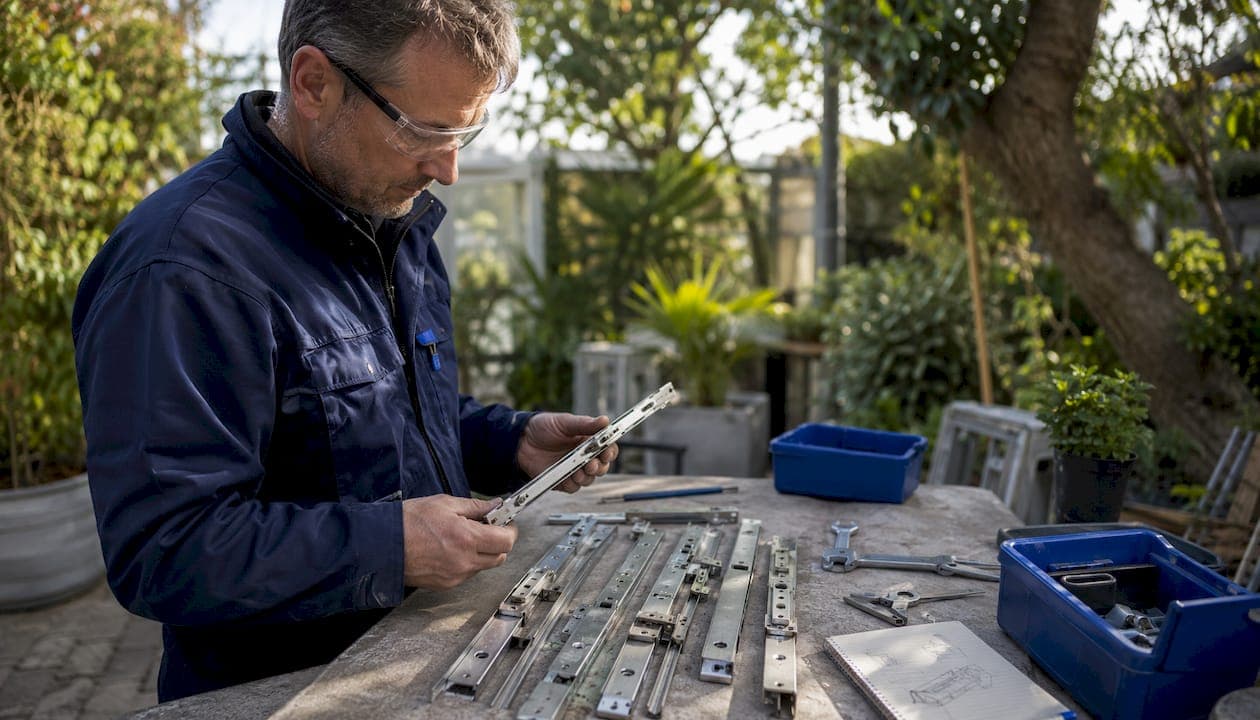
Security glazing hardware is the collective term for the mechanical fittings, fastenings and seals that allow a window or door system to resist forced entry while remaining functional and weatherproof. The single most important thing to understand is this: PAS 24 tests the entire system — frame, glass, locks and hinges together — not individual components in isolation. For new and replacement windows and doors in England and Wales, compliance with Approved Document Q means meeting PAS 24 as a whole-unit standard. Retrofits can improve security, but they do not create an equivalent tested system.
- Hardware covered: locks, multipoint gearboxes, espagnolette (espag) mechanisms, hinges with dog bolts or anti-lift pins, keeps and strike plates, restrictors, fixings and screws, gaskets, glazing beads, handles, cylinders and escutcheons.
- For new or replacement work: specify hardware as part of a PAS 24 or Secured by Design (SBD) tested system. Swapping a single component can void certification unless the replacement is identical and part of the tested assembly.
- For retrofits: TS 007-rated locks and reinforced fixings are useful mitigation, but they are not equivalent to a whole-unit PAS 24 system.
Table of Contents
- What does security glazing hardware actually cover?
- Why frame, glass and hardware must work as one system
- UK standards every trade professional needs to know
- Specification checklist for trade professionals
- What can you realistically retrofit, and when must you replace?
- Installation best practice and common failure modes
- How to maintain security glazing hardware over time
- When should you involve a security assessor?
- How Windowhardwarestore supports security glazing jobs
- Key takeaways
- The mistakes we see most often
- Windowhardwarestore: your trade supplier for security hardware
- Useful sources and further reading
What does security glazing hardware actually cover?
Every component below plays a distinct mechanical role. Miss one, and the system can fail even if the glass itself is excellent.
- Locks and multipoint gearboxes. A multipoint gearbox distributes locking force across several points along the door or window frame, resisting the levering attacks that defeat single-point locks. Gearbox choice must match the profile's reinforcement layout and shoot-bolt positions.
- Espagnolette (espag) mechanisms and mushroom cams. The espag rod links multiple locking points operated by a single handle turn. Mushroom-shaped cams compress the sash against the frame seal, improving both weather resistance and resistance to sash displacement under attack. The Trojan Stallion telescopic espag is a practical example of an adjustable espag that accommodates varying sash heights while maintaining mushroom cam engagement.
- Hinges and anti-lift features. Dog bolts and anti-lift pins prevent the hinge side of a sash from being lifted clear of the frame. Hinge screws must bite into the profile's steel reinforcement, not just the PVC-U skin.
- Keeps and strike plates. These receive the shoot bolts and cams under load. A keep specified to the wrong plate thickness or without reinforcement backing will deform under jemmy attack, allowing the sash to be forced open even with the lock engaged.
- Restrictors and concealed restrictors. Restrictors allow ventilation without fully opening a window. The RES Lock concealed window restrictor is a discreet option that limits sash travel while remaining visually unobtrusive — useful in residential and commercial settings where aesthetics matter.
- Fixings, screws and fasteners. Screw length and material are frequently overlooked failure points. Screws must anchor into the steel reinforcement inside the profile, not merely grip the outer skin. Stainless steel or case-hardened fixings resist corrosion and cutting attacks.
- Gaskets and glazing beads. Glazing beads retain the glass unit within the frame. If beads can be removed from outside, an attacker can extract the glass without breaking it. Security glazing tape bonded between the glass and frame adds retention that bead removal alone cannot defeat.
- Handles, cylinders and escutcheons. Handle choice affects whether a cylinder can be gripped and snapped. A cylinder rated to TS 007 with an anti-snap, anti-pick, anti-drill specification, combined with a correctly sized escutcheon, is the minimum for any door claiming security performance. See Windowhardwarestore's guide on window handle security features for a detailed breakdown.
Pro Tip: When ordering replacement hardware, always cross-reference the gearbox backset, shoot-bolt positions and cam height against the original tested assembly. A dimensionally similar but non-identical part may not engage the keep correctly under load.
Why frame, glass and hardware must work as one system
Security depends on the tested integration of all three elements. Strong glass with weak fixings or a misaligned keep will still fail under a determined attack.
Under a levering attack, force is applied at the lock side of the sash. A multipoint gearbox spreads that load across several keeps simultaneously, so no single point bears the full force. The hinges resist the opposing rotational load. If hinge screws are short or the keeps are underspecified, the load concentrates and the frame deforms before the glass is even touched.
Glazing beads present a separate vulnerability. On many standard UPVC windows, the bead sits on the outside of the frame. Without mechanical retention or bonded glazing tape, an attacker can remove the bead with a flat tool in seconds, then lift the glass unit clear. The glass itself may be laminated and rated to BS EN 356, but the system fails because the retention method was inadequate.
Replacing a cylinder or handle on a PAS 24-certified unit can void the test evidence unless the replacement component is identical and listed as part of the tested assembly. Always request the manufacturer's system evidence before substituting any part — even one that looks the same.
UK standards every trade professional needs to know
PAS 24 is the baseline for new and replacement windows and doors under Approved Document Q in England and Wales. It tests the complete unit under simulated manual attack, so the frame, glazing, hardware and fixings are all assessed together.
- Secured by Design (SBD). The police-preferred specification that builds on PAS 24. SBD requires additional features such as laminated glass of at least 6.8 mm and specified locking configurations. Products appear on a police-run register. SBD is commonly requested on social housing, public sector and higher-risk developments.
- TS 007. A lock-only standard covering cylinders and associated hardware. Appropriate for retrofit mitigation where frame replacement is not possible, but it does not replace whole-unit PAS 24 performance.
- BS EN 1670. Corrosion resistance classification for hardware. Relevant for coastal or high-humidity environments where standard zinc-plated fixings will degrade.
- BS EN 356. Glazing resistance classes for manual attack. Specifies the glass performance, not the system — the frame and hardware must still be compatible.
- LPS 1175 and RC classes. For higher-security or commercial applications requiring resistance classification beyond domestic forced-entry levels.
Practical verification: check product datasheets for PAS 24 or SBD registration numbers and UKAS test laboratory evidence. For replacement work, confirm the installer holds FENSA or CERTASS registration, which requires compliance with Building Regulations including Part Q.
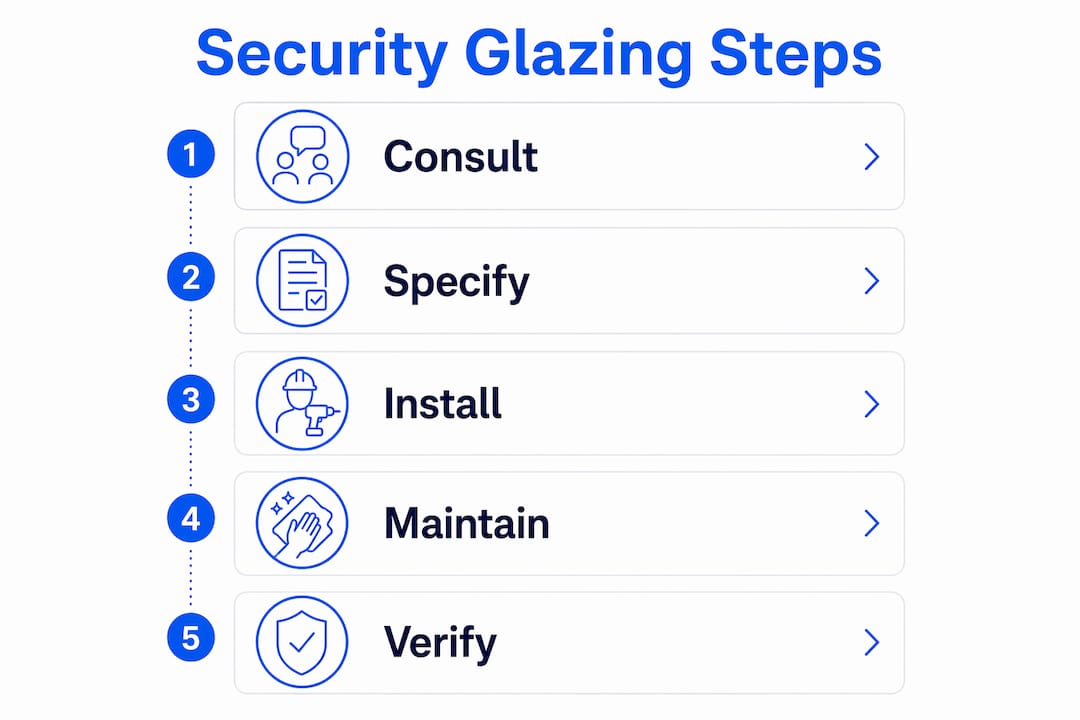
Specification checklist for trade professionals
State the non-negotiables on every purchase order and site instruction. Gaps here are what generate callbacks.
- Exact hardware part numbers and manufacturer references for every component in the tested assembly.
- Confirmation of PAS 24 or SBD system test evidence, including the test laboratory reference.
- Screw lengths, material grade and confirmation that fixings anchor into steel reinforcement.
- Reinforcement specification: wall thickness, steel grade and position within the profile.
- Cylinder star rating or TS 007 classification, with anti-snap, anti-pick and anti-drill confirmation.
- Hinge type, dog bolt or anti-lift pin specification, and fixing detail into reinforcement.
- Keep and strike plate type, plate thickness and backing reinforcement detail.
- Gasket profile references and glazing bead retention method (mechanical fixing or bonded tape).
- Declaration of performance (UKCA marking) from the supplier for each component.
Pro Tip: Always request traceable test certificates alongside the declaration of performance. A UKCA mark on the packaging is not the same as a UKAS-witnessed test report — ask for both, and file them with the job record.
What can you realistically retrofit, and when must you replace?
Retrofits improve security but do not create a PAS 24-equivalent system. That distinction matters for compliance conversations with clients and building control.
- TS 007 cylinders. The most cost-effective single upgrade. TS 007-rated locks address the most common domestic attack method — cylinder snapping — without requiring frame removal.
- Reinforced keeps. Replacing a thin pressed-steel keep with a solid, reinforced strike plate and longer fixing screws into the reinforcement is a straightforward site job that significantly improves resistance to levering.
- Concealed restrictors. The RES Lock concealed window restrictor fits discreetly and limits sash travel, useful where full opening creates a security risk but ventilation is still required.
- Polycarbonate overglaze shields. Overglaze systems use vented extrusions and polycarbonate panels anchored to the existing frame. They are considerably tougher than glass and designed to flex under impact rather than shatter. Correct venting prevents condensation between the shield and the original glazing.
- Secondary glazing. For higher threat levels or heritage buildings where frame replacement is constrained, secondary glazing can be specified to forced-entry, blast or ballistic standards.
When glazing beads cannot be mechanically secured, when frame reinforcement is absent, or when fire egress rules prevent permanent retrofit solutions, full unit replacement is the only compliant route. Simple lock upgrades can be completed the same day; overglaze and secondary glazing systems typically require bespoke measurement and a longer lead time.
Installation best practice and common failure modes
Poor fixings and incorrect mechanical anchoring cause more security failures than the absence of laminated glass. Keep that priority order in mind on every job.
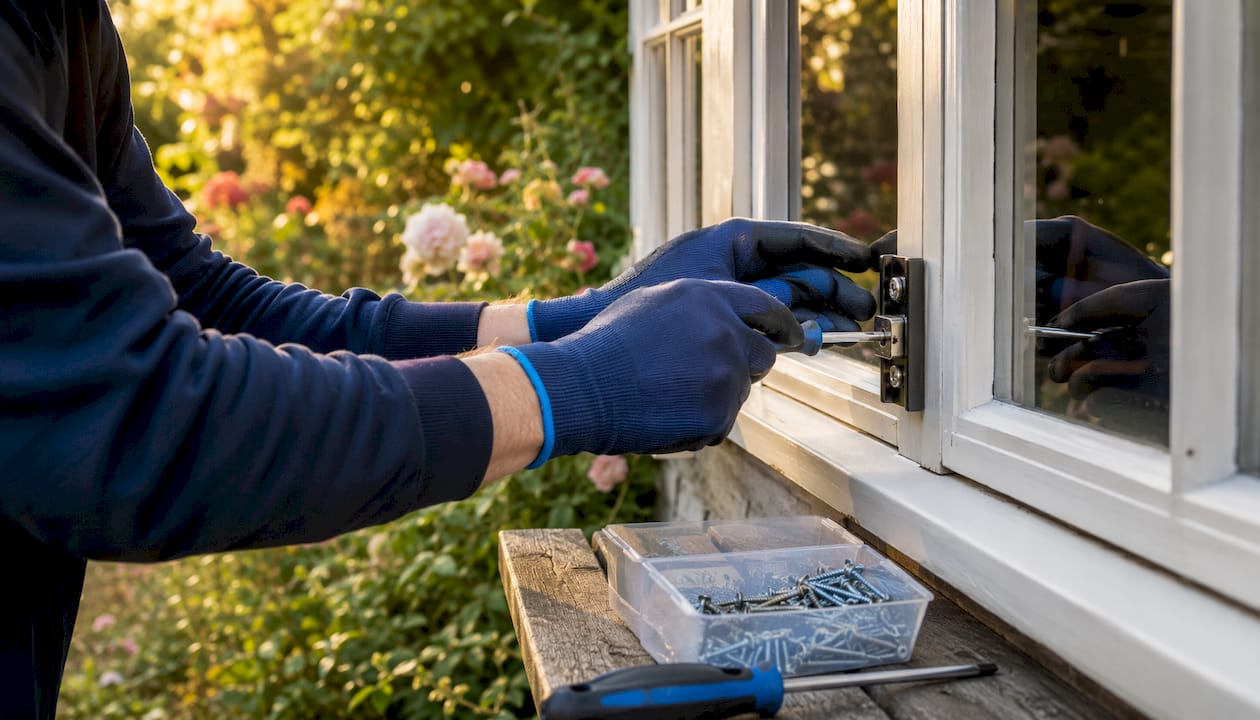
Pro Tip: Keep a simple on-site checklist: screw length confirmed, fixings into reinforcement, mushroom cam engagement visible, keep alignment checked, certificate on file. Photograph each stage — it is your evidence if compliance is ever queried.
Common failure modes to check and avoid:
- Screws too short, gripping only the PVC-U skin rather than the steel reinforcement inside.
- Keep misalignment, so shoot bolts do not fully engage under load.
- Glazing beads fitted without mechanical retention or bonded tape, removable from outside.
- Hinge screws that miss the reinforcement, leaving the hinge side vulnerable to lift attacks.
- Cylinders without anti-snap protection, or cylinders that protrude beyond the escutcheon and can be gripped with pliers.
- Multipoint gearbox shoot bolts that do not reach full travel due to incorrect backset or worn cam profiles.
For fastener selection on structural fixings, choosing the right screw specification for shear strength and material compatibility is as relevant to glazing frames as it is to any structural application.
How to maintain security glazing hardware over time
Inspect annually and after any forced-entry attempt or unusual loading. Mechanical security degrades quietly — a loose hinge screw or worn cam is invisible until the system is tested under attack.
- Lubricate all moving parts: gearbox cams, shoot bolts, hinge pivots and cylinder plug with a dry PTFE or silicone lubricant. Avoid oil-based products that attract grit.
- Check cylinders for play, corrosion or stiffness. Any lateral movement in the plug indicates wear.
- Inspect hinges and dog bolts for corrosion, loose screws or deformation at the fixing points.
- Test multipoint gearbox engagement: operate the handle through full travel and confirm every shoot bolt reaches its keep.
- Check screw and keep torque at accessible points. A screw that turns freely has lost its grip on the reinforcement.
- Inspect gaskets for compression set, cracking or displacement. A failed gasket allows water ingress and reduces the glass unit's retention under impact.
- Confirm glazing beads are secure and have not been displaced by thermal movement or previous maintenance.
At handover, provide clients with operation and maintenance instructions, test evidence and exact part references so any future replacement uses identical, tested components.
When should you involve a security assessor?
Consult a Designing-Out-Crime Officer or security assessor for high-value property, vulnerable occupants, critical infrastructure, or where blast or ballistic threats are possible. Involving assessors early avoids costly over-specification and ensures hardware is compatible with the architect's design intent.
- Commercial premises with public access — threat profile differs significantly from domestic; assessors can map access points and recommend resistance classes.
- Social housing projects where SBD is requested — the SBD register and police liaison process requires documented compliance from the design stage.
- Heritage buildings — invasive frame replacement may be constrained by planning conditions; assessors can identify compliant secondary glazing or overglaze routes.
- Blast or ballistic threat scenarios — specialist engineers are required to verify that the glazing, framing and wall connections perform as a complete element, as demonstrated by high-security systems tested to RC classes.
Pro Tip: Bring specific questions to the assessor: required resistance class, recommended glazing configuration, documentation needed for planning or procurement, and whether SBD registration is required. Vague briefs produce vague specifications.
How Windowhardwarestore supports security glazing jobs
Windowhardwarestore provides trade-grade components, traceable datasheets and technical help to match hardware to PAS 24 and SBD requirements. Stock visibility is real-time, so you can confirm availability before committing to a programme.
- Winlock patio door handle set — a secure inline handle set for patio doors, available with locking options suited to multipoint systems.
- RES Lock concealed window restrictor — a discreet restrictor for safe ventilation without compromising sash security.
- Multipoint gearbox for UPVC doors — specified with backset and shoot-bolt positions to match the tested frame assembly.
- Trojan Stallion telescopic window espag — adjustable espag with mushroom cams for secure sash engagement across varying sash heights.
- Gaskets and glazing beads — including the E020 E, E015 E and TW023 wedge gasket profiles for retention and weatherproofing.
The technical helpline handles part-matching queries, compatibility checks and requests for test certificates. Windowhardwarestore's locking handle buying checklist is a practical starting point for handle and cylinder specification. When ordering, declare the exact hardware configuration and request the declaration of performance alongside the product to preserve system test evidence.
Key takeaways
Security glazing hardware performs only as well as the weakest component in the tested assembly — specify every element together, not in isolation.
| Point | Details |
|---|---|
| Specify as a tested system | PAS 24 and SBD assess the whole unit; changing one component can void certification unless the replacement is identical. |
| Fixings are the most common failure point | Screws must anchor into steel reinforcement, not the PVC-U skin; keeps must match plate thickness and reinforcement layout. |
| Retrofits have clear limits | TS 007 cylinders and reinforced keeps improve security but do not equal a whole-unit PAS 24 system. |
| Document everything | Retain test certificates, declarations of performance and installation photographs for every job. |
| Windowhardwarestore for trade supply | Traceable datasheets, real-time stock and a technical helpline support correct specification and fast procurement. |
The mistakes we see most often
The calls that come into our helpdesk follow a pattern. An installer has swapped a gearbox for a "compatible" alternative, or fitted screws that are 10 mm shorter than the tested specification, and now the client's building control officer is asking questions. The fix is usually straightforward — supply the correct part with the matching test reference — but the delay and the rework are avoidable.
The other common scenario is a homeowner who has upgraded their cylinder to a TS 007 product but left the original thin-pressed keeps in place. The cylinder is now excellent. The keeps will still deform under a modest levering attack. Security is only as strong as the component that gives way first.
Our practical approach is to supply the exact replacement part, provide the installation detail and, where needed, request the test evidence from the manufacturer on the customer's behalf. If you are unsure whether a substitution is safe, call the helpline before fitting — not after.
Windowhardwarestore: your trade supplier for security hardware
Sourcing the right security glazing hardware quickly, with the paperwork to back it up, is where Windowhardwarestore earns its place on your supplier list. Every product comes with real-time stock visibility and fast nationwide delivery, so you are not waiting on a part that holds up an entire installation.
For your next job, check the product pages for the Winlock patio door handle set, the RES Lock concealed restrictor, the multipoint gearbox and the Trojan Stallion espag. Each listing includes the datasheet and part references you need to preserve system test evidence. For bespoke specifications or certificate requests, contact the technical helpline directly through windowhardwarestore.com.
Useful sources and further reading
- PAS 24 and Approved Document Q — the BSI and MHCLG publish the current version of Approved Document Q; always check the live edition for the most recent requirements.
- Secured by Design register — the SBD website lists all registered products and manufacturers; verify any product claimed to be SBD-registered against this list before specifying.
- UKAS-accredited test laboratories — request UKAS-witnessed test reports from manufacturers, not just declarations of performance, for high-security or publicly funded projects.
- BRE security glazing guidance — BRE Trust research on security glazing types and standards provides an independent overview of how different glazing materials perform under manual attack.
- Windowhardwarestore technical blog — practical guides on locking vs non-locking handles, handle security features and buying checklists for common specification decisions.
- FENSA and CERTASS — installer competence schemes whose registered members are required to self-certify compliance with Building Regulations, including Part Q, for replacement windows and doors.
For certificate requests or technical queries on specific products, contact Windowhardwarestore directly — the team can request manufacturer test evidence on your behalf and confirm compatibility before you order.
Recommended
- Where to Buy Quality Double Glazing Supplies in the UK | Window Hardware Store | Window Hardware Store
- Best Window Gearbox Brands for UK Homes: Trade Recommendations | Window Hardware Store | Window Hardware Store
- Replacement Double Glazed Window Handles: Handing Explained | Window Hardware Store | Window Hardware Store
- Security Glazing Tape 10 – 15mm | Window Hardware Store