
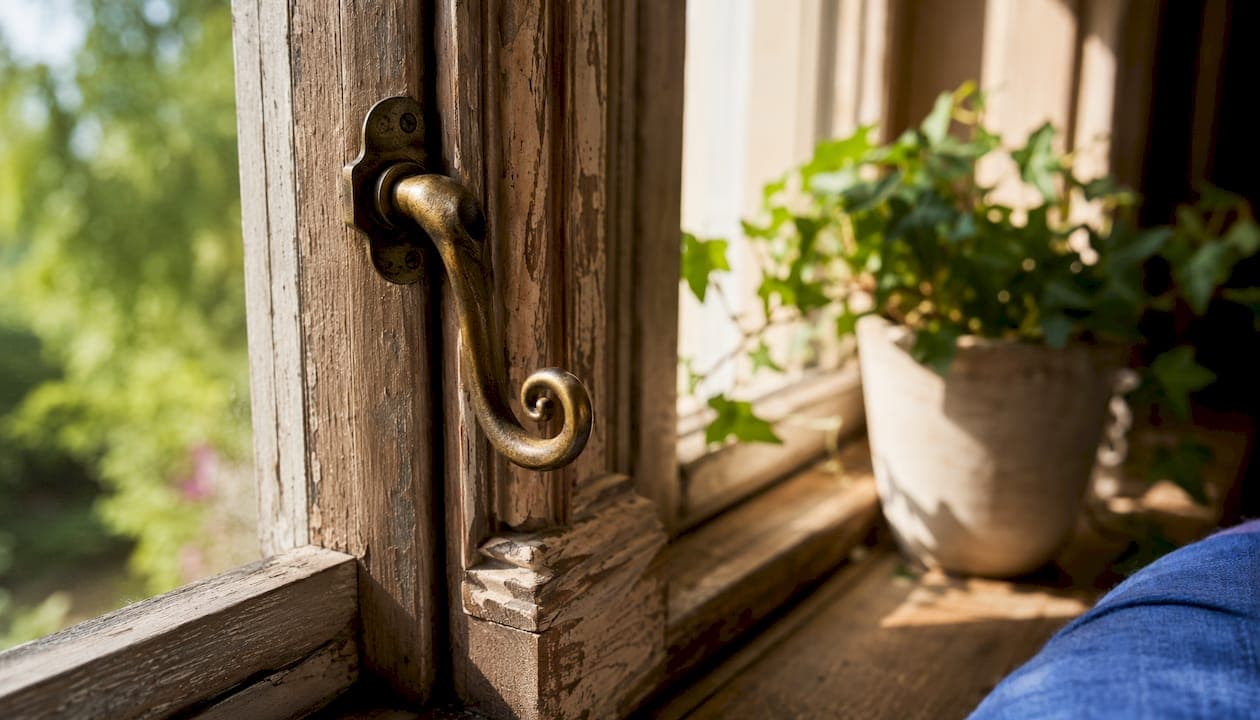
Heritage window hardware types fall into five categories: handles, stays and hinges, sash fittings (lifts, fasteners and pulleys), locks and security, and finishes and materials. Get the category right first, then match the mechanical function to the period profile. That single rule saves more ordering errors than any other.
Before you measure or order anything, run through this quick checklist:
- Spindle length: measure from the base of the handle to the tip of the spindle (typically 7mm, 8mm or 9mm square section for timber windows)
- Backset: the distance from the edge of the frame to the centre of the spindle hole
- Fixing centres: the distance between the two fixing screws on the backplate
- Plate size: overall length and width of the backplate or rose
- Handedness: note whether the window opens left or right (critical for espagnolette gearboxes)
Pro Tip: Photograph the existing hardware in situ before you remove anything. A clear image of the profile, fixing centres and frame condition is worth more than any written description when you are matching a reproduction to an original.
Table of Contents
- What does 'heritage window hardware' actually cover?
- Which window handle type suits your heritage timber window?
- How do casement stays, restrictors and hinges differ?
- What security options work for heritage timber windows?
- Which finish suits your period property?
- How do you match hardware to a specific historical period?
- How to measure, source and check compatibility for UK heritage hardware
- When should you refurbish original hardware rather than replace it?
- Practical fitting checklist for tradespeople and competent DIYers
- Key takeaways
- The specification mistakes that cost restorers the most time
- Windowhardwarestore: trade stock and specialist support for heritage hardware
- Further reading and authoritative UK sources
What does 'heritage window hardware' actually cover?
Architectural ironmongery on timber windows serves three distinct purposes: it controls how the window opens and closes, it holds the sash or casement in position, and it provides security. Every fitting belongs to one of these functions, and understanding which function you are addressing stops you ordering the wrong part.
The main groups are:
- Handles: espagnolette (espag) levers, cockspur fasteners, monkey tail handles, pear-drop handles, D-pulls and sash lifts. These operate the window and engage the locking mechanism.
- Stays and hinges: peg stays, quadrant stays, friction stays and friction hinges. These hold the casement open at a chosen angle and bear the weight of the sash or casement.
- Sash fittings: sash lifts, sash fasteners (Fitch, quadrant, Brighton), meeting-rail locks and pulley wheels with sash cord. These are specific to vertically sliding sash windows.
- Locks and security hardware: espag multi-point gearboxes, sash locks, shootbolts, keyed meeting-rail locks and child-safety restrictors.
- Auxiliary items: draught-exclusion gaskets, sash stops, frame bolts and window furniture such as escutcheons.
The mechanical behaviour of a fitting matters as much as its visual profile. A monkey tail handle fitted to a single-point cockspur mechanism looks right but performs differently from the same handle on a multi-point espag gearbox. Period authenticity is not just about appearance.
Quick signal for sash versus casement: if your window slides vertically, you need sash fittings (lifts, fasteners, pulleys). If it swings open on side or top hinges, you need casement hardware (stays, friction hinges, espag or cockspur handles).
Which window handle type suits your heritage timber window?
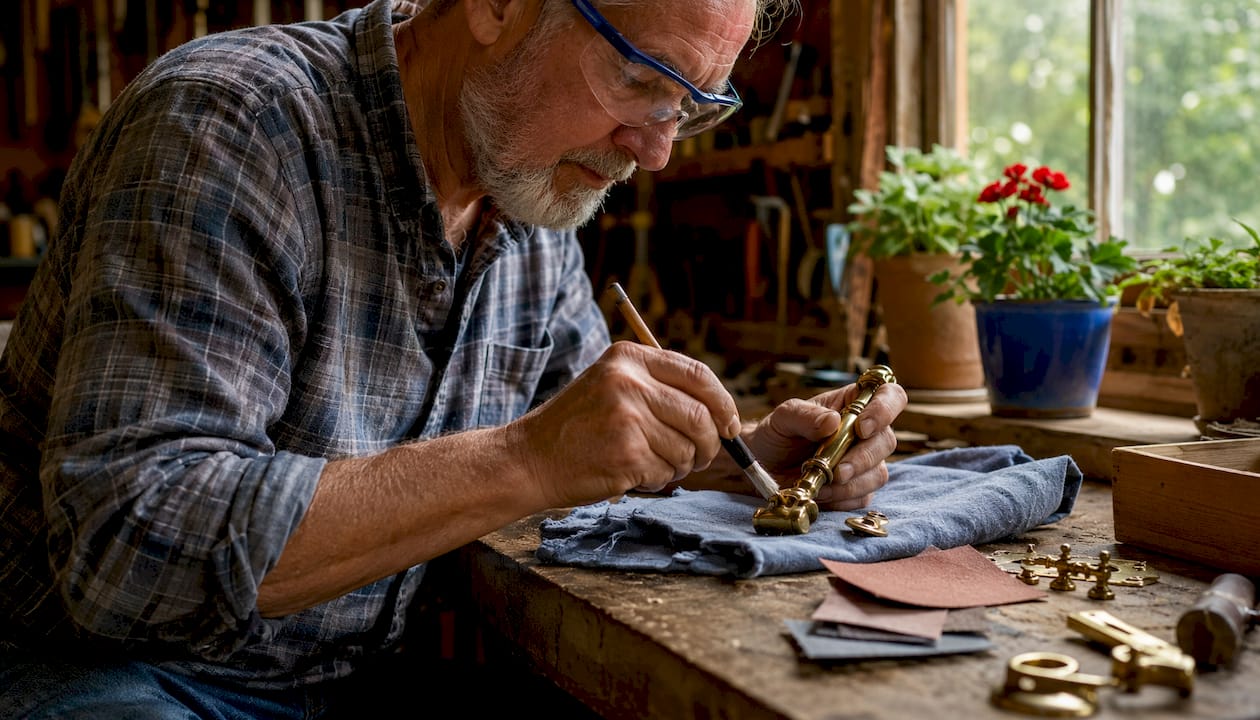
Handles are the most visible part of the ironmongery specification, and they are also the most commonly mismatched. Here is what each type does and where it belongs.

Handle types compared
| Handle type | Typical period | Mechanism | Typical use |
|---|---|---|---|
| Espagnolette (espag) lever | Victorian to present | Multi-point gearbox | Casement windows with modern or upgraded security |
| Cockspur | Victorian, Edwardian | Single-point catch | Traditional casements, lower security |
| Monkey tail | Georgian, Victorian | Espag or cockspur | Sash and casement, period properties |
| Pear-drop | Victorian, Edwardian | Espag or cockspur | Casement, ornate period properties |
| D-pull / bar pull | Georgian, Arts & Crafts | Sash lift only | Sash windows, lower rail |
| Sash lift (flush or ring) | Georgian to Edwardian | Sash lift only | Sash windows, lower rail |
Espagnolette handles drive a multi-point gearbox that locks the casement at multiple points along the frame. Modern espag gearboxes accept heritage-style levers, so you can fit a monkey tail or pear-drop reproduction onto a current gearbox and gain multi-point security without losing the period silhouette. This is the most practical compromise on listed and conservation-area properties.
Cockspur handles engage a single-point catch on the frame. They suit lighter casements and are appropriate for Victorian and Edwardian properties where the original mechanism was single-point. They offer lower intruder resistance than espag systems, so consider upgrading the gearbox if security is a priority.
Monkey tail and pear-drop handles are decorative lever profiles rather than distinct mechanisms. Both can be specified for espag or cockspur gearboxes. The monkey tail's curved tip is characteristic of Georgian and early Victorian ironmongery; the pear-drop's teardrop finial suits mid-to-late Victorian and Edwardian work.
Sash lifts and D-pulls are purely functional fittings on the lower rail of a sash window. They do not engage a locking mechanism. Flush sash lifts sit recessed into the rail and suit Georgian windows where a projecting fitting would look out of scale.
Compatibility notes for ordering
- Confirm whether the gearbox is espag or cockspur before ordering a handle. An espag handle will not operate a cockspur catch.
- Measure the spindle size (7mm, 8mm or 9mm square) and spindle length. A spindle that is 2mm too short will not engage the gearbox fully.
- Check the backset. Standard espag backsets are 13mm or 16mm; older timber frames may have non-standard dimensions.
- Confirm fixing centres on the backplate. Heritage backplates are often longer than modern equivalents.
- Note handedness. Espag gearboxes are handed; ordering the wrong side means the handle operates in reverse.
On material quality: solid brass and bronze hardware can last 50 or more years and develop an authentic patina over time. Plated items cost less upfront but wear through at the handle contact points within years of regular use. For a property you are restoring once and not revisiting, solid material is the better long-term investment.
Pro Tip: When retrofitting heritage-style profiles onto a modern espag gearbox, check the gearbox depth against the frame rebate before ordering. Some slim-profile heritage frames cannot accommodate a full-depth modern gearbox without additional routing.
How do casement stays, restrictors and hinges differ?
The stay holds a casement open; the hinge carries its weight. On traditional timber windows these are separate components. On modern friction-stay systems, they are combined into one fitting.
Traditional peg and quadrant stays
A peg stay is a flat bar with a series of holes that drop onto a fixed peg screwed to the sill. Simple, repairable and period-appropriate for Georgian through to Edwardian properties. Peg stays typically cost £20–40 and are available in polished brass, antique brass and black-painted finishes. A quadrant stay uses a curved arm that locks into a slotted bracket; it allows finer angle adjustment and suits Victorian and Edwardian casements. Quadrant stays typically cost £30–60.
Both types are appropriate for heritage projects where the original mechanism was a stay-and-hinge combination. They are repairable, replaceable with like-for-like parts, and visually correct for the period.
Friction stays and friction hinges
Friction stays combine the hinge and stay into a single side-hung fitting. They hold the casement at any angle by friction rather than a peg. Different sizes are rated for various casement weights, so matching the load rating to the actual casement weight is critical. Matching the load rating to the actual casement weight is critical. An under-rated friction stay will sag within months, distorting the frame and breaking the seal.
Friction stays are less visually intrusive than a traditional stay-and-hinge combination, but they are not period-correct for most pre-1950 timber windows. Use them where the original stay is missing and a like-for-like replacement is not available, or where the casement has been rehung and the original hinge positions no longer align.
Child-safety restrictors
Building Regulations require that windows above ground-floor level in dwellings be fitted with a restrictor that limits the opening to a small gap where a child could fall. This applies to new installations and to replacement hardware on existing windows. A concealed window restrictor is the least visually disruptive solution for heritage casements, as it fits within the frame rebate and is invisible when the window is closed.
- Restrictors must be releasable by an adult without a key for fire-escape purposes (unless a keyed restrictor is specifically required by the building's fire strategy)
- Retrofit restrictor kits are available for both peg-stay and friction-stay configurations
- For listed buildings, check with the conservation officer before fitting any visible restrictor bracket
Pro Tip: On casement windows with traditional peg stays, casement window stays with an integrated restrictor hole allow you to limit the opening to 100mm by simply moving the peg to the first hole. No additional hardware is needed, and the fitting remains period-appropriate.
What security options work for heritage timber windows?
Security and authenticity are not mutually exclusive. The key is choosing the right mechanism and keeping the visible hardware period-appropriate.
Multi-point espagnolette systems are the strongest upgrade for casement windows. A single turn of the handle engages locking points at the top, bottom and side of the frame simultaneously. Modern espag gearboxes can accept heritage-style levers, so the visible profile remains correct while the locking performance meets current expectations. For guidance on choosing between locking and non-locking handle options, the mechanical difference is significant even when the visual difference is minimal.
For sash windows, the options are:
- Sash fasteners (Fitch, quadrant, Brighton): these pull the two sashes together at the meeting rail. Brighton fasteners provide a tighter seal than Fitch or quadrant types and improve thermal performance as well as security.
- Keyed meeting-rail locks: a small keyed bolt that locks the meeting rail in the closed position. Discreet and period-appropriate.
- Sash stops: small bolts that prevent the lower sash from being lifted more than a set distance from outside. Useful for ground-floor windows.
- Shootbolts for casements: a shootbolt system drives a bolt into the head and sill of the frame when the handle is operated, adding top and bottom locking points to a casement.
Security options ranked by intruder resistance (highest first):
- Multi-point espag with shootbolts
- Multi-point espag without shootbolts
- Keyed meeting-rail lock (sash) or keyed cockspur (casement)
- Sash stop plus Fitch fastener
- Single-point cockspur or traditional Fitch fastener alone
Visible changes to listed building hardware can trigger a requirement for listed building consent. If the upgrade changes the appearance of the ironmongery from the outside, speak to your local conservation officer before proceeding. Concealed or like-for-like replacements are far less likely to require formal consent.
Which finish suits your period property?
Finish choice affects both authenticity and maintenance. The right material for the period is not always the lowest-maintenance option, and that trade-off is worth understanding before you specify.
Heritage projects commonly require polished brass, antique brass, satin chrome or matt black finishes. Each ages differently:
- Polished (unlacquered) brass: develops a warm patina over time. Correct for Georgian and Victorian properties. Requires occasional polishing if you want to maintain the bright finish, or can be left to age naturally. Solid brass outlasts plated equivalents significantly.
- Antique or satin brass: a pre-aged or brushed finish that suits properties where the bright polish of new brass would look out of place. Lower maintenance than polished brass.
- Bronze (solid or plated): the preferred finish for Arts & Crafts properties and some late Victorian work. Solid bronze patinates beautifully; bronze-plated items wear through at contact points.
- Satin chrome and nickel: clean, transitional finishes that suit Edwardian and early twentieth-century properties. More stable than brass in coastal or high-humidity environments.
- Matt black / painted black: appropriate for Georgian ironwork and for properties where the original fittings were japanned or painted. Powder-coated black is durable outdoors; painted finishes require periodic touching up.
Pro Tip: Lacquered brass keeps its bright finish longer but cannot be polished once the lacquer wears unevenly. Unlacquered brass is the better choice for heritage work: it ages consistently and can be polished back to bright at any point.
Period-by-period guidance:
- Georgian: polished brass or black-painted iron. Simple profiles, minimal ornament.
- Victorian: polished or antique brass, bronze. Ornate profiles, monkey tails, pear-drops, decorative backplates.
- Edwardian: satin brass, satin chrome, nickel. Cleaner decoration, transitional profiles.
- Arts & Crafts: bronze, hand-forged iron, dark finishes. Deliberately rustic or hand-worked appearance.
How do you match hardware to a specific historical period?
Period matching is about proportion and ornament as much as finish. A heavy Victorian backplate on a slender Georgian sash looks wrong even if the finish is correct.
- Georgian (c.1714–1830): windows are typically double-hung sashes with slender glazing bars. Hardware should be delicate in scale: small flush sash lifts, simple D-pulls, plain brass Fitch fasteners. Avoid anything with heavy casting or elaborate ornament.
- Victorian (c.1837–1901): casements and sashes both appear. Hardware becomes more ornate: monkey tail and pear-drop levers, decorative quadrant stays, ornate sash lifts with cast detail. Polished brass dominates, with some japanned black ironwork on secondary windows.
- Edwardian (c.1901–1910): a transitional period. Hardware simplifies relative to Victorian but retains quality. Cockspur handles with plain backplates, simple quadrant stays, satin or polished brass. Bay windows and large casements are common.
- Arts & Crafts (c.1880–1920): deliberately rejects machine-made ornament. Hardware should look hand-forged or hand-finished: bronze or dark iron, simple bar handles, strap hinges, minimal decoration.
Worked example: a Georgian townhouse sash restoration in a conservation area. The brief calls for like-for-like replacement of missing sash lifts and a new meeting-rail fastener. The correct specification is a small flush brass sash lift (no projection, no ornament) and a plain brass Fitch fastener. A Brighton fastener would improve the thermal seal but its more prominent profile is a marginal departure from the Georgian original. In a conservation area, the Fitch is the safer choice unless the conservation officer agrees otherwise.
How to measure, source and check compatibility for UK heritage hardware
Getting the measurements right before you order is the single most effective way to avoid returns and delays. Work through this list in order.
- Remove the existing fitting carefully and photograph it from the front, side and back before cleaning.
- Measure spindle length from the base of the handle casting to the tip of the spindle.
- Measure spindle section (7mm, 8mm or 9mm square is standard; some older fittings use 5mm or 6mm).
- Measure backset from the edge of the frame to the centre of the spindle hole.
- Measure fixing centres between the two fixing screws on the backplate.
- Measure plate size (overall length and width of the backplate).
- For sash lifts: measure the centre distance between the two fixing screws and the projection of the lift from the rail face.
- For pulley wheels: measure the wheel diameter and the groove width for the sash cord.
- Note handedness for espag gearboxes and shootbolts.
- Note the frame material and condition — a soft or rotten frame may need consolidation before new fixings are driven.
Sourcing routes in the UK
- Salvage yards and reclamation dealers: best for genuinely original fittings. Quality varies; always test operation before buying. SALVO and the Building Conservation Directory list reputable dealers.
- Specialist reproduction suppliers: cast reproduction ironmongery matched to period profiles. Lead times can be longer than trade stock.
- Trade stockists with real-time availability: Windowhardwarestore carries a range of heritage-compatible handles, restrictors and gaskets with live stock visibility, which reduces the risk of ordering delays on time-sensitive jobs.
- Local metalwork restorers: for re-plating, rebushing or repairing original castings that cannot be sourced as reproductions.
Common compatibility pitfalls
- Modern espag gearboxes are deeper than older frames expect. Check the gearbox depth against the frame rebate before ordering.
- Screw threads on older ironmongery are often imperial (BSW or BSF); modern fixings are metric. Keep a set of imperial taps and dies if you are refurbishing originals.
- Handedness errors on espag gearboxes are the most common cause of returns. Double-check before placing the order.
Pro Tip: When contacting a supplier about a heritage fitting, send the photograph alongside the measurements. A good supplier can often identify the original manufacturer and suggest a compatible reproduction from the image alone, saving a second round of measurement.
When should you refurbish original hardware rather than replace it?
Conservation guidance is clear: replacement of original ironmongery should be a last resort. Salvage and professional refurbishment are the default position on listed building projects, and many local authorities expect this approach even on unlisted buildings in conservation areas.
Refurbish when:
- The original fitting is present and mechanically functional, even if worn or corroded
- The profile is unique or period-specific and no reproduction match exists
- The conservation officer expects reuse as a condition of consent
- The casting is solid brass or bronze and structurally sound
Replace when:
- The fitting is missing entirely and no salvage match is available
- The mechanism is unsafe (fractured casting, seized spindle that cannot be freed)
- Modern security is required and the original mechanism cannot be upgraded
- The fitting is a plated item that has worn through and refurbishment is not cost-effective
Practical refurbishment steps:
- Clean with a mild acid solution (citric acid works well on brass) to remove oxidation without damaging the casting
- Re-pin worn pivot points with new brass rod
- Rebush worn spindle holes with a brass bush to restore tight operation
- Re-plate in polished or antique brass where the original plating has worn through (specialist platers can match period finishes)
- Polish solid brass or bronze by hand or with a buffing wheel; avoid power tools on fine castings
Secondary glazing or slimline double glazing can improve the thermal performance of original sash windows without replacing the frames or the ironmongery. This supports the conservation-first approach: keep the original hardware, upgrade the glazing.
For window handle maintenance between full refurbishments, regular cleaning and lubrication of the spindle and gearbox extends the life of both original and reproduction fittings considerably.
Practical fitting checklist for tradespeople and competent DIYers
Work through these steps in order. Skipping the dry-fit stage is the most common cause of rework.
- Remove the old fitting and photograph it before disposal or storage.
- Clean the frame around the fixing holes and check for rot, movement or previous over-boring.
- Measure using the checklist in the sourcing section above. Confirm spindle length, backset, fixing centres and handedness.
- Order the replacement and confirm lead time. Check the delivery note against your measurements before opening the packaging.
- Dry-fit without fixings. Offer the new fitting to the frame, engage the spindle with the gearbox, and check that the handle operates smoothly through its full arc.
- Check handedness. The handle should lock in the closed position when turned in the correct direction for the window's opening side.
- Mark and pilot-drill fixing holes. Use the correct drill diameter for the screw gauge; over-boring in a heritage frame is difficult to correct.
- Fix and test operation. Tighten fixings evenly; do not over-torque on softwood frames.
- Test the lock. Close the window fully and confirm the locking points engage correctly. On espag systems, check that all locking points compress the seal evenly.
- Test the restrictor (if fitted). Confirm it limits the opening to approximately 100mm and that the release mechanism operates correctly.
- Check the seal. Run a draught test (a thin strip of paper held at the frame edge) around the closed window. Address any gaps with an appropriate window gasket before signing off the job.
- Final sash balance check (sash windows only). The lower sash should stay open at any position without dropping. If it drops, the sash cords or weights need attention before the job is complete.
Pro Tip: On sash windows, always check the cords and pulleys while the window is open for hardware work. Replacing a sash cord after new hardware is fitted means removing the hardware again. Do both in one visit.
Key takeaways
Matching mechanical function before visual profile is the single most important rule in heritage window hardware specification: get the mechanism right, then choose the period-appropriate finish.
| Point | Details |
|---|---|
| Conservation first | Salvage and refurbish original ironmongery where possible; replacement is a last resort on listed and conservation-area properties. |
| Mechanism before appearance | Confirm espag or cockspur, spindle size, backset and handedness before choosing a handle profile or finish. |
| Solid materials last longer | Solid brass and bronze outlast plated equivalents significantly and develop an authentic patina; choose solid for long-term restorations. |
| Match period and proportion | Georgian hardware is delicate and plain; Victorian is ornate; Edwardian is transitional; Arts & Crafts favours bronze and hand-forged profiles. |
| Windowhardwarestore for trade sourcing | Windowhardwarestore offers real-time stock, nationwide delivery and specialist support for heritage hardware orders, reducing delays and ordering errors. |
The specification mistakes that cost restorers the most time
The most common error we see is treating the handle as a purely decorative choice and ordering on appearance alone. The spindle is wrong, the backset does not match, or the gearbox is handed incorrectly, and the job stalls while a replacement is sourced. Mechanical function first, always.
The second mistake is specifying plated hardware on a property that deserves solid material. A plated cockspur handle on a Georgian sash looks fine on day one. Three years of daily use and it looks worn and cheap, and the client is back asking why the hardware has failed. Solid brass or bronze costs more upfront, but it is the right answer for any property where the ironmongery is meant to last.
The third mistake is ignoring the conservation officer. On a listed building, even a like-for-like handle swap can require consent if the new fitting looks different from the outside. The rule is simple: if it is visible and it changes, check first. The Lancaster local authority guidance is explicit on this point, and Rutland County Council's design guidance for listed buildings reinforces it.
A short worked example: a Georgian sash restoration where the original brass sash lifts had been replaced at some point with chrome-plated modern fittings. The brief was to return the window to a period-appropriate specification. The correct approach was to source small flush brass sash lifts with a plain profile, match the fixing centres to the existing holes to avoid new boring in the historic frame, and specify a plain Fitch fastener at the meeting rail. The result was period-correct, required no new holes in the frame, and satisfied the conservation officer without a formal consent application.
Windowhardwarestore: trade stock and specialist support for heritage hardware
Getting the right heritage fitting quickly is where many restoration jobs lose time. Windowhardwarestore stocks a practical range of heritage-compatible window hardware, including locking espagnolette handles, restrictors, gaskets and security fittings, all with real-time stock visibility so you know before you order whether the part is available.
The team handles complex heritage orders regularly and can help with measurement queries, compatibility checks and sourcing advice for less common profiles. Nationwide delivery means the right part reaches site without the delays that come from chasing specialist suppliers. For tradespeople managing multiple restoration jobs, a trade account gives you consistent pricing and a single point of contact for orders. Visit Windowhardwarestore to check stock, get a quote or speak to the team about your next heritage project.
Further reading and authoritative UK sources
These sources are worth bookmarking if you are working on a heritage restoration or need primary guidance on conservation requirements.
- Traditional sash windows technical note | Lancaster City Council: detailed local authority guidance on repairing and upgrading traditional sash windows, including thermal performance options and consent requirements. Directly relevant to any sash restoration in a conservation area.
- Design guidance for the repair and replacement of windows in listed buildings | Rutland County Council: sets out the conservation officer's expectations for ironmongery matching and the default position on salvage versus replacement. Useful for any listed building project.
- Ironmongery for timber windows and doors | RJ Parry: a practical overview of ironmongery groups, finish options and conservation principles from a joinery perspective.
- Sash window hardware | Timbawood: covers sash-specific fittings including fastener types, the difference between Brighton and Fitch fasteners, and practical fitting notes.
- Replacement window handles: how to match your existing handle | Windowhardwarestore: a practical guide to matching handle profile, spindle size and backset when ordering a replacement, with compatibility notes for heritage frames.
Recommended
- Universal Window Handles for uPVC Windows: Compatibility Guide | Window Hardware Store | Window Hardware Store
- Universal Window Handles: Do They Actually Fit Most Windows | Window Hardware Store | Window Hardware Store
- New Window Handles FAQs | Window Hardware Store | Window Hardware Store
- Replacing Window Handles: Locking vs Non-Locking Options | Window Hardware Store | Window Hardware Store