
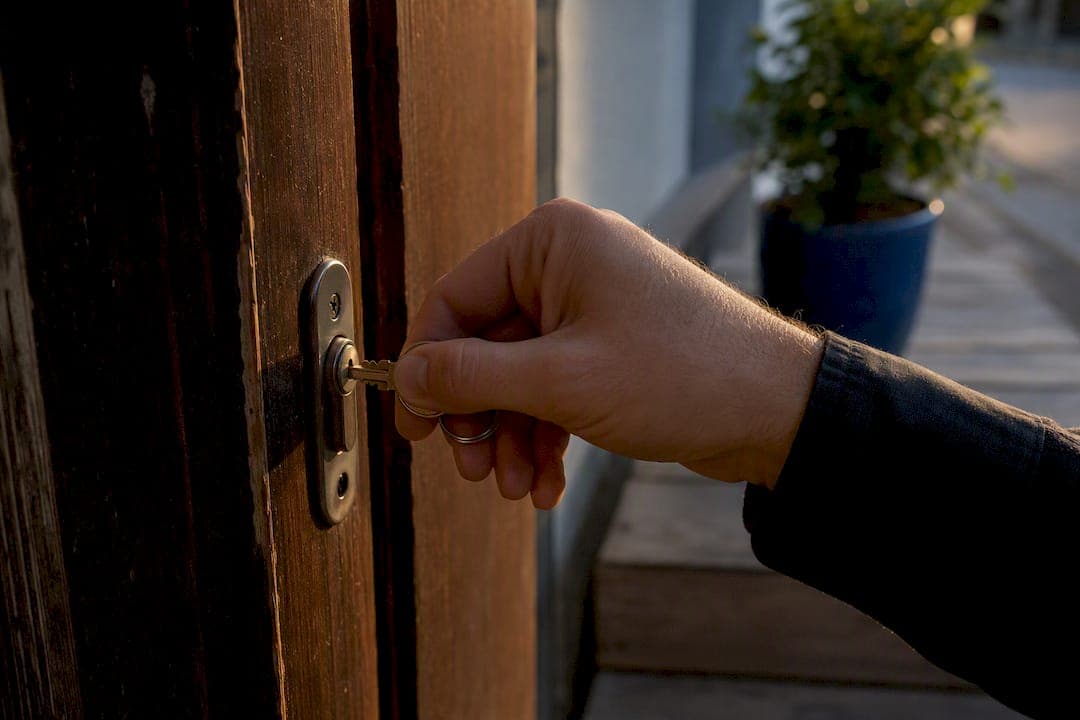
Try this two-minute test before anything else: open the door fully, insert the key, and see if it turns freely. Smooth turn with the door open means an alignment problem, not a broken lock. Stiff or jammed even with the door open points to the cylinder or gearbox itself. Whatever you do, stop forcing the key the moment it resists.
This diagnostic works because it isolates the two things that actually go wrong with a euro cylinder: the door is putting pressure on the mechanism, or something inside the mechanism has failed. Most call-outs turn out to be the first, cheaper problem.
Do this now:
- Try every spare key you own, not just the one that's stuck
- Test the key with the door standing wide open
- Lift the handle firmly before turning the key on uPVC doors
Never do this:
- Force, wiggle aggressively, or lever the key with pliers
- Spray WD-40 or any oil-based lubricant into the cylinder
Pro Tip: A snapped key inside the cylinder is by far the most expensive DIY mistake locksmiths see, and it almost always happens because someone pushed past the first sign of resistance.
Key Takeaways
A euro cylinder that won't turn is usually an alignment problem, a dry cylinder, or a sheared cam, and the two-minute open-door test tells you which before you attempt any fix.
| Point | Details |
|---|---|
| Run the open-door test first | Smooth turning with the door open points to alignment, not a broken lock. |
| Never use oil-based sprays | WD-40 attracts grit and worsens sticking; use graphite or PTFE dry spray instead. |
| Stop before forcing the key | A snapped key or seized cylinder turns a cheap fix into a costly repair. |
| Measure before you order | Overall length, symmetry, and keying determine the correct replacement cylinder. |
| Windowhardwarestore supplies parts and guidance | Real-time stock on cylinders and gearboxes, plus measurement guides and order support. |
Table of Contents
- Two-minute doorstep diagnostic: alignment or mechanism fault?
- Safe DIY fixes that resolve most cases
- How to remove a stuck euro cylinder safely
- When should you call a locksmith instead?
- Choosing the right replacement: cylinder or gearbox?
- What actually matters when your lock jams
- Get the right parts once you know what's wrong
- Sources
Two-minute doorstep diagnostic: alignment or mechanism fault?
Before you touch a screwdriver or reach for a spray can, run through this sequence. It takes less time than searching for your locksmith's phone number, and it tells you exactly what kind of problem you're dealing with.
- Open-door test. Swing the door fully open, unloading any weight from the hinges and frame, then try the key. If it turns smoothly, the fault is almost certainly door alignment, not the lock itself. If it's still stiff or won't turn at all, the cylinder or gearbox is the culprit.
- Spare-key check. Grab any duplicate key and try it in the open door. Lay your usual key flat against a ruler or the edge of a table. A key that's visibly bowed, or whose teeth show rounding and wear, can bind even a healthy cylinder.
- Lift-handle test. On uPVC and composite doors with a multipoint lock, lift the handle firmly to the locked position before turning the key. This re-engages the hooks and rollers into the keeps, which is often the missing step that makes a perfectly good cylinder feel jammed.
Five causes explain most cases: a wrong or worn key, gearbox misalignment, a dry or dirty cylinder, or genuine mechanical failure inside the lock. Running the three checks above tells you which one you're facing.
| Test result | Likely cause | What to try next |
|---|---|---|
| Turns smoothly, door open | Door alignment | Lift handle, check hinges |
| Stiff even with door open | Cylinder or gearbox | Lubricate, inspect key |
| Spare key also fails | Cylinder fault | Consider replacement |
Pro Tip: If the key turns but the door still won't unlock, don't keep twisting. That symptom usually means the cam connecting the cylinder to the gearbox has already sheared, and more turning just adds wear to a part that needs replacing anyway.
Safe DIY fixes that resolve most cases
Once you know whether you're dealing with alignment or a mechanism fault, most euro cylinder problems respond to one of five fixes. None of them require specialist tools, but each has a wrong way to do it that makes things worse.
Check the key itself first. Lay it flat against a straight edge, a steel ruler works well, and look along its length. Even a slight bow, invisible to the eye when you're just holding it, can stop pins seating correctly. Compare it against a spare cut from the same original if you have one.
Lubricate with the right product. Graphite powder or a PTFE dry spray is what locksmiths reach for, not oil. Oil-based sprays like WD-40 actually attract dust and grit over the following weeks, which then binds the pins even harder than before. Puff a small amount of graphite or PTFE into the keyway, insert the key, and work it in and out a few times to distribute it across the pins.
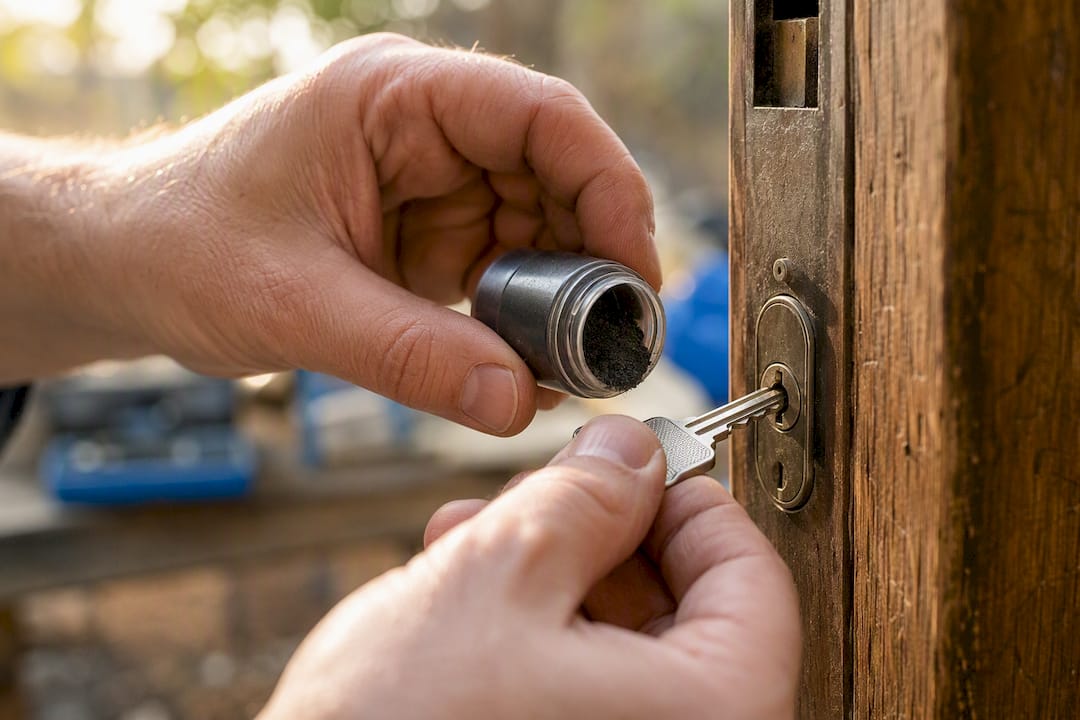
Thaw a frozen lock carefully. In cold snaps, moisture inside the cylinder can freeze solid overnight. A hairdryer on a low, warm setting held a few inches from the cylinder for thirty seconds usually clears it. Never pour hot water over it. The temperature shock can crack the barrel or warp surrounding uPVC.
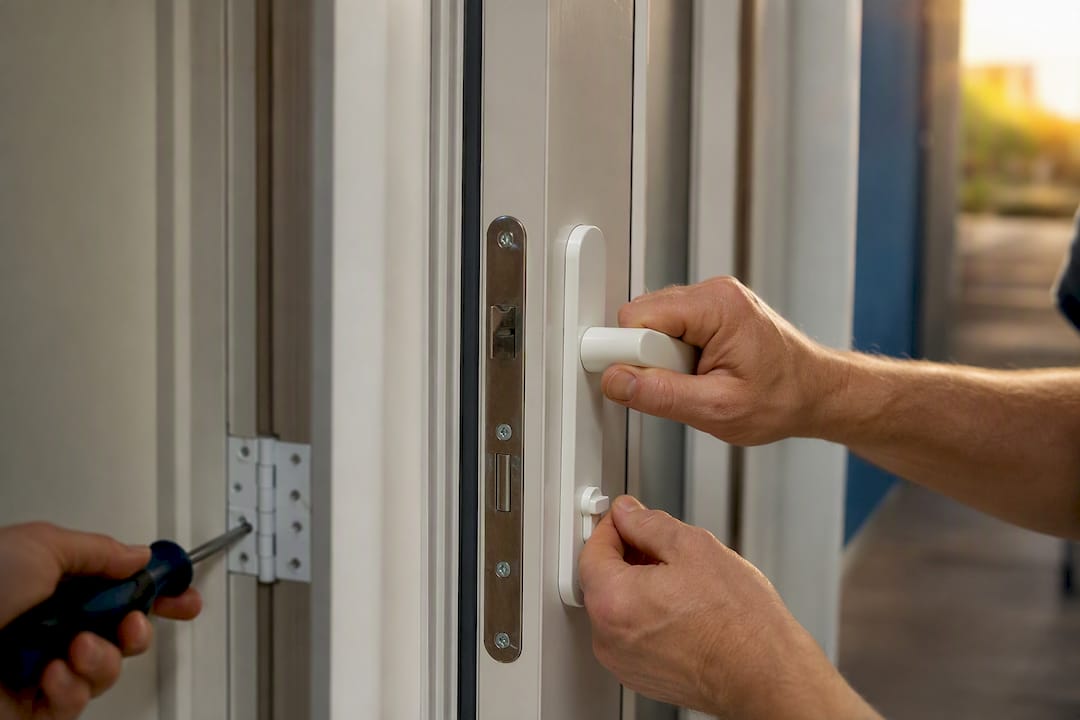
Fix alignment without tools. If your open-door test showed the lock working fine, the fix is often mechanical rather than chemical. Lift the handle firmly to fully engage the gearbox before turning the key. Pulling the door towards you slightly while turning can also relieve pressure on a sagging frame. Loose hinge screws are a common culprit, so a quarter-turn tightening on each hinge screw can restore enough clearance to let the lock work again, a fix master locksmiths report resolving droop-related jams without any parts at all.
Use a gentle wiggle, not force. If the key partially catches, a small back-and-forth wiggle while applying light turning pressure can help pins settle. This is different from forcing. You're using millimetres of movement, not muscle. If nothing changes after a few gentle attempts, stop and move to the next section.
If your door still won't lock properly after trying these, our guide to troubleshooting a uPVC door lock that won't engage covers hinge and strike plate adjustments in more depth.
How to remove a stuck euro cylinder safely
If lubrication and alignment fixes haven't worked, removing the cylinder for a closer look, or for replacement, is the next step. The process is straightforward when the cylinder isn't seized.
- Locate the retaining screw on the door edge, usually a single Torx or slotted screw roughly in the centre of the door thickness, holding the cylinder in place.
- Remove that screw completely and set it aside.
- Insert the key and turn it 20 to 30 degrees to align the internal cam with the slot it needs to pass through.
- Gently pull the cylinder out from the opposite face of the door while keeping light pressure on the key, wiggling slightly rather than yanking.
Stop if you notice any of these:
- Rust staining or green corrosion around the cylinder face
- The cylinder rotates slightly but won't slide out at all
- Visible warping or swelling in the door around the lock
A seized cylinder that won't budge after gentle wiggling has usually corroded internally or fused with a swollen door. Pushing harder risks snapping the cam or damaging the multipoint gearbox behind it, turning a simple parts swap into a much bigger repair.
Removing a cylinder without its key is a different problem entirely. Beyond a very limited set of non-destructive techniques, this is genuinely a locksmith's job. Drilling is sometimes necessary, but drilling in the wrong spot can destroy the gearbox cassette sitting just behind the cylinder, adding a second repair bill to what should have been a single fix.
When should you call a locksmith instead?
Some situations aren't worth attempting yourself, no matter how confident you feel with a screwdriver. Recognising these early saves money.
Call a locksmith immediately if:
- The key has snapped inside the cylinder
- The key spins freely without engaging anything
- The mechanism jams even with the door wide open
- The cylinder won't budge after gentle removal attempts
- You're locked out entirely with no spare key available
A professional locksmith typically works through the same checks you've just run, then moves to non-destructive entry, broken key extraction, cylinder replacement, or gearbox cassette replacement depending on what they find. Attendance and diagnosis usually sits at the lower end of a locksmith's pricing, with straightforward cylinder swaps costing more once parts are added, and gearbox replacement typically the most expensive single repair because of the labour involved in stripping the door. Out-of-hours call-outs carry a premium on top of standard rates. Treat any figure a locksmith gives you over the phone as a starting estimate rather than a fixed price until they've seen the door.
Before booking, ask whether they hold Master Locksmiths Association accreditation, whether they'll quote a fixed price before resorting to drilling, and what guarantee comes with replacement parts. Forcing the lock yourself before they arrive rarely helps your case. It usually just adds a snapped key or a damaged cam to the list of things they now need to fix.
Choosing the right replacement: cylinder or gearbox?
Euro cylinders aren't designed to be serviced internally. Once pins wear or springs weaken, locksmiths replace the whole cylinder rather than attempt a repair, because stripping one down costs more in time than a new unit costs in parts. If your open-door test showed the fault was inside the lock itself, budget for a replacement cylinder rather than a repair.
If the key turns but the door won't unlock, the fault often sits further back in the multipoint gearbox rather than the cylinder, especially after recent gearbox work, where installation faults are a recognised cause of a new cylinder failing to turn. That points towards a gearbox cassette replacement instead of, or alongside, a new cylinder.
Before ordering anything, measure your existing cylinder using our euro cylinder measurement guide, which walks through checking overall length and the split either side of the fixing screw.
Checklist before you buy:
- Overall length and the length either side of the centre screw
- Symmetrical or asymmetric (offset) profile
- Keyed alike (if you want one key for multiple doors) or keyed to differ
- Anti-snap and anti-drill rating, particularly important for external doors
- Whether the fault is the cylinder, the gearbox, or both
| Feature | Standard cylinder | Anti-snap rated cylinder |
|---|---|---|
| Internal design | Basic pin tumbler | Sacrificial snap points |
| Best suited to | Internal doors | External front and back doors |
| Relative cost | Lower | Higher |
Why you can trust this guidance
This guide draws on trade-level troubleshooting knowledge and Windowhardwarestore's ongoing work supplying euro cylinders and gearbox parts to installers and homeowners alike, curated by Samuel.
- Windowhardwarestore stocks a wide range of euro cylinders and gearbox cassettes with real-time stock visibility, so you can check availability before committing to a repair route.
- Our support team handles complex or uncertain orders directly, useful when you're not sure whether you need a cylinder, a gearbox, or both.
- Measurement guides for euro cylinders and uPVC door locks walk you through getting the right dimensions before you order.
What actually matters when your lock jams
Most guides on this topic bury the useful information under generic warnings about calling a professional. That's backwards. The open-door test alone resolves more cases than any amount of spraying or wiggling, and it costs nothing but thirty seconds.
Where I think conventional advice falls short is lubrication. Too many people reach for whatever's in the shed, usually WD-40, because it's what's always recommended for squeaky hinges. It's the wrong product for a pin-tumbler cylinder, and it tends to make the next jam worse rather than better.
Prioritise diagnosis over fixing. Knowing whether you're dealing with alignment, a dry cylinder, or a genuinely failed gearbox changes everything about what you do next, including whether you need a £15 spray can or a £150 gearbox cassette. Measure twice, buy once, and don't let a stuck key talk you into forcing something that was never going to give.
Get the right parts once you know what's wrong
Once you've worked out whether it's the cylinder, the gearbox, or just a misaligned handle causing the problem, Windowhardwarestore is where you go to fix it properly rather than patch it. Unlike booking a locksmith for a straightforward parts swap, you get real-time stock visibility on cylinders and gearbox cassettes, trade pricing open to everyone, and fast delivery, so you're not paying a call-out fee for a job you can now do yourself with the right part in hand.
If you've already measured your existing cylinder using our measurement guide, head to Windowhardwarestore to check stock against those dimensions and order the matching anti-snap rated replacement today. Our support team is on hand if you're unsure whether the gearbox or the cylinder is the actual fault before you buy.
Sources
- Key Won't Turn in Lock? Causes & How to Fix It | LocksmithLocal
- Common Locksmith Problems: "The key is just spinning in the lock" – 1st Metropolitan Locksmiths
- Key Stuck in Euro Cylinder Lock? Expert Guide to Removal, Drilling, Cylinder Extraction & Broken Key Repair | Keys4U Locksmith