
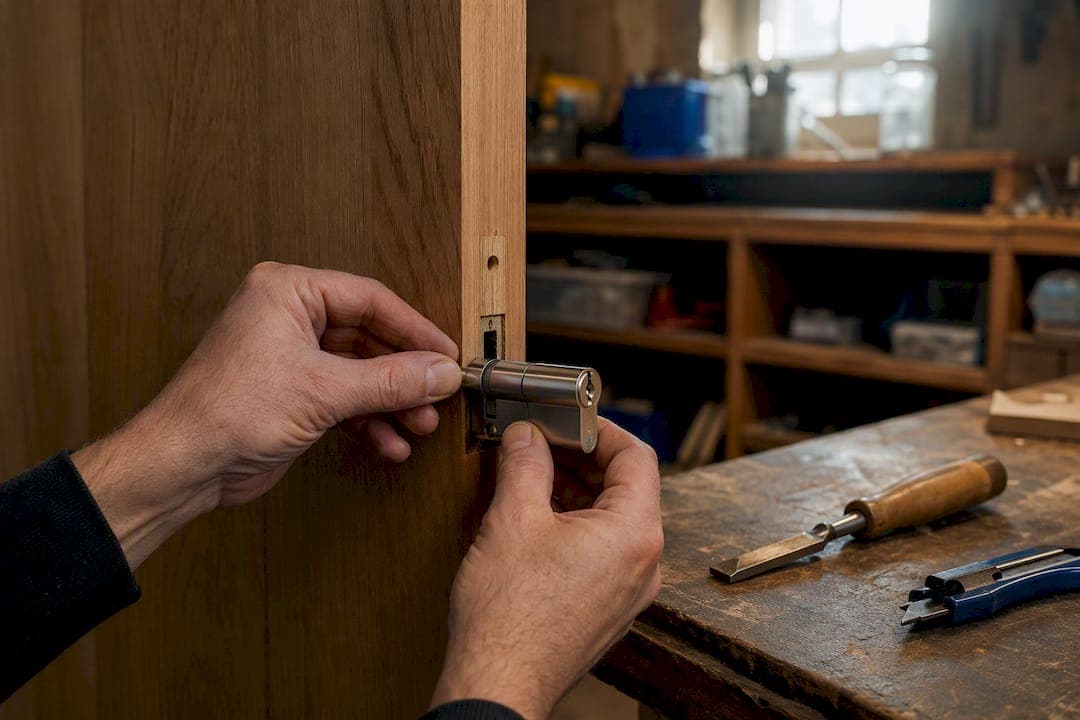
Two standards govern euro cylinder security in the UK: TS 007 (rated 1★ to 3★) and Sold Secure SS312 (Gold or Diamond). The practical minimum to aim for is a 3★ TS 007 cylinder or an SS312 Diamond cylinder, though pairing a 1★ cylinder with a 2★ handle achieves the same protection at lower cost.
TL;DR:
- Pair a 1-star euro cylinder with a 2-star handle to achieve equivalent security as a 3-star cylinder at a lower cost, especially if replacing a handle anyway.
- SS312 Diamond cylinders, rated as the highest standard, are considered equivalent to TS 007 3-star and are recommended for high-value or high-risk properties.
- Precise measurements of the cylinder length, backset, and profile are essential to ensure compatibility and proper fit before purchasing or installation.
- Working with reliable suppliers who confirm stock and measurements reduces sourcing errors that cause call-backs, making standard compliance secondary to proper sourcing.
Table of Contents
- What door cylinder security standards mean in practice
- What do TS 007's 1★ and 3★ ratings actually mean?
- What does Sold Secure SS312 test for, and is Diamond better than Gold?
- How TS 007 and SS312 relate to PAS 24 and building regulations
- Practical selection checklist: measure, match and verify before ordering
- What does a compliant cylinder cost, and how long does fitting take?
- Why trade sourcing matters as much as the standard itself
- Where to buy certified cylinders and rated door furniture
- Where to verify standards and check certification
- Sources
What door cylinder security standards mean in practice
Choosing a door cylinder isn't really about the brand or the finish. It's about which anti‑snap standard the product has passed, and whether that standard matches what your insurer, your building control officer, or your own common sense expects of a front door lock. TS 007 and Sold Secure SS312 are the two names you need to recognise, and they test similar things in slightly different ways. Get familiar with both and you'll never be talked into an inferior cylinder by a persuasive sales patter again.
What do TS 007's 1★ and 3★ ratings actually mean?
TS 007 exists to stop lock snapping, the attack method that made euro cylinders infamous after burglars worked out how to snap a standard cylinder in seconds using nothing more than a pair of grips. The standard was built around that single vulnerability, and everything about its construction, testing, and rating system flows from it.
A 1★ cylinder has passed a baseline level of anti‑snap and anti‑pick resistance but offers no meaningful protection once someone applies real force at the snap point. A 3★ cylinder goes considerably further, built with sacrificial sections designed to break away harmlessly, anti‑drill plates behind the pins, and hardened steel components that resist both snapping and drilling attacks.
What makes TS 007's star system genuinely useful, rather than just another badge, is its modular design. You don't have to fit a 3★ cylinder to get 3★ level protection. West Yorkshire Police confirm that pairing a 1★ cylinder with a 2★ rated handle or escutcheon delivers equivalent overall security, because the handle's reinforced casing protects the exposed part of the cylinder that attackers target.
This matters for anyone weighing up cost against disruption:
- 1★ cylinder alone: basic anti‑snap resistance, insufficient on its own for most insurance requirements.
- 3★ cylinder alone: full anti‑snap and anti‑drill protection in a single component.
- 1★ cylinder + 2★ handle: the same overall rating as a 3★ cylinder, often cheaper if the handle needs replacing anyway.
Euro‑profile cylinders of this type are the standard fitting on uPVC doors, composite doors, and most patio doors, so this decision applies to the vast majority of UK front and back doors fitted since the 1990s.
Pro Tip: If your existing handle is worn, cracked, or loose, replace it with a 2★ rated handle before you replace the cylinder. It's often the cheaper first move, and it lets you defer a full 3★ cylinder upgrade without leaving the door vulnerable in the meantime.
What does Sold Secure SS312 test for, and is Diamond better than Gold?
Sold Secure SS312 tests cylinders against snapping, picking, drilling, bumping, and impressioning, giving a broader picture of resistance than a single attack method alone. Two grades sit under the SS312 banner, and the gap between them is significant enough to affect what your insurer will accept.
SS312 Diamond is the highest grade available and is treated as equivalent to a TS 007 3★ cylinder for building regulation purposes and for high value or high risk properties. SS312 Gold sits a level below and, in most cases, needs to be paired with protective door furniture (comparable to the 1★+2★ modular route under TS 007) to reach an equivalent overall standard.
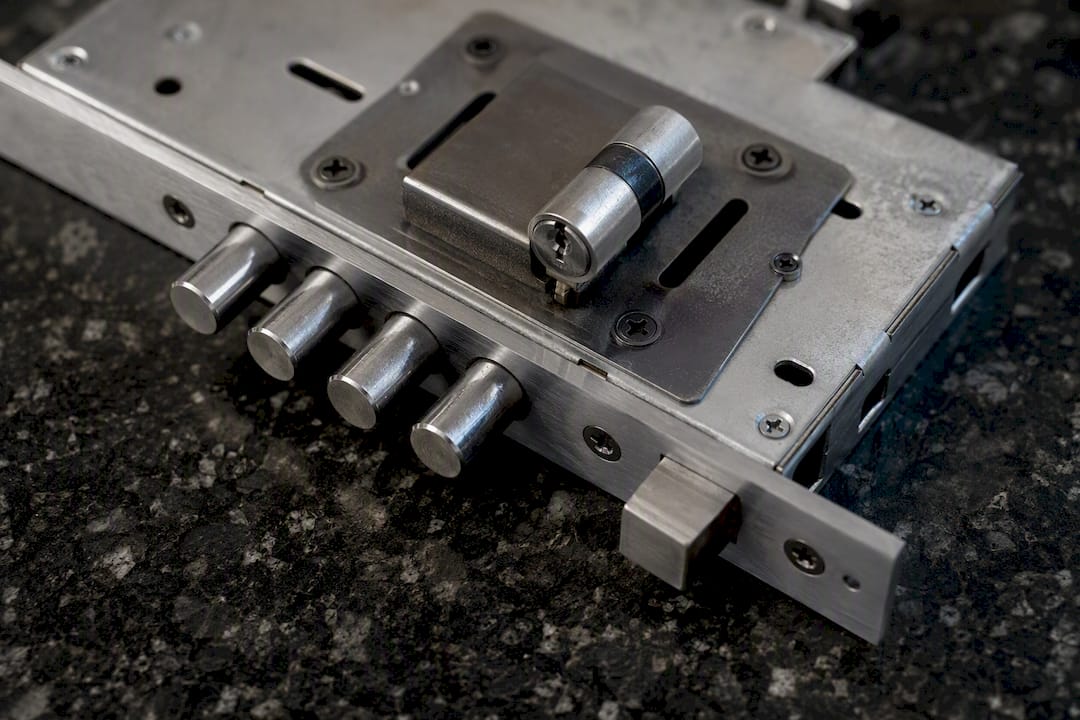
Some manufacturers now produce cylinders carrying dual certification under both TS 007 3★ and SS312 Diamond, which removes any ambiguity about which insurer or specifier requirement the product satisfies.
Checking a cylinder's actual certification takes a few minutes and is worth doing before you buy or install:
- Look for the Sold Secure hologram or laser‑etched marking on the cylinder body itself.
- Search the product name against the official Sold Secure directory to confirm current listing status.
- Ask the retailer or trade supplier for documented test evidence rather than relying on packaging claims alone.
Insurers and Secured by Design schemes increasingly specify SS312 Diamond by name for higher value contents policies or for new‑build developments, so it pays to check the exact wording of any policy or planning condition before assuming a lower grade will do.
How TS 007 and SS312 relate to PAS 24 and building regulations
PAS 24 governs whole door set performance for new dwellings, and Approved Document Q sets the security expectations that new‑build doors and windows in England must meet. Neither standard tests the cylinder in isolation, but both reference SS312 and SS301 as acceptable certified hardware alongside TS 007, meaning a 3★ or Diamond cylinder often satisfies the hardware component of compliance.
Fitting a certified cylinder to an existing door is a component upgrade, not a PAS 24 certification. If you're replacing an entire door set on a new build or under Document Q, the whole assembly, not just the lock, needs testing and certification as a unit.
Practical selection checklist: measure, match and verify before ordering
Getting the wrong cylinder length is the single most common reason a replacement doesn't fit. Follow this sequence and you'll avoid a second trip to the supplier.
- Measure overall length and backset. Remove the existing cylinder, measure from the centre of the fixing screw hole to each end, and note whether it's symmetrical or offset.
- Confirm the profile you need. Most UK doors use a euro profile, but check whether you need double (key both sides), single (key one side, fixed the other), or thumbturn (key outside, turn inside).
- Set your target certification. Decide between a 3★ or SS312 Diamond cylinder outright, or the 1★+2★ modular route if your handle is being replaced anyway.
- Check the handle or escutcheon rating if you're going modular. A 1★ cylinder behind an unrated handle gives you neither the cost saving nor the protection.
- Verify multipoint gearbox compatibility, and check fire door or escape route requirements against BS EN 1303 where the door forms part of a fire strategy.
- Photograph the label, keep the receipt, and note the Sold Secure or TS 007 reference so you can answer an insurer query quickly if the need ever arises.
Pro Tip: Keep a note of your cylinder's exact measurements on your phone. Trade suppliers with real‑time stock visibility can match odd lengths quickly, but only if you know precisely what you're asking for.
What does a compliant cylinder cost, and how long does fitting take?
A certified 3★ or SS312 Diamond cylinder typically retails between £25 and £60 supply‑only, with locksmith‑fitted prices commonly running from £60 to £120 depending on region and access. A straightforward swap on a uPVC or composite door usually takes a locksmith or competent DIYer between fifteen and thirty minutes.
Costs and timescales rise sharply once the problem extends beyond the cylinder itself:
- A worn or misaligned multipoint gearbox needs replacing separately, adding parts and labour.
- A distorted uPVC or composite frame may need adjustment before any new cylinder will sit correctly.
- Anti‑snap cylinders remain inexpensive relative to the risk they address, which is why insurers push so hard for the upgrade.
Keep the door lubricated with a light lock oil twice a year, and test the key action periodically. A cylinder that's starting to feel stiff is often the first sign of wear well before it fails outright.
Why trade sourcing matters as much as the standard itself
Getting the specification right on paper is only half the job. Installers commonly report call‑backs caused by a cylinder that's a few millimetres out on length or backset, not by choosing the wrong star rating. That's a sourcing problem, not a standards problem, and it's solved by working with suppliers who hold accurate stock of odd sizes and can confirm exact dimensions before dispatch.
Window Hardware Store's technical guides exist precisely because getting the standard right and getting the fit right are two separate problems that both need solving properly.
— Samuel
Where to buy certified cylinders and rated door furniture
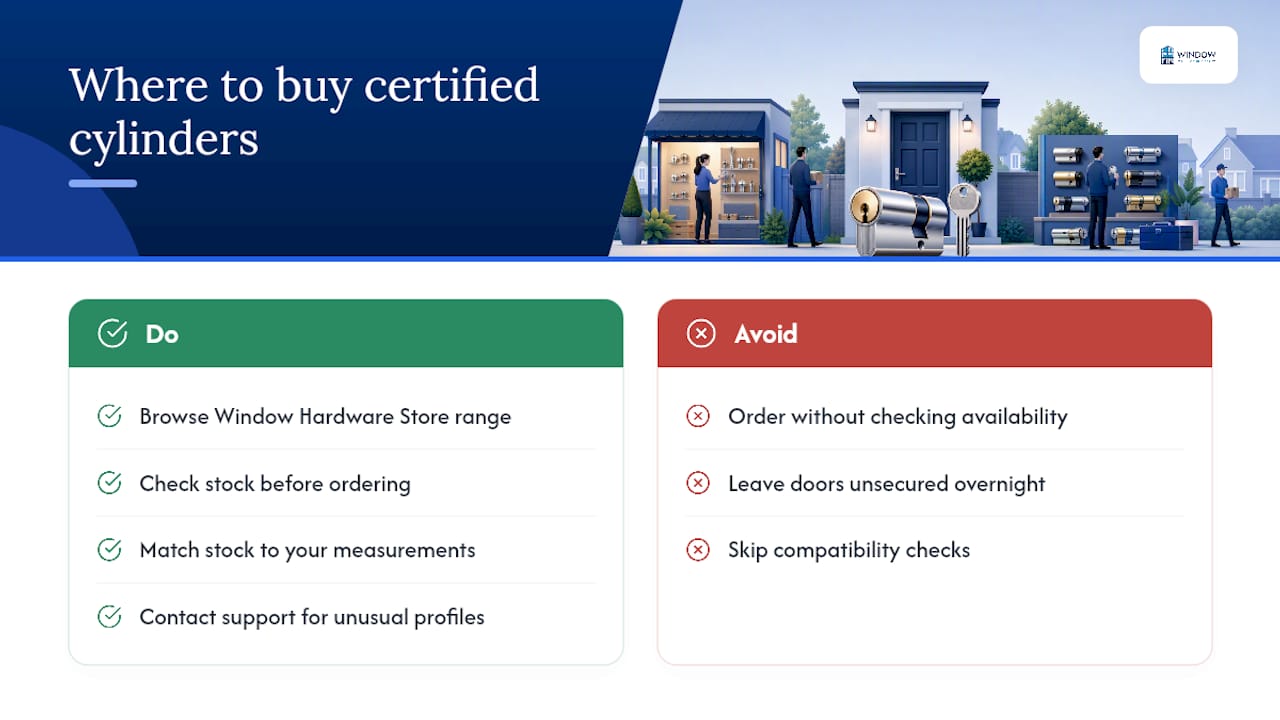
Windowhardwarestore stocks certified 3★ and SS312 rated cylinders alongside the rated handles that make the 1★+2★ modular route work in practice, with real‑time stock visibility so you know exactly what length and profile is available before you order.
That combination matters more than it sounds. A trade supplier who can only confirm stock after you've ordered leaves you guessing until the parcel arrives, whereas checking availability upfront means no wasted trips and no doors left insecure overnight. If you're going the modular route, the Winlock patio door handle set pairs directly with a 1★ cylinder to reach 3★ equivalent protection, and it's priced to make that route genuinely cost effective rather than a compromise.
Whether you're a locksmith fitting dozens of doors a month or a homeowner replacing one cylinder after a break‑in attempt, browse the full range on the Window Hardware Store site, check current stock against your measurements, and get in touch with the support team if you need help matching an unusual profile or setting up a trade account for repeat orders.
Where to verify standards and check certification
For direct verification, consult West Yorkshire Police's euro‑cylinder advice, the Sold Secure product directory, and BSI's cylinder and lock standards. The Locksmith Journal's PAS 24 coverage explains the regulatory mapping in more depth.
Sources
- Euro‑cylinder advice | West Yorkshire Police
- What is Sold Secure SS312 Diamond? (Benefits + How to Check)
- PAS 24 2022: sold secure ss312 / ss301 reference | Locksmith Journal